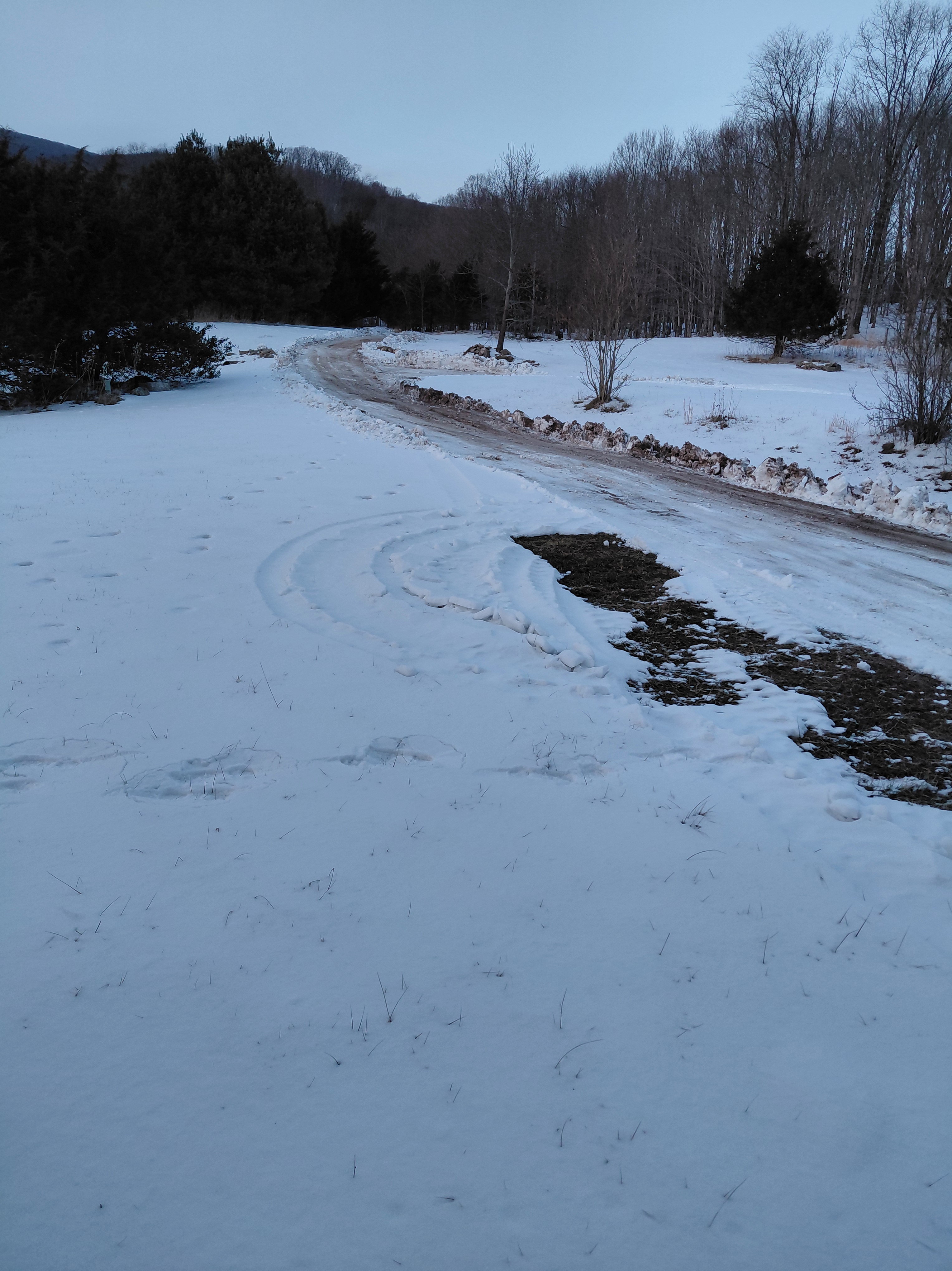
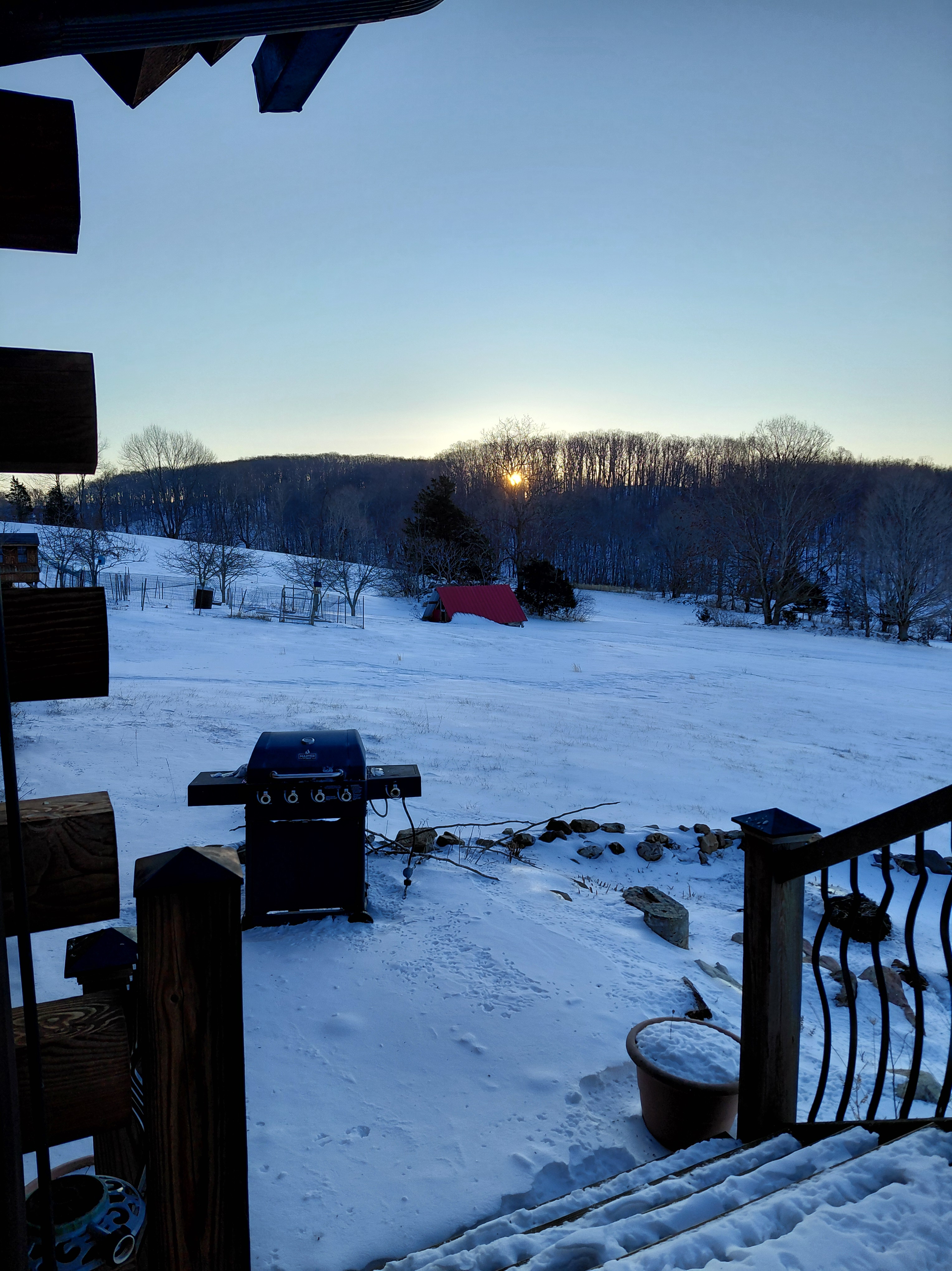
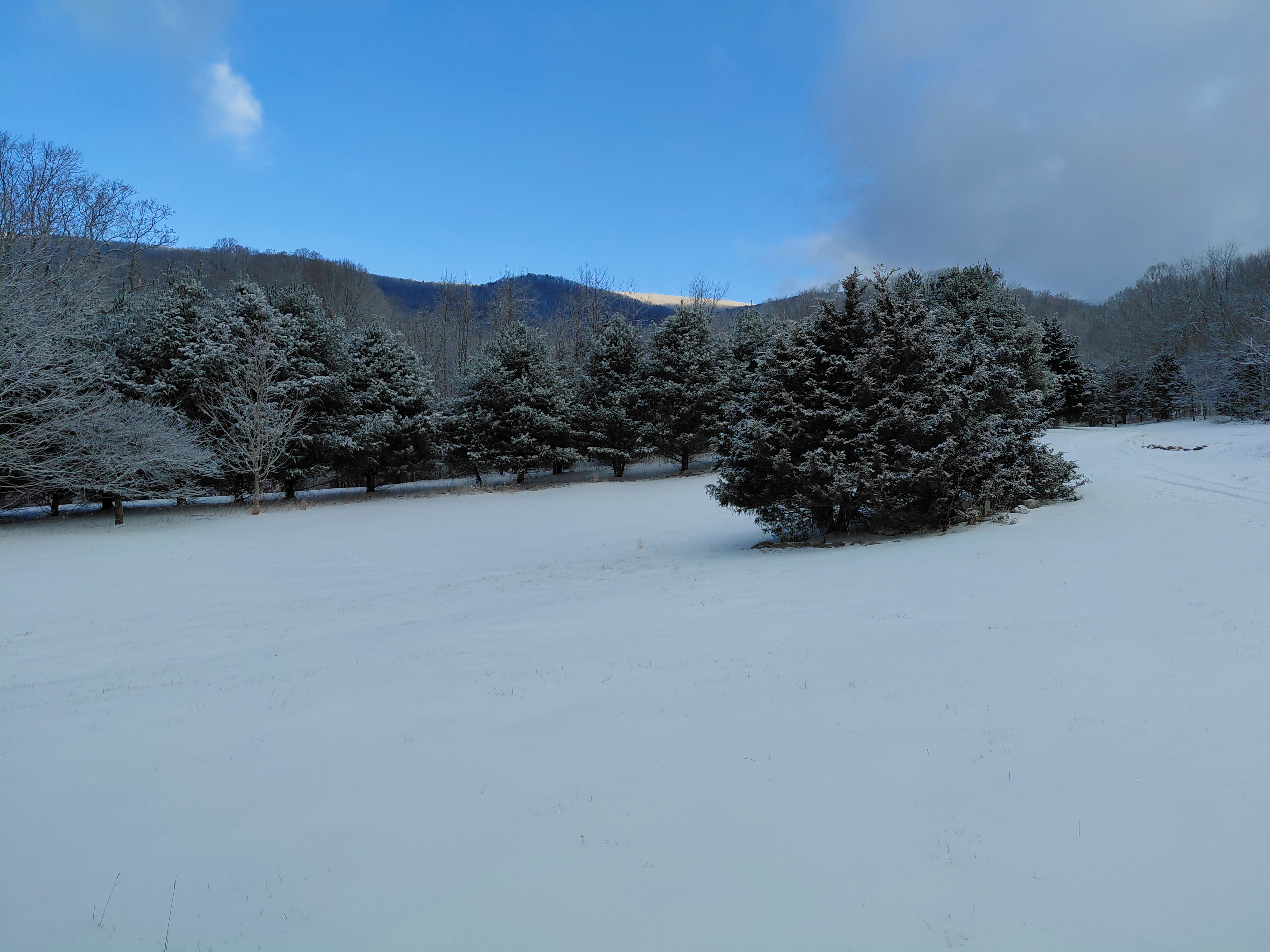
Yesterday was almost springlike in temperature, though windy which chilled the day some. By Sunday night and into Monday morning, it is going to feel like January with forcast snow showers possible, not accumulation.
Most of the leaves have fallen except for a few vivid reds and yellows. And the stubborn brown leaves of the oaks.
Yesterday’s walk took us to a nearby town to walk along a creek bed then along the river it feeds for a couple of miles. The path is paved and smooth with a couple of steep long rises that take it from the path on the park side up to a tunnel that passes under the four lane main street of the town and down to the continued path along the river bank. The park walk is about two miles round trip, the one along the river is about 2.5 miles one way from one end of the trail to the other. We alternate the park way with the river bank walk when we go over and don’t walk the full 5 mile up and back of the river bank one.
The park is more rustic and a pleasure to walk.
Most days, we stay closer to home walking sections of a rails to trails paved path. The original terminus begins at the town library and traverses about 2 1/2 miles to where it connects up on the other side of the main highway to continue in two directions for several miles each. If you choose to go right, it eventually ends up at Brown’s Farm, several miles away,now a park for the county. If you choose to go left, it continues for another 5 miles to the recreation center of the next town. We often park along that section near the old Coal Miner’s Park, but that section is currently closed until March for repair of 3 bridges.
Our daily walk is generally 2 1/2 to 3 miles, though hubby will sometimes do 4 when I go to my spinning group once a week. We are striving to keep mobile and flexible as we are both advanced senior citizens.
Today’s news had throwback photos of October 10, 1979.
On that day, a surpise early snowstorm dumped up to 10 inches of snow on parts of the Shenandoah Valley. When I saw the article, I asked my hubby if it had any significance to him but he said it didn’t until I reminded him of where we were and what we were doing.
We had taken a weekend backpacking trip along the Skyline Drive. On Friday night, we tent camped at the Big Meadows Campground rather than walking in a trail we were unfamiliar with in the dark. I was an avid backpacker at that time, trail Supervisor for the Appalachian Trail Club in Tidewater area of Virginia. They came out monthly to clear a section of the AT from Maupin’s Field to Three Ridges, but this weekend it was just the two of us. Being Autumn, we figured it would be a nice, mild weekend to go see the fall leaf colors, so we borrowed a fairly thin sleeping bag for hubby. That Friday night ended up being very cold and I exchanged sleeping bags with him so he could have the down bag as I had a down jacket I could wear in the thinner bag. Saturday was gorgeous. It probably got up in the mid 70’s and we had a great hike down the trail and a signifant elevation loss to a hollow where we planned to spend the night. Camp was set up, dinner prepared and enjoyed, and a lovely evening as it got dark, looking at the stars. The night stayed relatively warm, a surpise after the prior night.
On Sunday we woke and were about to prepare breakfast when I looked in the distance to see a very ominous black cloud. The decision was made to pack up, grab something we could eat on the move and start the hike back up the hill to where our car was parked. We hadn’t even begun to walk out until it started to rain, then hail. The temperature began to plummet and the hail turned to sleet, then snow. By this point, we were hustling to get up the slope and back to the car, a few miles away. Packs tossed in the hatchback and we set out to get off the Skyline Drive when we saw a young man, improperly clad, hiking up the road. We stopped and asked his if he needed help and he asked if we could drop him off at the site where his group would be or would gather. We did, and slowly through accumulating ice and snow made our way to Afton Pass where we got off the Drive and stopped to finally get food at Howard Johnsons. While we ate, we heard a report that the Skyline Drive and the Blue Ridge Parkway were being shut down. We hoped the young man found his group and a safe place to stay. The Drive and Parkway were shut down for 3 days due to the storm.
That was a trip we remember in detail 46 years later. I don’t remember ever seeing snow in Virginia in October, prior to or since.
When I began college nearly 60 years ago, I was unsure the direction in which to go careerwise. One of my early classes was a General Biology class with a great professor and having followed a wonderful high school biology teacher, I ended up majoring in Biology Education and adding General Science certification to my teaching license. I started my master’s degree also in science, but later changed to School Counseling. Though much of my career in education was in counseling, the interest in science never moved far from my focus.
As a result, I am ever on the lookout when on our daily walks for animals, and changes in the flora surrounding the trails. One of the interesting quirks of nature are mast years. Those are years when all the nut and oak trees produce more fruit that prior years. The reason for this is debated with several theories, but next year, there will be way more young animals in the fields and woods. This is a mast year. Walking the paths over the abundance of acorns and small nuts feels like walking on pebbles. And several of the areas are shaded by black walnut trees which drop baseball size nuts in green husks that can cause a turned ankle if not looking where your feet fall, or a knot on the head if you are under one when it falls.
The past couple of days walks have been interesting. We saw the first copperhead snake I have seen here since we moved here almost two decades ago. It was leisurely crossing the paved trail on which we were walking. I got close enough to identify it, but not close enough to disturb it, not wanting to make a venomous snake cross with me.
Yesterday while weeding a garden bed, I disturbed this large garden spider with hundreds of her young on her back. I moved away from where she was and weeded elsewhere.
Today’s walk was one that was ripe with nuts. There were Buckeyes (aka Horse Chestnuts) which are toxic to humans and animals, Bitternut Hickory which are edible though very bitter when raw, if roasted they can be substitued for pecans or walnuts, and many Black Walnuts. I failed to pick up a walnut to add to my photograph. The Black Walnut that was on our property before we purchased it had fallen, though we have plenty of Bitternut Hickory trees and Oaks.
The hickory nuts in this photo are in two stages of being shelled, the husk still on one and two still in the shell. All five nuts went back into the wild, not brought home with us.
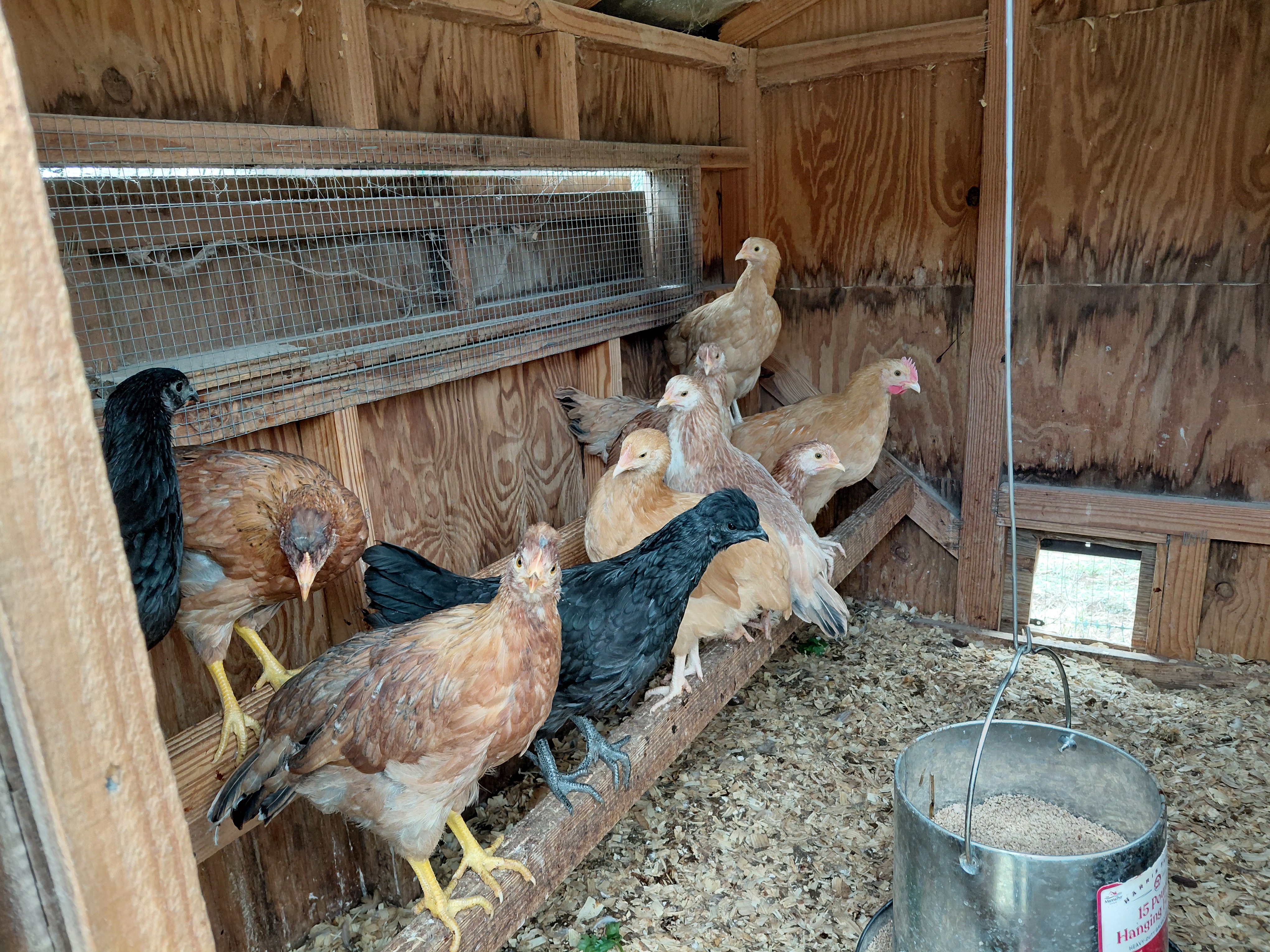
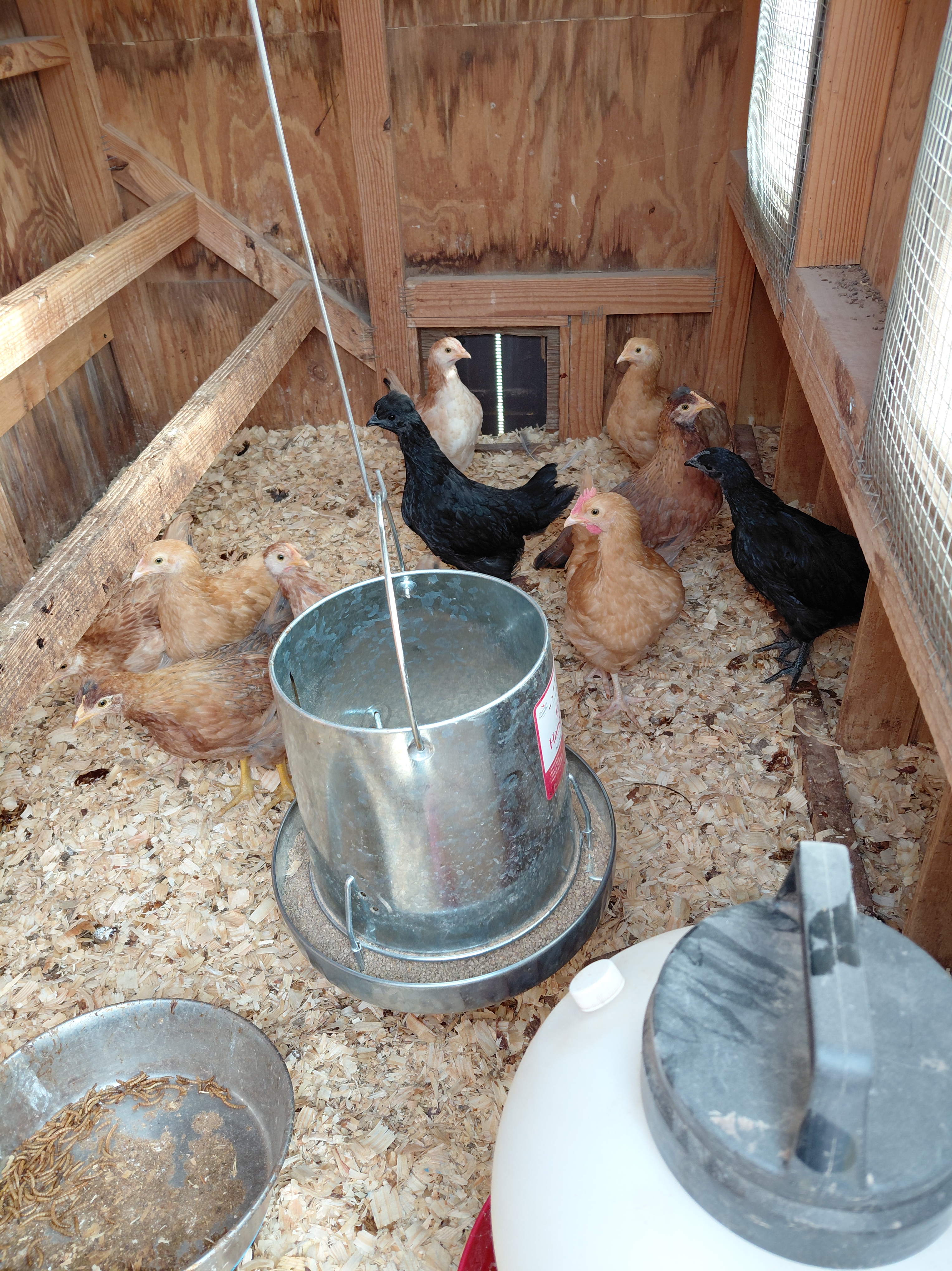
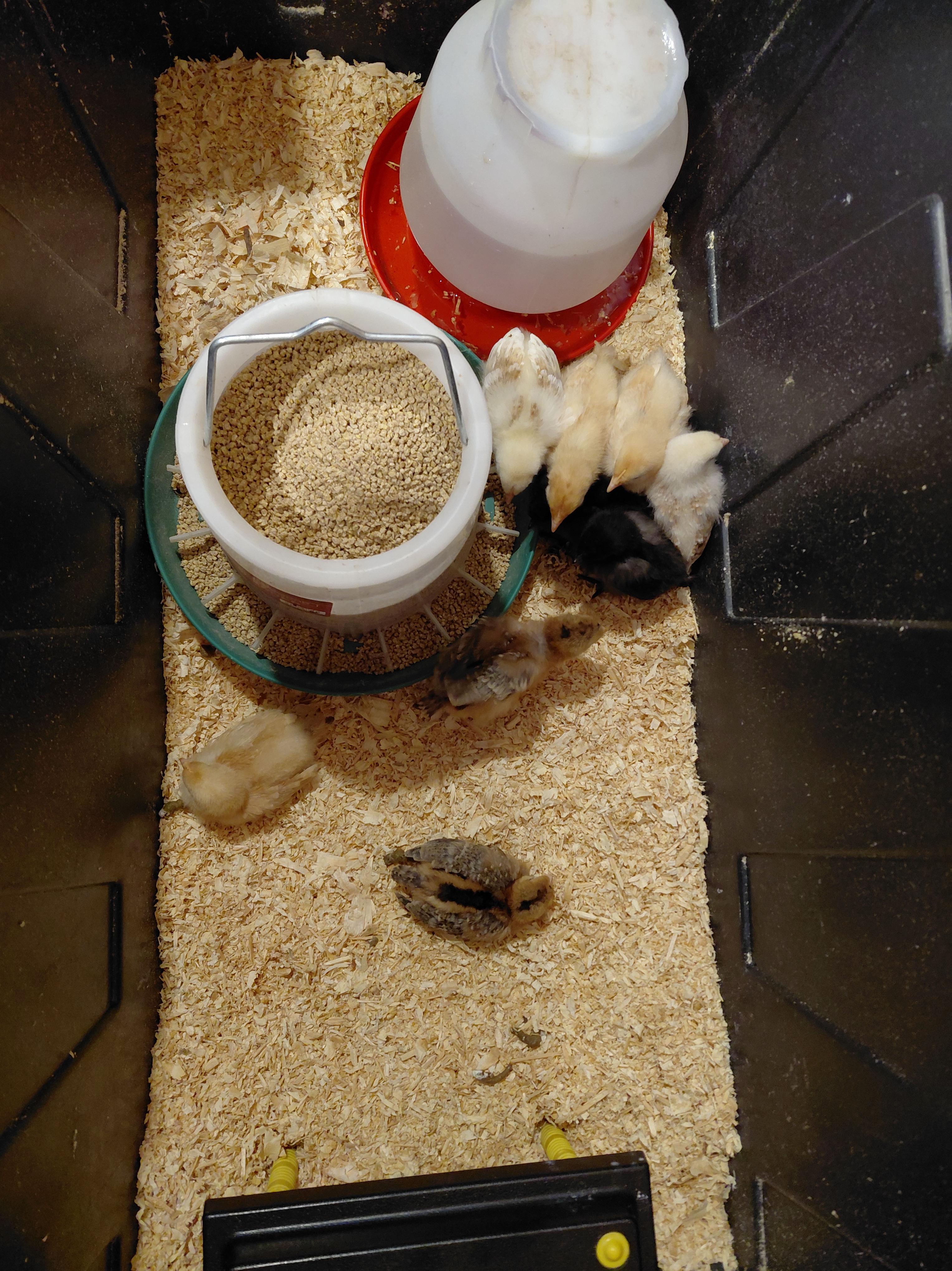
This is a great time of year for our daily walks. The daytime temperatures are very comfortable, the trees are turning autumn colors and dropping their leaves, fruits, and nuts, and we see more wildlife in the woods and crossing the roads and trails. Soon the geese will land in the pond on their way south, though we haven’t seen or heard any yet. We still have Hummingbirds coming to the feeders, so they are staying full. One beautiful little one got trapped in our garage yesterday and by the time we saw it, it was worn out from trying to escape, allowing me to pick it up and take it back outdoors where it gratefully flew away. The hens have already started into non laying mode, getting only about a dozen a week now from 6 hens instead of enough to share.
Soon the autumn will chill, the garden will close up for the winter, and it will be time to plant next year’s garlic.
Stay safe, enjoy the changing seasons if you live where you get changes.
Not to anything dire, just not wanting to keep posting the same routine.
It has been a hot, wet summer and the garden has suffered. Raccoons got every ear of corn and started on the tomatoes as they ripened. Green beans have been very prolific as were the cucumbers. The cucumber vines have now died off and were pulled from their trellis yesterday afternoon and the first planting of green beans also pulled as I had been away for 5 days and most of the ones on the plants were too large and soft to be desirable as we don’t like the “southern” way of cooking them with fat back until they are practically mush. The second planting has just begun to provide.
We set about on Monday to get the lawn mowed after lunch. I sent DH out to get gas for a fill up, thinking there was enough to start while he was gone, but I backed the riding mower out of the garage and it sputtered to a stop. Instead of sitting idly by, the bed of flowers by the east side of the garage was a weedy mess and the grass was hanging over into it, so much bending, stooping, and sitting on a step stool that sent me into an unplanned hard landing on the grass, and all the grass and lambs quarters were pulled, a new edge dug. He began to mow while I was doing that so the line trimmer was used to go around the house and over to the vegetable garden that had lambs quarters, wild amaranth, and horse nettles as tall as me that the line trimmer couldn’t handle. This is the result of hand weeding all of it and the orchard grass growing in the paths.
That pile is about 2.5 feet tall, what you see behind it is the same mess that is in the closed off chicken run that I can’t access until the fence is removed. I don’t know if it will compost as I had no means of chopping it up, so it is a stack of 5 to 6 feet long stalks mixed with mats of Creeping Charlie, Bermuda grass, Smart weed, and other unwanted greenery that had taken over the end of the garden not in use this summer. I’m thinking about trying to move the inner fence to cross just above the part of the garden in use and letting the chicken have at the rest. It will leave them unprotected from the hawks but that is a chance I am willing to take.
Yesterday a very early venture over to the garden to harvest beans and tomatoes and finish weeding a small section I never got to Monday, found all of the Tithonia and Sunflowers full of sleeping wild bees.
Yesterday afternoon, after a trip to the nursery, flats of spinach and Romaine lettuce seedling, a row of Little Gems lettuce seed, and three rows of turnips were planted in one of the empty raised beds. The one the first green beans were in will be reserved to plant garlic when it cools more.
The reason for my 5 day absence was to travel to Black Mountain, North Carolina for my favorite Art and Fiber Retreat. We meet at the YMCA Blue Ridge Assembly. It was rejuvenating and a bit heartbreaking. The group is a wonderful mix of ladies that spin, knit, crochet, weave, and do other paper arts. The heartbreak was to see the damage caused by Helene and know that though they have worked hard to recover, only 40% occupancy is available still as they lost a couple of buildings and had damage to many others. The motel style lodge where we stay and where meals are prepared and served by the staff was the first to be repaired and reopened. Helene took out every power pole leading up to the buildings except for 3. It took them 4 weeks to get any power back. The creek that became a river down the west side, that damaged the old gym so badly it had to be torn down is now a gully 16 feet deep and washed through the woods taking out trees and rhododendron to now look like a dry river bed.
This is an area above the retreat that is up the mountain. All of their hiking trails in that area are impassable still and a lower priority than restoring the rest of the buildings.
Part of the repair is placing 14 foot arches where roads were to divert the flow, instead of smaller culverts that had always handled the creeks in the past. Also where two landslides sent mud into buildings, have new reinforced walls at the top and the slides seeded as they are now open meadows.
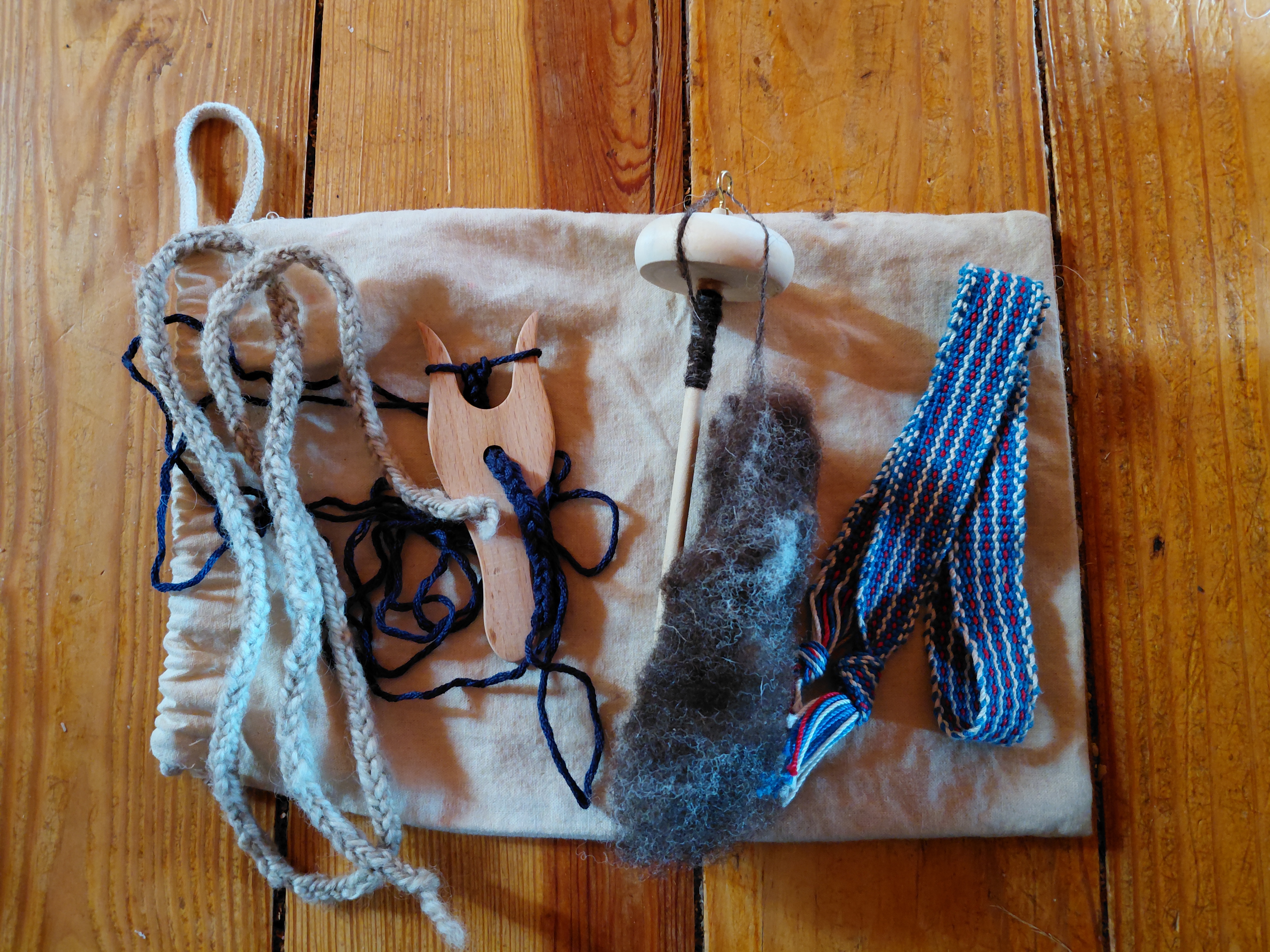
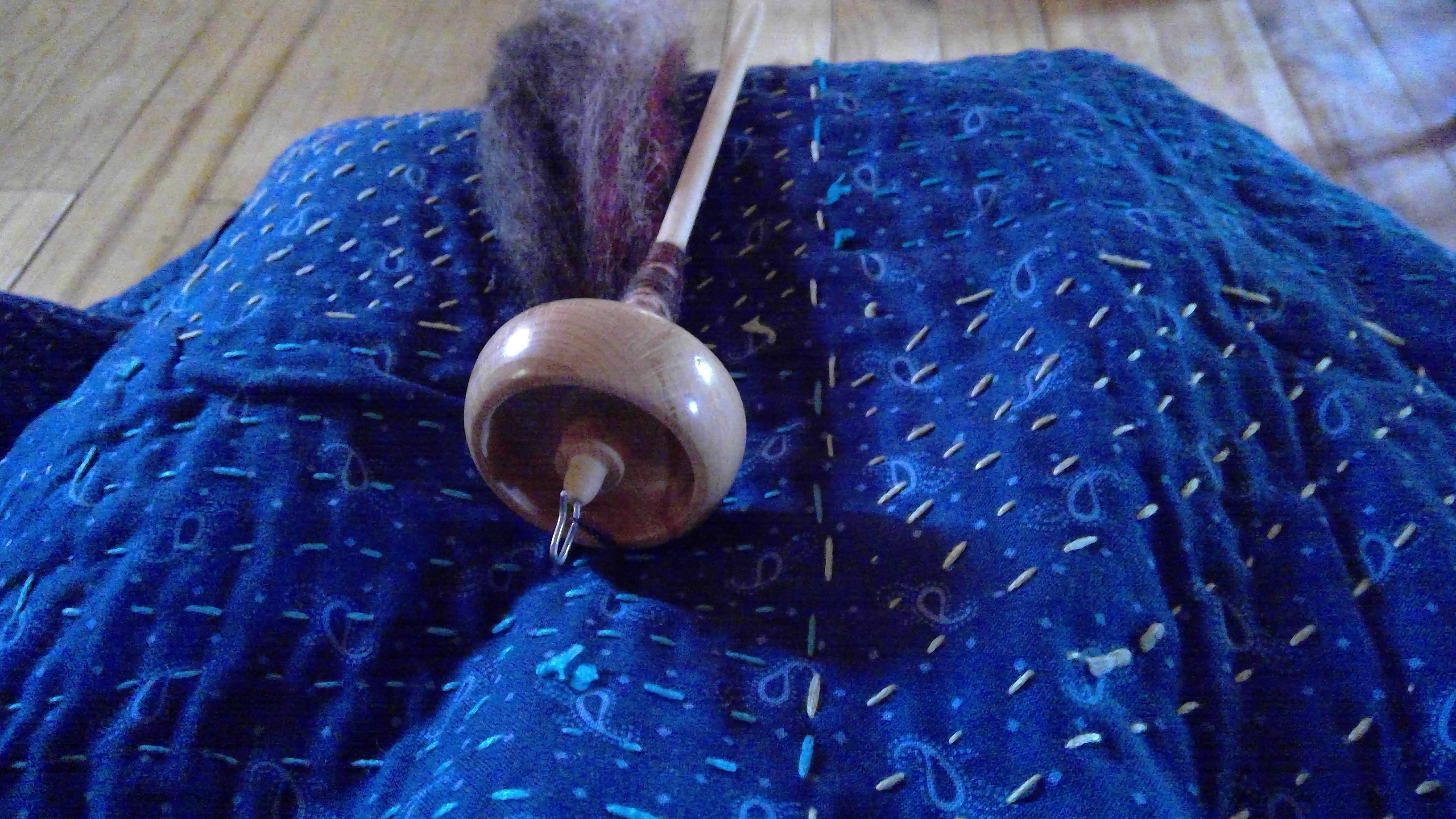
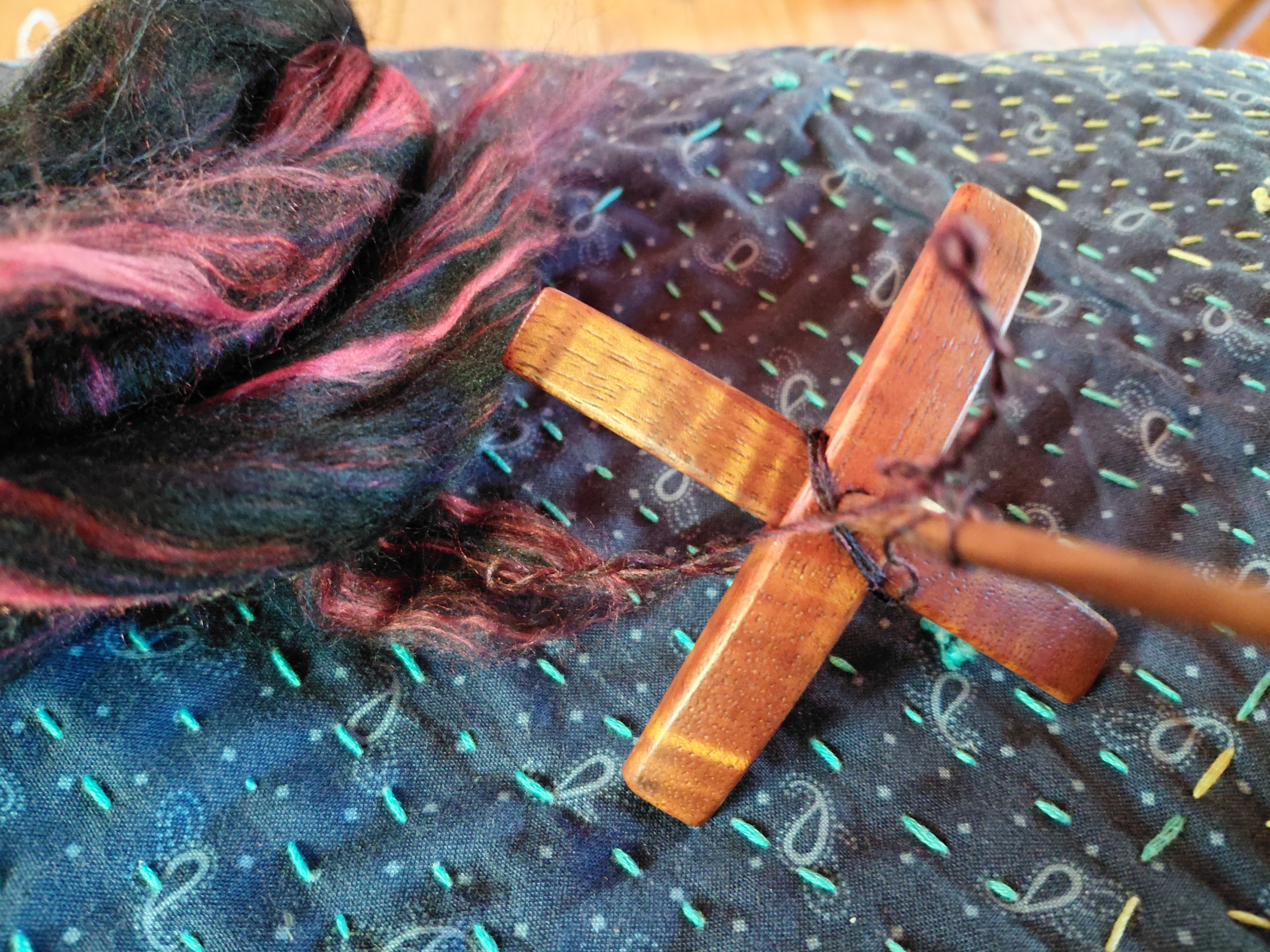
In addition to visiting with friends I see seldom, I finished a skein of yarn I had been spindle spinning, took a needle felting class and made two little pumpkins, and started wheel spinning 8 ounces of Coopworth and Alpaca roving purchased from a friend that raises the animals and dyes the wool before the mill processes it into roving. Also some knitting on a pair of fingerless mitts was done with the wool I purchased in Alaska in May, spun on spindles and plyed on spindles.
Now back home, my food consumption is focusing on smaller portions and healthier choices as we always have a snack table with too much sugar and fat on it, and though I did take a walk up as far as I could go up hill above the retreat one day, I consumed too much not so healthy snacks in addition to the three meals a day they provide. Now home, I have resumed my daily walks with DH of 2-2.5 miles. It has been so humid though, it feels like you are breathing fog.
We have a cooler week of so ahead, it should help make the walks more enjoyable. We see early Autumn in the air as the early turning leaves are coloring and some are already falling. Until I have something new, stay safe.
We have lived here for about 18 years now, and for 15 of them we had either barn cats or large dogs. All are gone now. Early on, because we have 30 acres of fields and woods, we allowed some hunting on the property, but after an incident when one of the young hunters, invited a friend we did not know and the friend then showed up alone with his 5 year old son, we cancelled hunting privileges for non family and no one in the family has hunted here for years. With no domestic animals in or near the house and no hunters on the land, the wild animal behaviors have changed.
We used to park the cars in the driveway and every spring, we had to cover the side mirrors to keep the male cardinal, that calls the side yard his habitat, from constant attacks against the “intruder.” The cars now get parked in the garage.
The male bird aggression is interesting. This morning a tiny sparrow repeatedly bashed his breast and head against the French doors of the dining room. I tried turning on the inside light, putting a dining room chair against the glass, and finally hung a paper owl from the back of the chair to keep it from a concussion or broken neck.
We have always had deer foraging and crossing the property, but now they rest in the shade of the row of pine trees on the edge of the mowed lawn just to the west of the house and barely flinch when we go outside to water plants, fill hummingbird feeders, or go over to the chicken pen and coop. The hay is still high and unmowed and it is fawning season where the does drop their young. There is a new mom doe (probably a first time as she only has one fawn) that feels safe enough that she had her tiny little one near the house. As their behavior is to hide the fawn and move off from it, coming back to nurse a few times a day, and then moving the fawn to a new location, we have seen her bring the little one in to the mowed yard where it is easier to walk, then take it back into the tall grass to hide. We can tell approximately where the fawn is hidden by where she goes to graze.
I won’t look for the fawn, there is no reason to disturb them, but we look out the south windows to see if we see where the doe is grazing. She is a brown hump in the tall grass when grazing and will look up if she hears a noise. The area she is using is about 2 football fields in size. After the fawn is about 3 weeks old and starting to eat more solid food, it will begin to follow the doe around and the two of them will like form a small herd with other does with fawns or other does that she is related to.
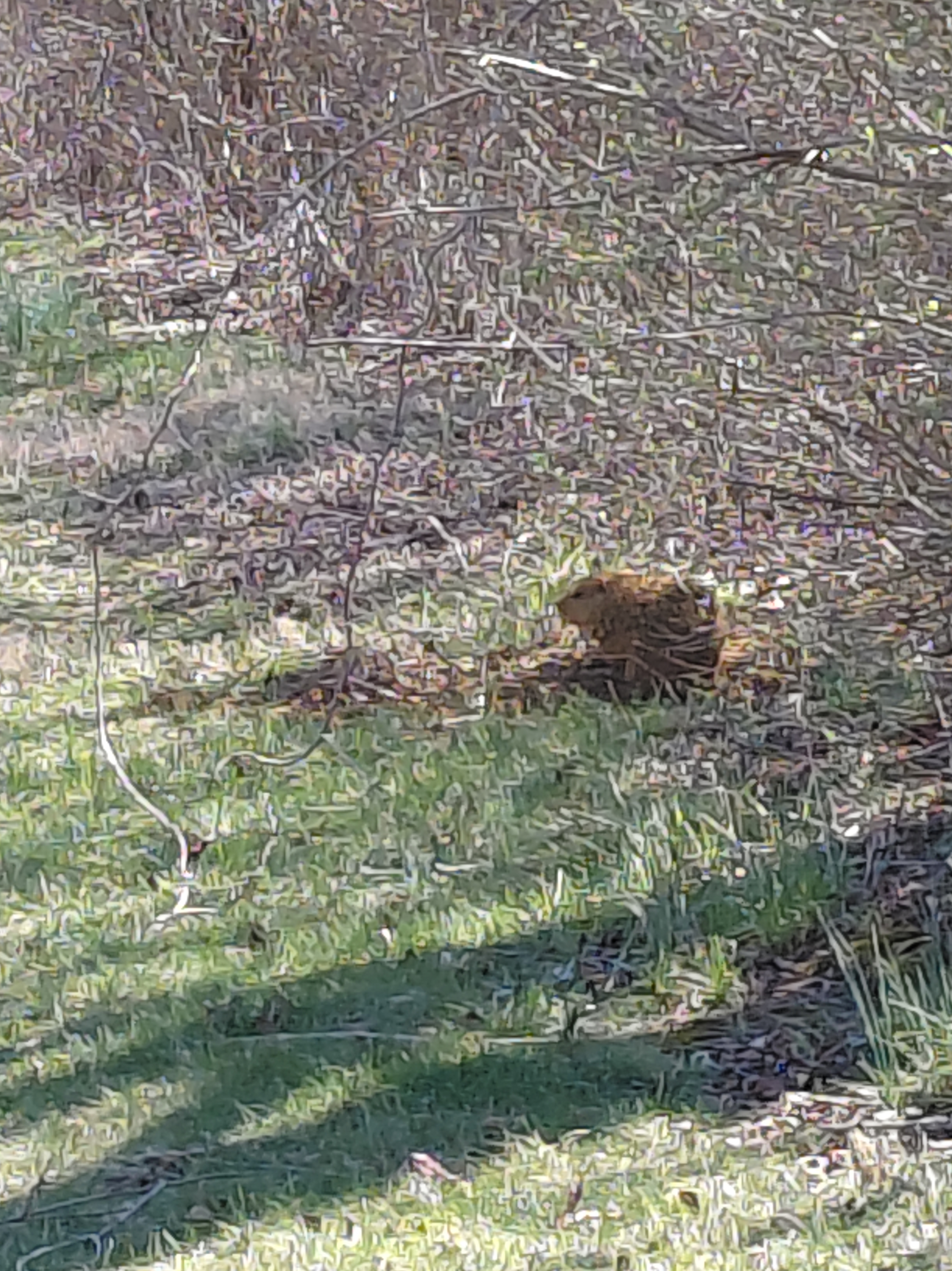
The other wildlife whose behaviors have changed in the absence of cats and dogs are the rabbits and chipmunks that come right up to the house, the chipmunks even up on the deck. And we have a groundhog that seems to prefer the mowed lawn to graze but lives near or under a cedar tree right on the edge of the hayfield. I haven’t caught it out to take a photo lately, it has been rainy for the past 4 days.
Last weekend, our eldest, his wife, and their son came to our local grandson’s high school graduation. His son is city born and city raised and he spent the entire weekend looking for o’possums and groundhogs to no avail. We did see rabbits and deer to show him and warned him about nighttime wandering to look for them due to skunks and coyotes. I haven’t heard the coyotes this spring yet.
Life in a rural area is ever changing. The hen turkeys should be hatching poults soon and we will see them. The toms are in male groups now and if they are in the fields, we can’t see them due to the height and thickness of the hay. Within the next month, weather permitting, the hay will be mowed and baled, hauled off to other farms and the animals will be visible in the mowed fields again. I love the rural mountain life.
There was a lot of living history this week. On Wednesday, we had about 80 fourth graders and 7 rotations with the museum history, slavery in Appalachia, a bit of William Tell fun with suction cup arrows and a plexiglass shield to protect the”victim,” women’s duties on the frontier, blacksmithing, fiber production at home on the frontier, and frontier Militia that includes the presenter firing a flintlock rifle for the students. After we were done, the curator showed them a covered wagon and how it would have been loaded to travel the Wilderness road to the western parts of Virginia (now Kentucky and Ohio).
Thursday we had over 100 sixth graders with some changes in rotations to match the available volunteers. These groups are fun to do and also have some of the frustrations that teachers deal with daily. Some the the youth are very engaged and have great questions. Some would rather be anywhere else and poke and prod their neighbors, or engage in flirting with another student.
The door to the loom house is low, about 5’5″ and most kiddos that age walk in without a thought, but there are a few as tall or taller than me at 5’7+” that have to duck to enter. The space inside is tight to put 15 sixth graders, but we make it work.
Wednesday night threatened cold so the flowers planted in the deck pots were covered for the night, there are no more nights much below 50 f for the next 10 days.
The first Hummingbird was spotted this morning. The single feeder that is currently out will empty quickly and soon additional feeders will be added.
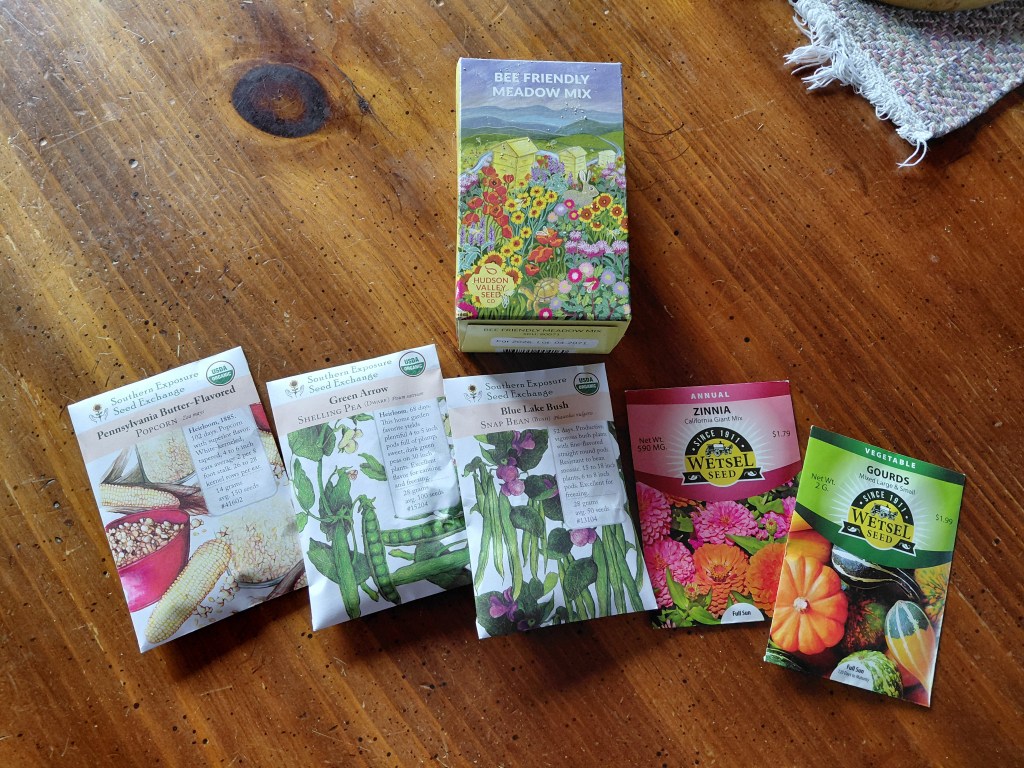
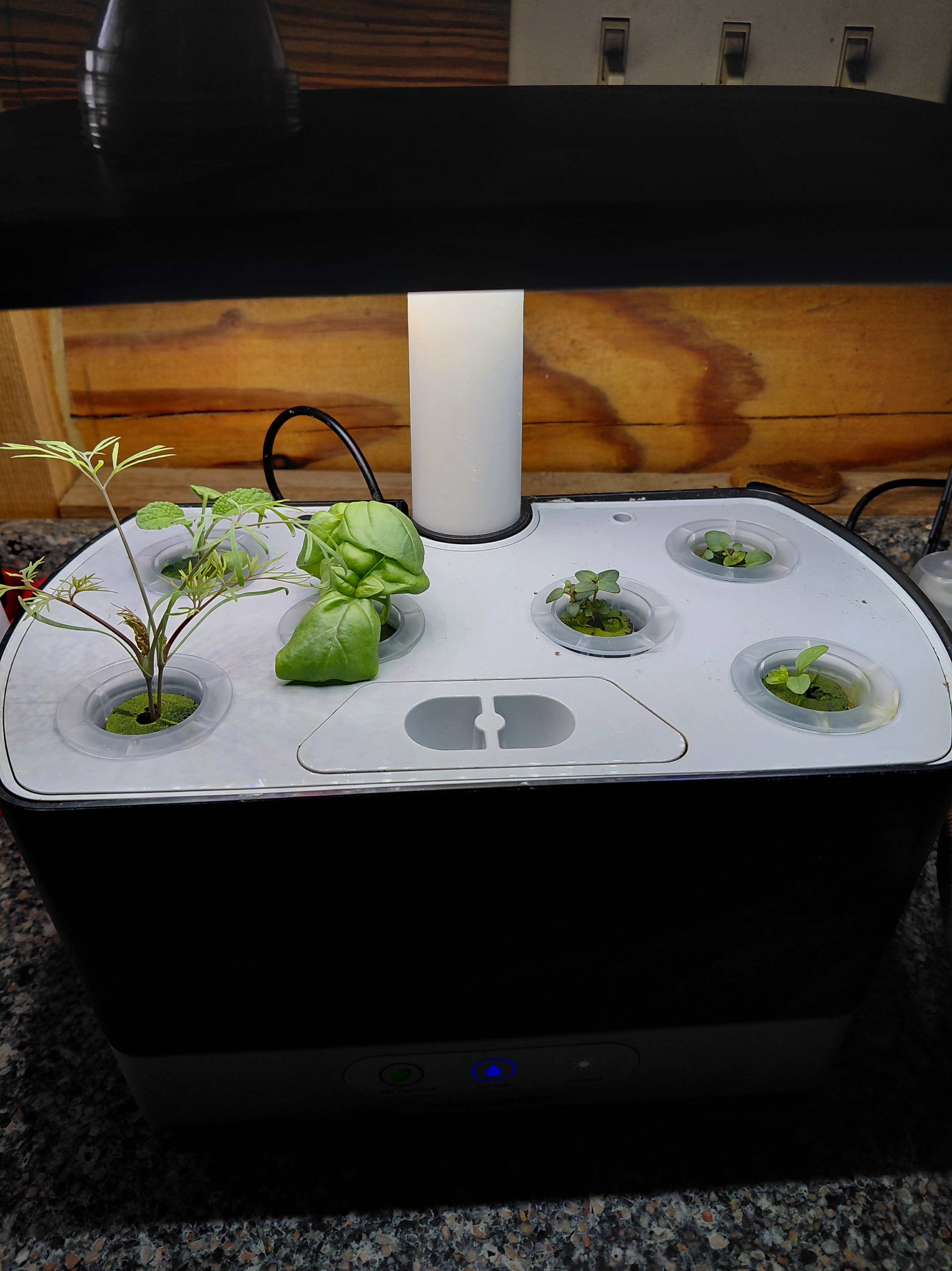
The vegetable, sunflower, and herb seed have sprouted under the grow lights. They will begin to get acclimated to the outdoors in a day or two.
The Amaryllis bud opened with only 2 flowers but is 22″ tall.
After the museum yesterday it was time to mow the lawn for the first time. The riding mower original battery was so dead there wasn’t even a hint of light from the headlights, much less turning over the engine. I edged around the house and pulled out the gas push mower and it wouldn’t start either. Our once a year pushing the heavy riding mower up on to the trailer and trip two towns over to drop it off wit the repair guy was done. Once it is repaired, the grass will be so tall it will be difficult to mow, but that is all I can do for now.
We are looking forward to warm days and mild nights. Tomorrow, grandson will come help me get the rest of the garden ready to plant soon.
If you are a subscriber that gets the blog in your email, it will direct to here. If you have gotten it from Facebook or Ravelry, you now should use Fstafford165.wordpress.com and it is secure. Subscribing will sent it to your email each time I post.
The blog looks a bit different as I have updated to a newer format, but it is still the same blog.
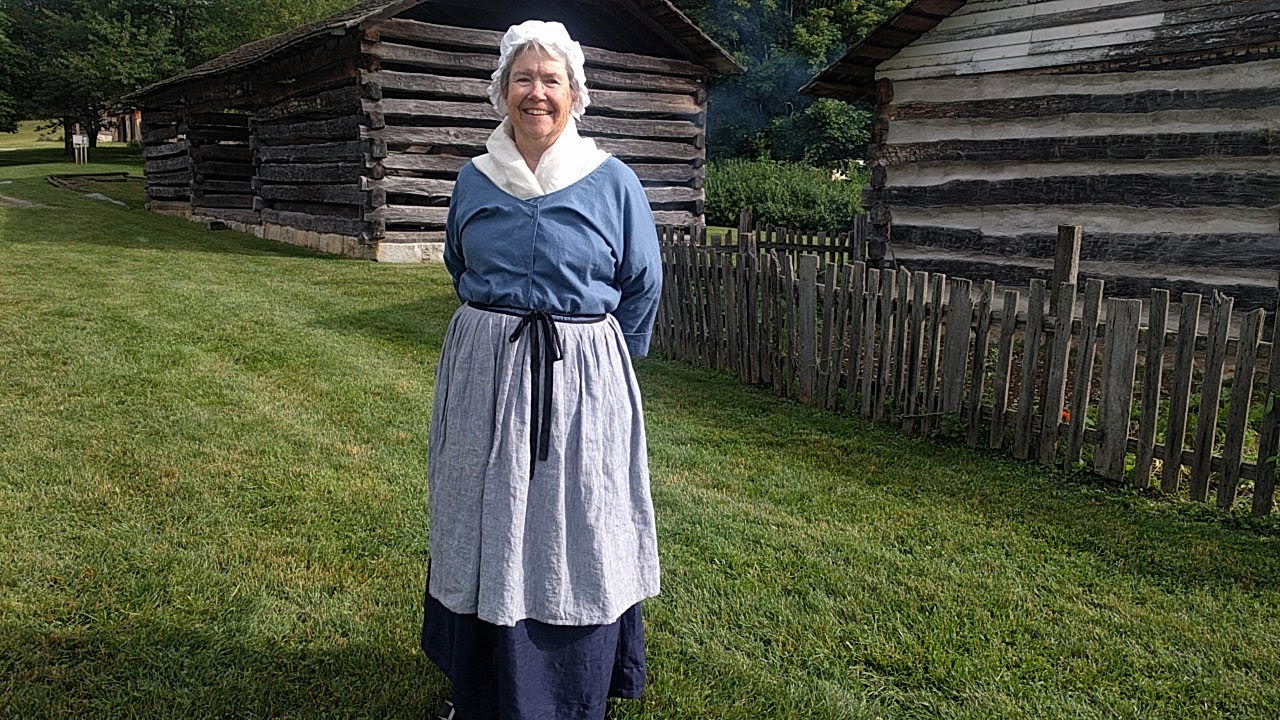
It is that time of the year when I dress up and present to local elementary and middle schoolers what it was like to have to make everything you needed to live on the frontier and to trade and barter with neighbors, provide your extras to the community store for the wagons moving farther west into what is now Kentucky and Ohio. The cabin was originally built in 1769 on Peak Creek and moved to the Wilderness Road in Newbern in 1830. When it was moved, a loft was added, you can see the stairs in the background. The footprint of the cabins in the “planned” community were 10′ X 10′ some with a loft. A fireplace for heat and cooking. The barn loom behind me, similar to the one that was in this cabin for an enslaved woman who was the village weaver. The walking wheel also behind me is one I made functional at the museum and demonstrate it and the drop spindle for making yarn to be used for the fabric needs. Last Wednesday when this photo was taken, it was dreary and chilly, about 47f and the 100 kiddos moving between the 8 stations every 15 minutes had to hustle and pack in tight for some of the stations. They huddled in every porch and building that had space to eat their lunch. I thought I was going to freeze and it took several hours once home to thaw out.
That sent me on a quest to make or find a historically accurate cape because this week’s groups begin on another chilly but dry day. My quest turned up a navy blue wool reenactment cape with hood used, on ebay, for a very good price and quick shipping. It arrived today and I won’t be cold again when the weather does not cooperate.
The cold night last week was hard on the new flower starts I put out, I guess a day too early. Today we bought marigolds and petunias as well as some flower seed that mostly will go in a ground bed once I get it cleaned up from winter and the hardier starts were put in the spots in the pots on the deck that were hit the hardest by the 25f night. Also some zinnia and nasturtium seed were interspersed with the small plants, so hopefully the pots will fill in with color as the spring moves on. There are no near freezing nights for the next 10 days and I will cover the pots with row cover if we get threatened.
The vegetable, herb, and flower seed under the grow lights haven’t sprouted yet, but they aren’t due to go in the ground for at least a month, maybe 6 weeks.
OK, I’m basically liberal in my leanings. I do think that the overabundant use and collection of fossil fuel is ruining the environment between mountain top removal for coal extraction and greenhouse gasses from the burning of it and natural gas as well as the fracking for that gas. The fracking process is poisoning ground water and the waste from it dumping chemical laden water in holding ponds and radium and radon sludge being dumped above ground. Once this coal or gas is extracted, it is transported to a coastal port via train and pipeline primarily to be exported overseas. All the while, the highways are clogged by petroleum guzzling semi trucks hauling goods around the country that could be more economically transported by rail.
If you have followed me for a while, you know that we are in the path of a proposed fracked gas pipeline, 42″ in diameter. Our region is limestone, karst topography, full of caves, sinkholes, 3 fault lines and every resident relies on groundwater from springs or wells for our water supply. Our immediate community is a Historic Preservation region with more than 300 historic and historical sites including two covered bridges, many that are also in the path of this pipeline. There are 3 significant caves on the path within 5 miles of our house, one containing endangered albino bats and all home of bat populations already threatened by the fungal white nose disease. In the meetings we have attended to learn more about this pipeline and to work to organize to oppose it, we have learned that a pipeline of this size, should it leak, causing an explosion, that the blast zone would be 2000 feet. That the industry accepted loss from these pipelines is 1% (probably higher if that is what they are reporting) and that methane would leech into our groundwater.
The company that is already using divide and conquer techniques and threatened lawsuits trying to force this through has a bad reputation for shoddy work and accidents and has many fines and a major lawsuit against it for damages in Kentucky.
To say we don’t want this in our backyard is an understatement, but we don’t want it anywhere, not just in our backyard. The years and dollars spent on this project would be much better spent on clean, alternative energy. Natural gas, especially fracked natural gas is not clean. It produces more greenhouse gas than burning coal. Don’t be deceived by the “Clean Coal” and “Clean Natural Gas” advertisements, it is not clean, do some research. Watch the video Gaslands.
We are fighting this, with peaceful opposition at meetings with the companies, through letter writing campaigns, with voting for politicians who are against these practices. We need help. Yesterday, the Keystone Pipeline was narrowly defeated, but will resurface as soon as the new congress is in office. Also yesterday, it was announced that fracking was going to be allowed in the George Washington National Forest. This is where parts of the Blue Ridge Parkway and the Skyline Drive are located.
To frack or build a pipeline, acres of forest will be destroyed, herbicides will be sprayed to keep the undergrowth controlled, herbicides that will affect the health of the fauna and the human populations near the areas and anyone who receives their water from the groundwater or the watersheds that these areas serve.
What can you do? If you live in any of the counties affected by any fracking or pipelines, join the organized fight against them, attend the meetings, stand up and be heard. If you don’t live near them, but want to continue to enjoy our natural resources, write your politicians and be heard. It is going to take a national community to stop this desecration of our country by these practices and to stop our natural resources from being shipped overseas. For the funds being spent on these projects to go toward true clean energy that doesn’t destroy the environment.
If you are local, we need an auditorium full of people at Giles County High School, November 20, 2014 at 6:30 p.m. to peacefully show opposition by our numbers and our signs. Questions of the pipeline companies will be allowed by filling out a 3 X 5″ card with your question.
Please help. This is our dream retirement home, built with our lifesavings and we don’t want to see it despoiled or destroyed, nor do we want any environment poisoned or destroyed.
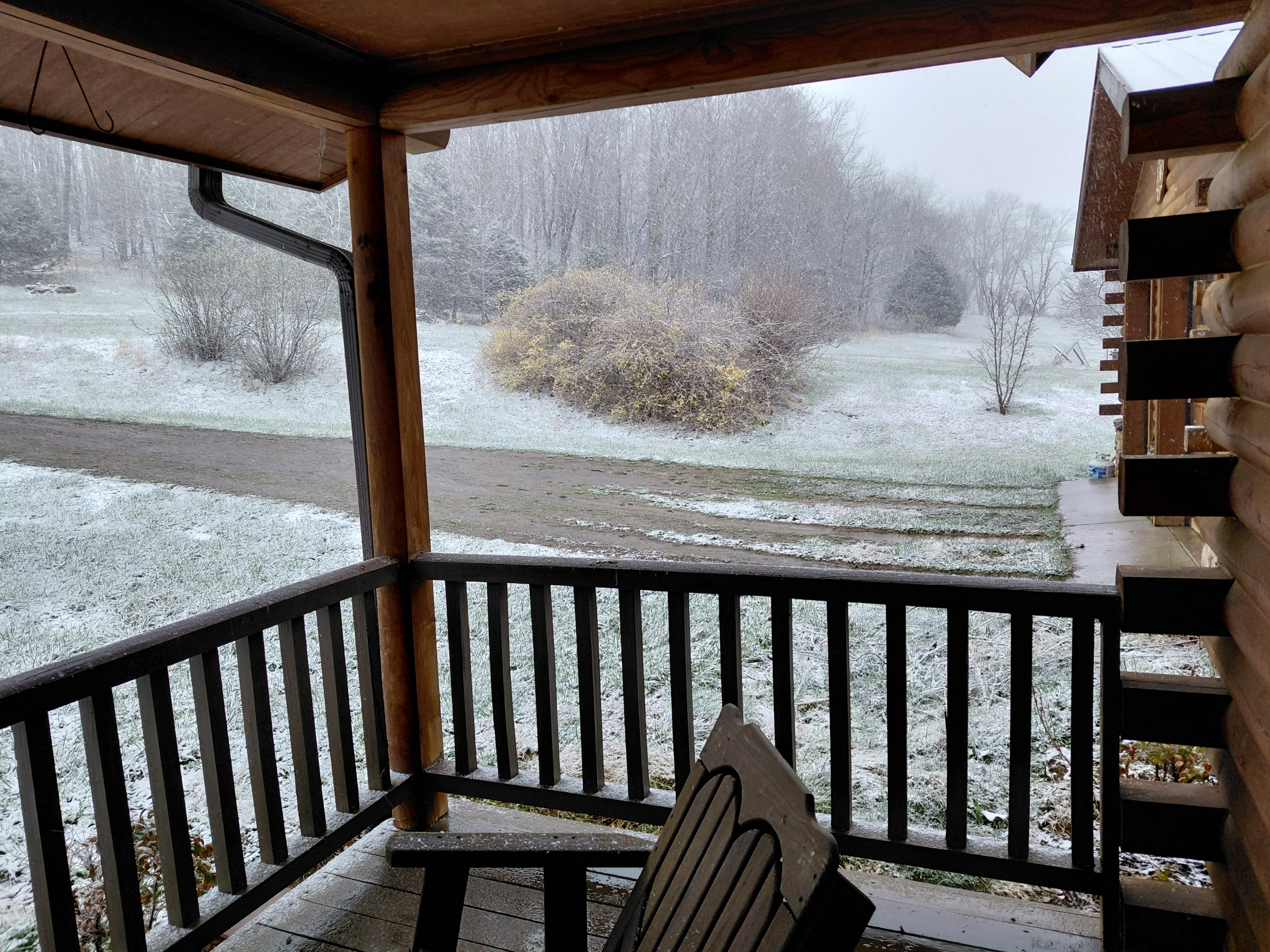
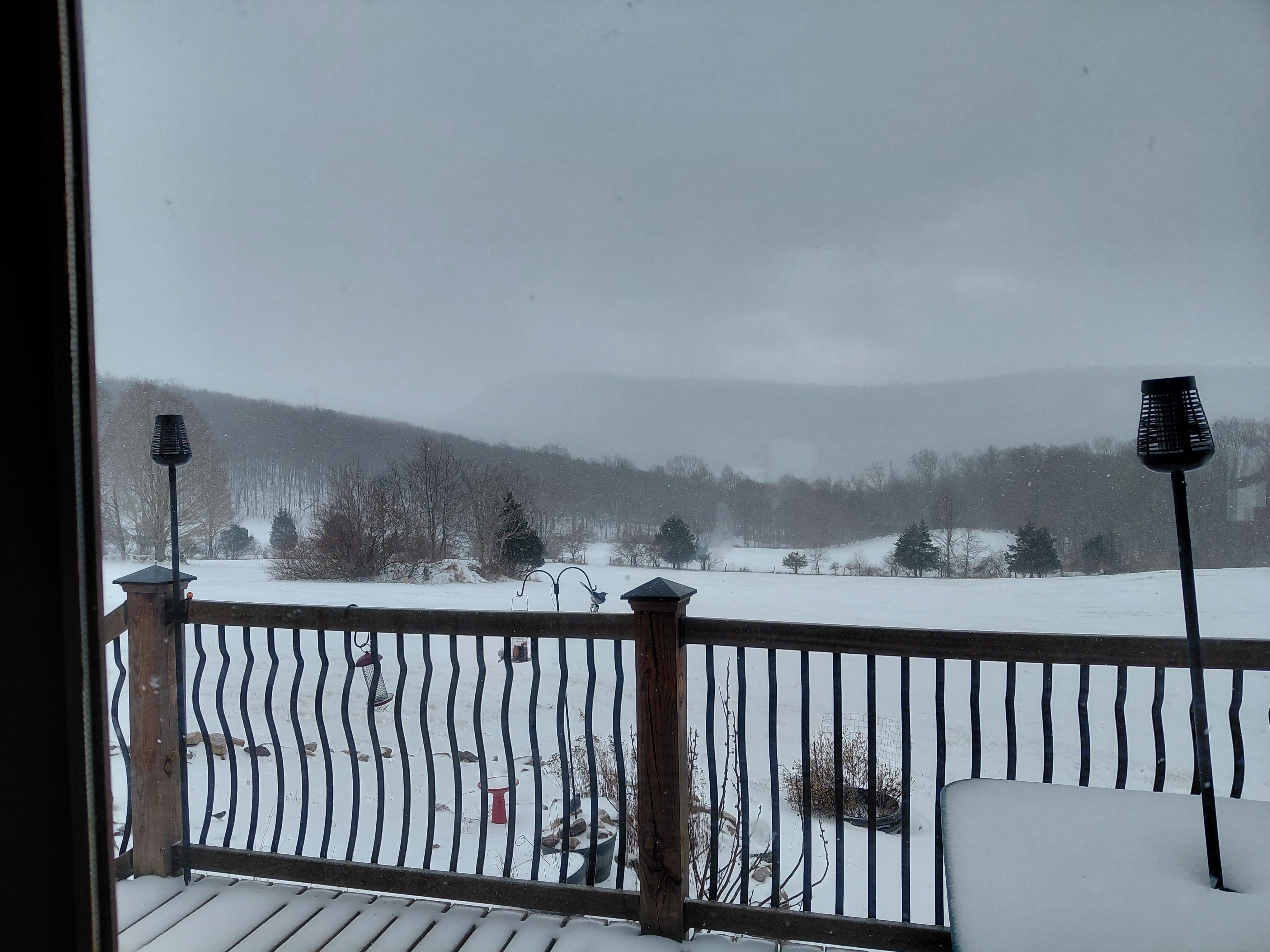
This is the scene this morning. The ridge a mile away is hidden by the snowfall. The snow is not heavy, just steady and expected until sundown, so we may see our first seasonal snowfall. It is later than usual, but we are approaching the 8 weeks when we are most likely to get snow cover. We are in the Allegheny mountains in southwest Virginia at an elevation of only about 2300 ft (700+ m) on the south flank of the ridge. The ridge north of us rises to about 4400 ft (1341 m) so that it shelters us from most heavy storms. The snow is welcome for the garden moisture it provides, the seasonal beauty and to indulge my inner child who will bundle up and walk or play in it after morning chores are done.
The dogs hit the deck this morning and delightedly took off, leaping; well the German Shepherd leaps, the English Mastiff lopes, and chasing each other around and rooting around like hogs with their noses in the snow. Often when it snows, one of them will come up with a mole or vole with which they play, tossing it around until they tire of the game.
The chickens were less delighted. I filled their water pan with tepid water and hung their feeder beneath the coop to keep it dry and opened the pop door for morning greetings. The first one to poke her head out stopped short as soon as her foot hit the snowy ramp, gave me an accusatory glare and ducked back inside. All of them were milling around in the coop making agitated sounds, but no one came out. It isn’t very cold yet, only 32°f (0°c), the cold is expected again tonight dropping to low single digits and remaining well below freezing for the next week or so. I may have to make a concession and at least put their food inside the coop. We have snow predicted again in a few days.
The woods are looking like a wonderland and with the snow cover, you can see well into the woods and see the foraging deer and turkeys. I love the mountains and the snow. Life is good on our mountain farm.