Blog

  • Rippit, Rippit, Rippit

    No, we don’t have a frog in the house.  Rippit is a sound that knitters don’t like.  There are times when a project just isn’t right.  If it is a little error not to far back, you can Tink (Knit backwards) and correct your error.  Sometimes you find a big error too far back and have to just rip it out.

    wpid-img_20141009_212928.jpg

    The sweater that I have been making for myself to go with the lovely Hitchhiker scarf at the top of the photo had progressed to sleeves by early this week.  By Wednesday night, half of one sleeve was complete and I tried the sweater on to check the sleeve length.  What I found was a sweater a bit too large in the body with huge sleeves.  I had followed the pattern and was very frustrated that the sleeves were so large.  The Knit Night crew suggested not adding the stitches under the sleeve, but the pattern wouldn’t let you just knit around, so I picked up the stitches and did significant decreases in the first couple of rows in the underarm area.  Once I had one sleeve long enough to try again, it was better, but I just didn’t like the size of the whole sweater.

    This was on the heels of having just given away a sweater I made last spring that was too small through the back and shoulders.  Rather than spend more hours finishing this sweater that I knew I would not ever enjoy, tonight’s decision was to Rippit.  About half of the sweater is now rolled back into balls.  The rest sitting in my lap awaiting the same fate.  Rather than try this pattern again in a smaller size, I have found a different pattern.  The new pattern will use much less yardage, but that is okay.  I have two granddaughters who might like sweaters for Christmas, so I will just continue to Rippit. . .and then enjoy the process of knitting sweaters that will be worn.

  • Garden’s Swan Song

    We are past our “Frost Date” and have had mild nights except a couple of weeks ago.  The garden survived those two nights with row cover fabric draped over the peppers and tomatillos.  We are expecting two nights in the 30’s tonight and tomorrow night and nothing is going to be done to protect what is left.  If the plants survive, great, we might get a few more tomatillos and peppers, the greens will be fine for a while.  If they freeze, it has been a good year.

    IMG_0299[1]

    To prepare, a harvest of 5 types of peppers, a basket of tomatillos, a handful of bush beans and two golfball sized turnips were brought in.  The Jalapeños were pickled into two more pints for winter.  The bell peppers sliced and frozen except for a few to stuff tomorrow.  The Anchos have been put in the window sill hoping they will turn red and can then be dried for Enchilada sauce.  The tomatillos and habeneros will be cooked down with onion and garlic for more of Son #1’s favorite XXX sauce.

    With the garden waning, the chickens get to visit, eating bugs, weed seed and scratching around leaving chicken fertilizer.  When they aren’t in the garden, they wander around the orchard, the yards and out into the fields, but not too far from the house.

    IMG_0296[1] IMG_0297[1]


    They are healthy, producing plenty of eggs each day and live a good life.

    On Saturdays, we generally go to town, have breakfast at the local diner then shop the Farmers’ Market.  We came home with some beef and pork for the freezer, a peck of eating apples and some carrots and onions.

    Between our garden goodness and the Farmers’ Market take, we will eat well.

    Lovin’ life on our mountain farm.


  • SAY NO TO THE PIPELINE

    Last night Mountaingdad and I attended the county Board of Supervisors meeting in opposition to the proposed “natural” gas pipeline.  We were heartened that the gallery was full to overflowing with residents of our county, the adjacent county, and the county that successfully blocked it.  There were more than 100 people in attendance and 16 spoke, including Mountaingdad.  Though this wasn’t a hearing on the topic, I feel the Board was given some good information, not just the sales propaganda from the Mountain Valley Pipeline people.  We were also heartened to learn that we don’t have to try to start the resistance moving in our community, that there is already a group made up of folks from 4 counties and we just need to jump on the band wagon.

    The statistics and data that we heard are frightening, regarding the dangers of even a smaller 30-32″ pipeline and they are talking about an experimental 42″ pipeline.  The map showing the proposed route and the question and answer sheet that was provided from the presentation they made to the county representative several days ago, shows that they are not going to directly use the power line easement, but rather take land near it by eminent domain and depending on which side of the easement they choose, they could be on our land or very near our farm and perhaps will take our land for the road access as they come in to destroy a 125 foot wide swathe of forest and dig a 10′ deep trench through the rock and karst topography and along a fault line of our county.  Needless to say we are alarmed.  Construction blasting and digging or a pipeline accident with a pipeline of that size could wipe out from our home past the only major road through the county, virtually isolating some of the county residents.  This in a large mostly rural county with only 4 small volunteer fire and rescue companies.  The route crosses the New River and two major creeks feeding the New River numerous time, threatening over 250 historical sites including 2 of the 3 covered bridges.  The estimated property impact is in the billions of dollars.  This is for a pipeline to carry gas recovered through fracking (a groundwater destroyer) and they won’t guarantee that the gas won’t be shipped overseas instead of for domestic use.  The estimated lifetime of this pipeline is only 20  years.

    OLYMPUS DIGITAL CAMERA
    The Cascades
    OLYMPUS DIGITAL CAMERA
    Bridge built in 1912 and designated as a Historical Landmark.
    OLYMPUS DIGITAL CAMERA
    Built in 1916, designated as a Historical landmark.
    OLYMPUS DIGITAL CAMERA
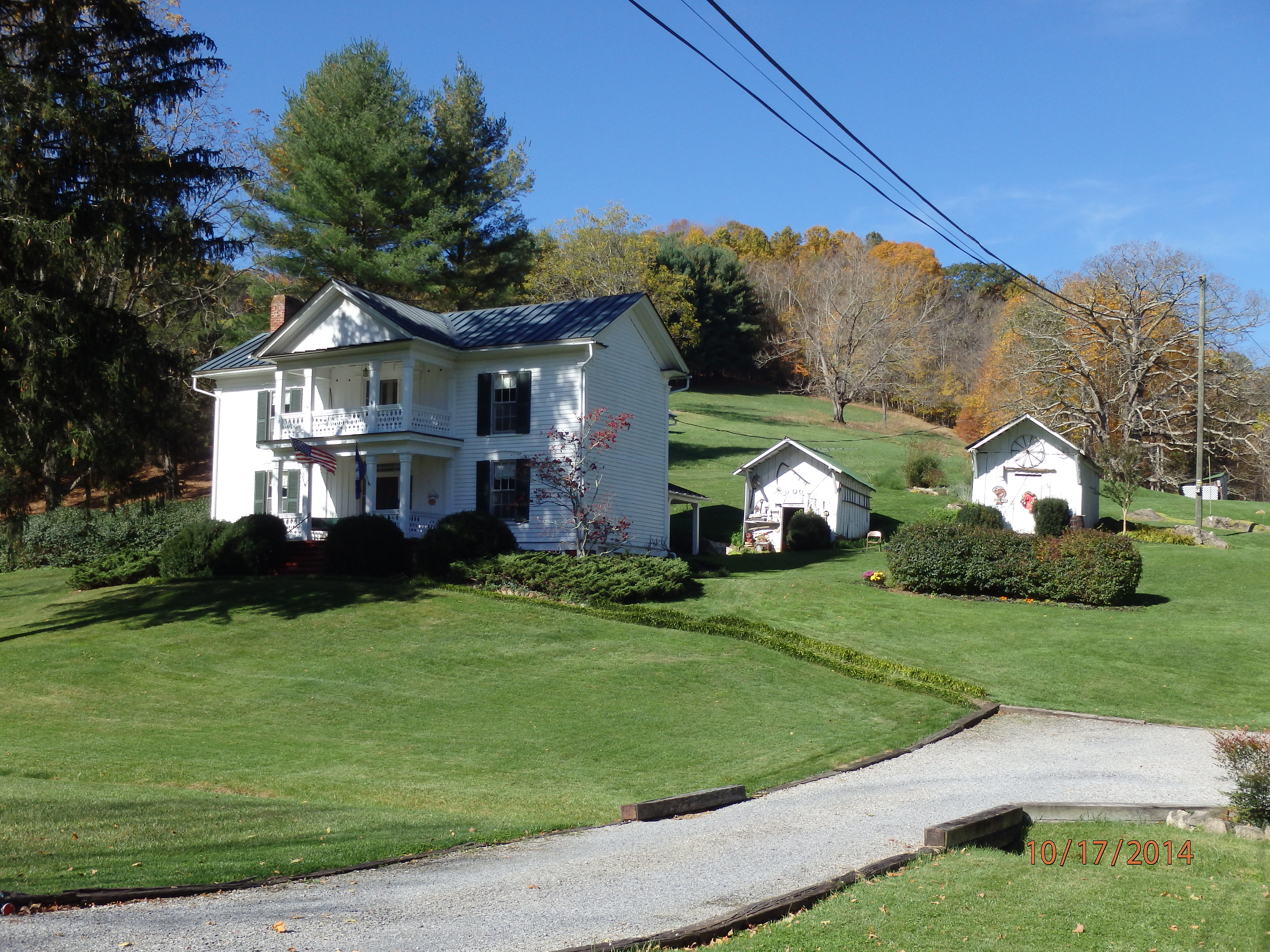
    Historical farmhouse
    OLYMPUS DIGITAL CAMERA
    Historical farmhouse

    The two bridges and the two houses are all within the probably easement as are many other historical sites.

    There have been over 360 incidents resulting in at least $40,000 damage to property per incident (the figure that is put on declaring it an incident) in the US alone including one that killed 8 people and destroyed an entire neighborhood in California just within the past few years from fracking or the transmission of the gas recovered by this process.

    This pipeline won’t even be giving jobs to our region as the installation of such a pipeline requires specially trained workers that are brought in with their own temporary housing during the construction.

    Our county has been striving to present itself as a recreation, vacation and wilderness area with over 45 miles of the New River for kayaking, canoeing, tubing and fishing; the wonderous Cascade Waterfalls, Mountain Lake and Lodge, and more than 50 miles of the Appalachian Trail including one of the trail towns.  The forest destruction will definitely impact the desirability of this area as a vacation spot or wilderness retreat.

    If you are one of my local readers, please join the cause against this pipeline and share this information with friends and neighbors.  We need all of the support that we can get.  More info is available at Preserve the NRV on Facebook.

  • Issues and finishes

    About a week ago, we learned that a proposed natural gas pipeline route had been relocated to cross our county.  As best we can tell, just below our property following the easement that the power company has for heavy load transmission lines, does that make sense, to run a gas line under electrical lines?  This gas will be coming from fracking in West Virginia and transported across our county and several adjacent counties to one south and east of us.  This is clearly not something that we support and hope that at tonight’s Board of Supervisors’ meeting, there will be strong and vocal opposition.  In addition to the 40+” buried pipeline, there will be several pumping stations, the locations of which have not been decided or at least not revealed.  One of the counties that was on the original route were so adamantly opposed and raised valid enough opposition that the route was reconsidered.  The two counties that it is slated to pass through after our county have mounted opposition groups.

    On my trip home on Tuesday, I passed through a county that is on a different proposed pipeline route and every property has opposition signs along the roadway and about 1/3 of the properties were for sale before property values plummet if the pipeline goes through their county.

    We fear for our property value, but also for our groundwater and physical safety if the line does indeed go beneath the electrical lines.  Our county sits on limestone and is riddled with caves and sinkholes.  It is subject to rare, but recorded earthquakes.  If there were a breach in the pipeline due to a sinkhole or other disaster, it could ruin the groundwater on which this county relies as most residents get their water from springs or wells.

    To add to this threat, we experienced another torrential rain two nights ago that made our state maintained gravel road look like it had been clawed out by a giant cat with gullies up to a foot deep traversing across it back and forth.  Mountaingdad has spoken with a VDOT representative on the road about the issue that the road swale tips in one direction then the other with no rain bars or culverts to direct the flow.  It tips toward our driveway about 20 feet up the hill and our culvert fills with gravel and mud from the road several times a year.  We have hand dug it out, had VDOT dig it out and now we are getting gravel building up on the downhill side of the culvert in our yard.  VDOT says they can’t do anything but regrade it with the same swale and won’t seem to consider adding culverts to direct the flow.  This is another battle we will have to again fight.

    I did finish the never ending Socks On A Plane today.  They have been on the needles for at least a year.

    IMG_0294[1]IMG_0295[2]

    They have a lovely little cable down the outside edge of each foot that the yarn totally swallowed.  And to add insult to injury, they are too small for my foot, so I am going to have to find a new owner for them whose foot is smaller than an 8.

    Last night at Knit Night, I ripped out the entire sleeve on the sweater I have been knitting as the armhole was so ginormous that I could put 4 of my upper arms in each one.  I have started them again following a decrease patter that has brought the sleeve size down to one that is still large, but might actually fit inside my winter coats. My sweater knitting has not been very good for the last year.  One I made for me was too small and found a new owner in a knitter friend.  This one is too large, but I don’t want to rip it all out, so if I can make the sleeves work, I will just wear it.

  • Return

    Sunday eve found Son#1, Grandson#1, and me motoring back to Northern Virginia.  The original plan had been to work on the scaffolding and sharpen knives on Saturday, deal with the meat chickens on Sunday, and have some hiking or other recreation on Monday, Columbus Day, and then I was going to take them home.  Friday as Son#1 was preparing to leave work for home and then the bus trip here, he realized that he wasn’t off on Monday, but Grandson#1 didn’t have school.  Plans changed, we accomplished the Saturday and Sunday plan and took off on Sunday eve for their house.  I spent two nights there to provide care for Grandson#1.  Leaving for home early this morning and encountering much semi traffic and intermittent rain, I decided to take a non interstate route home, at least most of the way.

    The route was a beautiful drive, though it took about 90 minutes longer and I drove through a few very severe storms.  The route took me through a good portion of the poultry raising parts of Shenandoah.  This is why I humanely raise and kill my own chickens and buy our turkey from a local free range farmer.

    IMG_0289[1]
    This is one of hundreds of poultry “houses” along the route. The sign that I tried to capture said, “Absolute no trespassing, no visitors.”

    This is what the inside of a “free range” building looks like. Photo from the internet, source unknown.

    IMG_0288[1]
    A poultry processing factory, it covered about 2 blocks. The entire town smelled like death and stench.
    IMG_0287[1]
    One of half a dozen trucks I passed going to the factory, each with 120 of these cages so low the turkeys can’t stand in them and each cage holding about a dozen turkeys.
    The birds beaks were clipped so they couldn’t harm each other.  This is grocery store poultry.

    On a more pleasant note, though the rain was intense at times, part of the route paralleled the Maury River.

    IMG_0290[1]

    The leaves were beautiful, the river sometimes well below the road like the picture above and at other times it was only feet from the edge of the road.  It was a certainly a prettier trip than the interstate, but the trip expanded to 6 hours instead of the usual 4 1/2.  Was it worth avoiding the semis?  I guess it was, but I’m glad to be home again.


  • Changes

    My childhood was spent in a semi rural area that is now suburbs of Virginia Beach. I was typical of a child of that era that was not raised on a farm. Produce came in cans or fresh during farmers market season, meat was wrapped in butcher paper or plastic from the meat case at the grocery. There was no thought as to how it was raised, where it came from, or how it got to the grocery.
    At some point, my Dad and I did start a small garden, but not too successfully at first.
    After I finished college and was out on my own, I began to become more aware of what was in our food, concern about packaging waste and harm and the treatment of animals for food. I bulk shopped for beans, rice, and grains from a local food coop, using my own jars and canvas bags. I quit eating meat, but living in the city at this point, still bought eggs from commercial markets.
    My husband was raised in a city with a similar food upbringing, but he is an ardent meat and starch man. I reintroduced meat into my diet because I didn’t want to prepare two different meals and because we started a family and I didn’t feel well versed enough on nutrition balance to think I could raise children without animal protein, though we ate smaller portions often added to stews, goulash, pasta sauce with beans or vegetables making up the main part of the meal.
    As a working Mom, convenience food sometimes slipped in our diet but was usually short lived as I returned to preparing food from scratch, generally baking our bread as well.
    Never in my wildest dreams could I see myself where I am now. As we approached retirement, we discussed having a mountain home on 5 to10 acres. Mostly woods with space for a garden. We found ourselves instead on a 30 acre farm with a pole barn and no house. The house was built, the large garden started by Son #1 and family during their part in construction continued to be used and providing a good portion of our produce. I read Barbara Kingsolver’s book Animal, Vegetable, Miracle and became even more committed to eating locally, eliminating more and more items that are processed or trucked in to the grocer. My concern about the treatment of animals raised for meat, milk, and eggs drove me to buy only meat from local farmers, humanely raised on grass not grain, eggs from local farmers that often free range their hens, and milk products from a local dairy. As I was paying $4 a dozen for eggs and $20-25 for a humanely raised chicken and having 30 acres of land of mostly pasture being mowed for hay for other local farmers, I ventured into raising a few chickens. Like most new chicken raisers, I bought what was cute or laid pretty eggs. The flock has evolved to a dozen heritage Buff Orpington hens and a rooster with the goal of the flock becoming self sustaining. Son#1 asked if I would raise some meat chickens, that he would “do the deed,” though I was a Biology major/teacher before becoming a school counselor, I didn’t think I wanted to participate in this process. Then I watched him process a deer, helped package it for freezing and decided that I could become involved. The first meat chicks were all of the cockrells and hens that weren’t fulfilling their end of the deal. The first batch we did, I spent most of my time in the kitchen doing finish plucking, packaging, and freezing. The entire process revolted me and I couldn’t eat any of them.  In fact, I returned to eating much less meat, eating only the sides and salads that I was preparing for our meals, but enjoying our eggs and local cheeses. The next batch, I could more fully participate in the process. Now I could do most of the steps in taking a bird from the coop to the table but I might make as mess of the inside cleaning as I haven’t done one. I know where these chickens were raised, what supplemental feed they are fed. I know how much coop space they have and how it is kept. I know how much free range, true free range time they get, and I know they are raised well and humanely killed. I still don’t eat much meat, but when I do, I feel better about where and how it was raised and treated. If and when Son#1 returns to our area to live, we will raise our own pigs and cows too. And they will be treated kindly during their lives as well.

    image

    image

    image

  • A weekend’s work

    IMG_0280.JPG
    Scaffolding to the sky, deconstructed and stored away til spring.

    IMG_0281.JPG

    IMG_0284.JPG
    Vivid colors of fall. More each day.

    IMG_0282.JPG
    Sauerkraut doubled because it was too salty.

    IMG_0285.JPG
    Fifteen Rainbow Rangers put in freezer camp.

  • Knit, Spin, Stain, Cook

    With two days of beautiful weather, I finished all of the staining that I can reach and with the cooler, wetter weather coming, it may be all that gets done this fall.  We will have to finish it this spring.  I made up a gallon of the stain mix this morning and the area that was to be done didn’t require that much, so the excess was used to get about 2/3 of the coop “redecorated.”  The girls were on a walk-a-bout on the farm, being supervised by Romeo, so it was a good time to get it done.  We have a few days of rain due, so the last bit can’t be done for a few days.  The year and a half it has been in use, it has gotten very dry and faded.  The egg hatch, pop door and side drop window are all made of the same plywood siding as the coop and their exposed edges are really showing wear from the weather.  I guess at some point, those three features will have to be replaced with a more weather resistant material.

    Coming in, stain covered and worn out, after a thorough clean up, I turned my waning energy to less strenuous tasks.  I’m working on one of the sleeves of my sweater, the one that is being knit to go with the Hitchhiker scarf made during the summer.

    image

    And an Ouroboros Moebius scarf, a design by a friend Mergaret Radcliff, published in the December 2013, Knit n’ Style magazine.  The scarf will be for Son #1 as part of his Christmas gift.
    image

    Both projects are pretty mindless knitting at this point.
    I’ve looked at “Hot Mess” for enough days that I think the measly 106 yards of tight overspun very fine yarn is going to become a knitted cover for a small sturdy plastic cup to hang from my spinning wheel to hold the machine oil, orifice hook and notions I need when spinning.
    image
    Tonight we enjoyed a “gourmet” meal utilizing some of the goodies from this year’s garden. The basic baked pork chops were topped with chutney that I canned, the Roasted veggies a blend of our yellow and white sweet potatoes, garlic, and rosemary added to farmers’ market potato’s, carrots and onions. A farmers’ market salad mix topped with beets, our radish kimchi and goat cheese.
    Lovin’ life on our mountain farm.

  • Olio, October 6, 2014

    Olio: A miscellaneous collection of things.

    The garden survived a 31ºf night and a 37ºf night through the aid of some row cover over the peppers and tomatillos.  The beans that haven’t been eaten by the deer that have breeched the electric fence also survived.  The pumpkins/winter squash patch is finally beginning to die back and there are dozens of the Burgess Buttercup squash beginning to show through.  So far I don’t see a single Seminole Pumpkin which is disappointing.  Today I waded through the thigh high patch, pulled back the squash vines and tried to dig the sweet potatoes.

    IMG_0270[1]

    I’m sure there are more there, but the vines will have to die back more before I try again.  Now that they are harvested, they require a few days of curing at 80ºf.  I don’t know how that will happen with the daytime temperatures at least 15 degrees lower than that and we haven’t turned the heat on in the house so it is 20 degrees cooler.  I put them out on a rack in the sun this morning, but then the rains started, so they are in the utility room until we see sunshine again.

    In July when visited our daughter’s family in Florida, our granddaughter came out in the cutest sun dress.

    IMG_0093[1]

    She and her mom love it because she can dress herself in it and it has no fasteners.  Over confident Mountaingmom announced, “That would be so easy to make.”  The bodice was traced on printer paper, the tiers measured approximately and brought home to the farm.  Later two packets of fat quarters were purchased and I stalled.  Before the Spinning retreat, I decided to begin them.  First off, I failed to cut the front on a fold, I do know better.  Second error was attempting to use three strands of narrow elastic to gather the back, I ended up buying wide underwear elastic later.  Third error was in the measurements I had made of the ruffles which I realized before cutting.  Daughter remeasured everything for me and a few days ago, I got serious about finishing the first dress.

    IMG_0272[1]

    Yesterday after finishing it, I decided that dress #2 was going to be made with a pattern and I purchased a simple A-line toddler dress pattern from McCall.  As I still wanted to use the fat quarter that I bought for the second dress, The solution was to cut wide strips, sew them end to end, then side to side to create a large striped panel that was used to cut the pattern.  I had some unbleached muslin that I used as facing as the pattern called for binding the edges with bias tape and I didn’t want to do that. Dress #2 was much easier to assemble.

    IMG_0271[1]

    As granddaughter lives in Florida, she will be able to wear them all year with a long sleeve T-shirt under them, so 3 T’s were bought to add to the package.  Also in the package is a giraffe.  Yes, a giraffe.  Two Christmases ago, we bought her a little barn that has various activity parts to it and a collection of farm animals to put inside.  Their dog got a couple of the animals and chewed them up, some of which were replaced, she selected a moose for her farm.  Near their home is a farm that has a giraffe.  We don’t know why or how they obtained it, but it is a source of amusement as we drive by, so her barn will now also have a giraffe.

    The Hot Mess yarn that I spun at the retreat, was soaked and hung with a weight on it.  The treatment helped relax the over twist some, so now I have a 106 yard skein of smooth, but tight yarn.

    IMG_0274[1]

    I have no idea what to do with it.  It is too little for anything other than trim on something.  There isn’t even enough to make a market bag.

    The yarn on the bobbin is the random color Merino that I purchased at the retreat.  The color isn’t showing up very well with no sun out and only house lighting to photograph it in, but it is basically lilac color with gold and maroon highlight.  I haven’t finished plying it yet to measure, but it looks like it will be a couple hundred yards of fingering weight yarn.

    IMG_0273[1]

    Lovin’ life on our mountain farm.


  • Plan for the worst, hope for the best.

    As the canning season is nearly over, may be over if it really went down to 30ºf last night as predicted, I haven’t checked yet.  Yesterday was a day to harvest everything that was ready, do a small canning as I wanted to try two of Marisa McClellan’s recipes for canning small quantities.

    Before we had freezers, refrigerators, and pressure canners, food was preserved by smoking, salting or fermenting.  The Germans preserved cabbage, the Koreans made Kimchi both using salt and the anaerobic process known as Lacto-fermentation.  These products are available, but the raw, unpasteurized products made at home are so much tastier and have more health benefits.

    IMG_0266[1]
    Fermentation on the counter.
    A basket of tomatillos, assorted peppers, bush beans, too many radishes and lots of greens were brought in, a 2 pint batch of Chunky Tomatillo Salsa made.  Quite uncharacteristic for me, I purchased a quart of out of season Strawberries as one of her books has a recipe for strawberry jam made with honey and Thyme that I wanted to try and I made a small batch of that as well.  I rarely grow radishes as they all are ready at the same time and you go from famine to feast.  I took the surplus and made a quart jar of radish Kimchi then shredded cabbage to start a half gallon of Sauerkraut.  The Cider started as vinegar a few days ago is beginning to smell, well like vinegar.  Maybe another half gallon of Sauerkraut will be made later.  Pickles and sauerkraut used to be made in quantity in large crocks or barrels in the farmhouse basements, the farm cook going down and drawing off what was needed for a meal and the crock re-covered until needed again, lasting until spring vegetables were growing.  We usually go through about a gallon each year. The eveningwas finished blanching and freezing the beans and hoping the plants survive the night to give us a few more meals before the real frosts and freezes of autumn arrive.

    The tarp on the meat chicken pen was anchored more securely, the peppers and tomatillos covered with light tarps and row cover.

    IMG_0268[1]

    A photo of the pumpkin patch was made to document the wild growth they did in the rich soil of the compost bins.

    IMG_0267[1]

    I’m afraid to venture down to check the thermometer for the low or to peek out to see what survived the night.  I am hopeful that we are high enough to avoid the frost pockets that should have formed last night.

    Lovin’ life on our mountain farm.