Category: history

  • Return to normal

    Spring typical weather returns tonight for a few days of 50’s during the day and upper 30’s/low 40’s at night before the warmer weather returns midweek. By Friday when again, many layers of Colonial style clothes will be donned to greet more school kiddos at the museum, it will be back up in the 80’s. For the next few days, the two hanging plants that were put on the porch will hang in the utility room to prevent the cold burning the leaves.

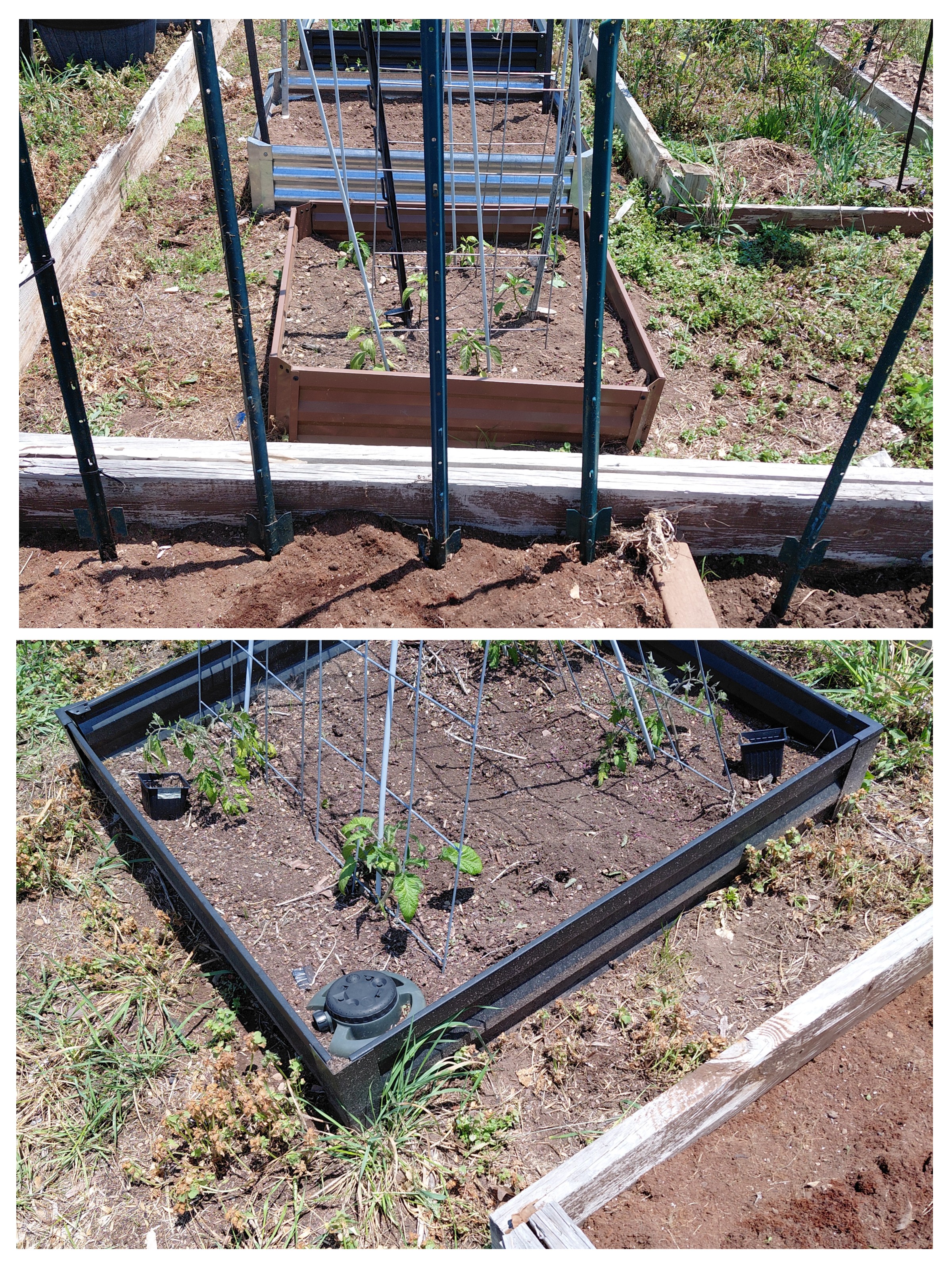
    Today being Saturday, we supported the local Farmer’s Market, coming home with some pasture raised, grass finished meats; some veggies; and 4 tomato plants that will live in a plastic bin by the back door in the sunshine, on the porch on warmer days, and inside at night, until it is safe to add them to the garden. I still need to get or start some peppers.

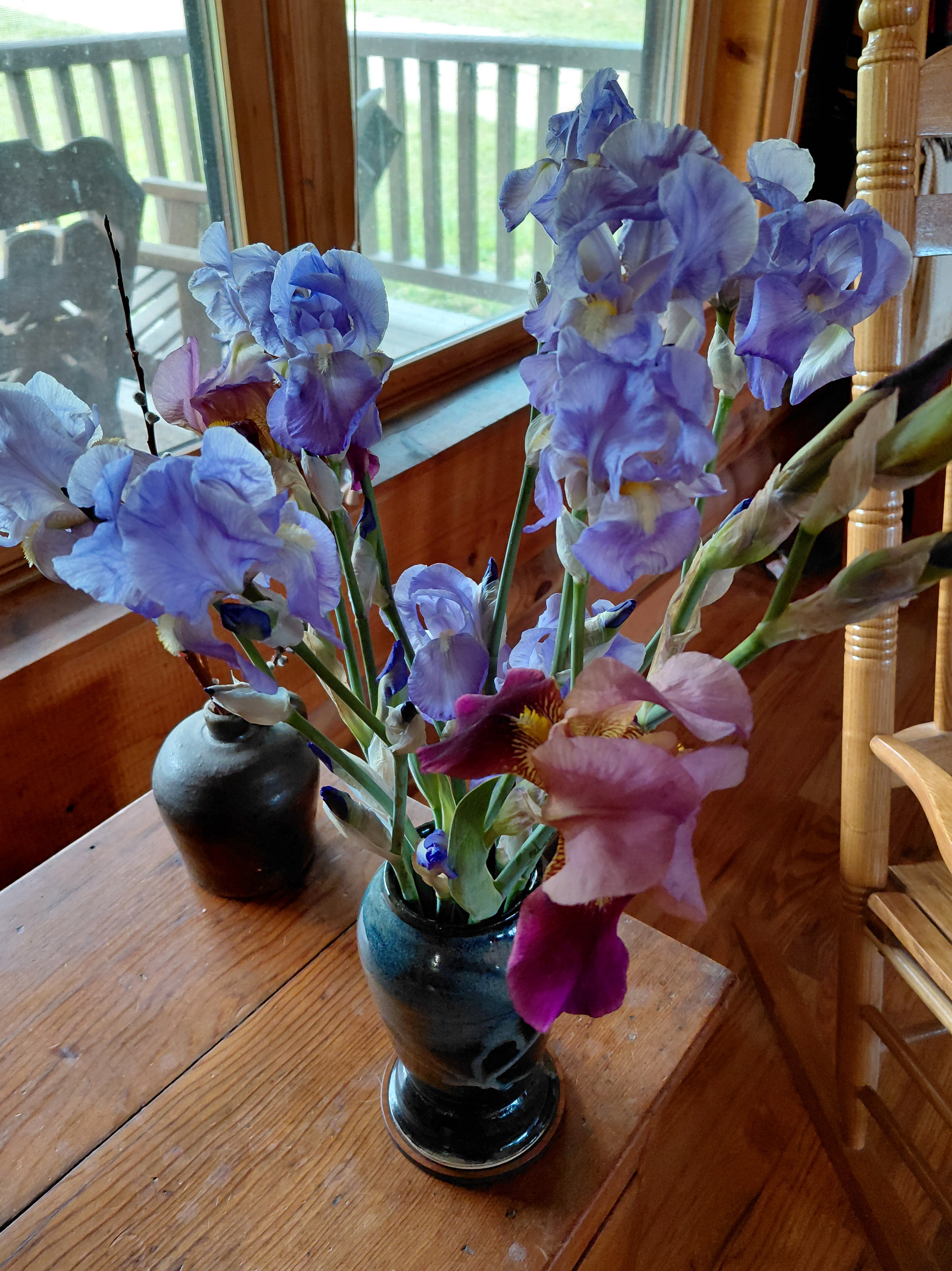
    The bearded Iris are glorious right now, at least the purple ones. Two vases cut and brought in the house and dozens more blooms in the garden beds. The Amaryllis that was gifted me in bloom several Christmases ago has bloomed later each year. It is just about to have this year’s blooms open. When it is done blooming and the weather stabilizes, it will move outdoors for the summer.

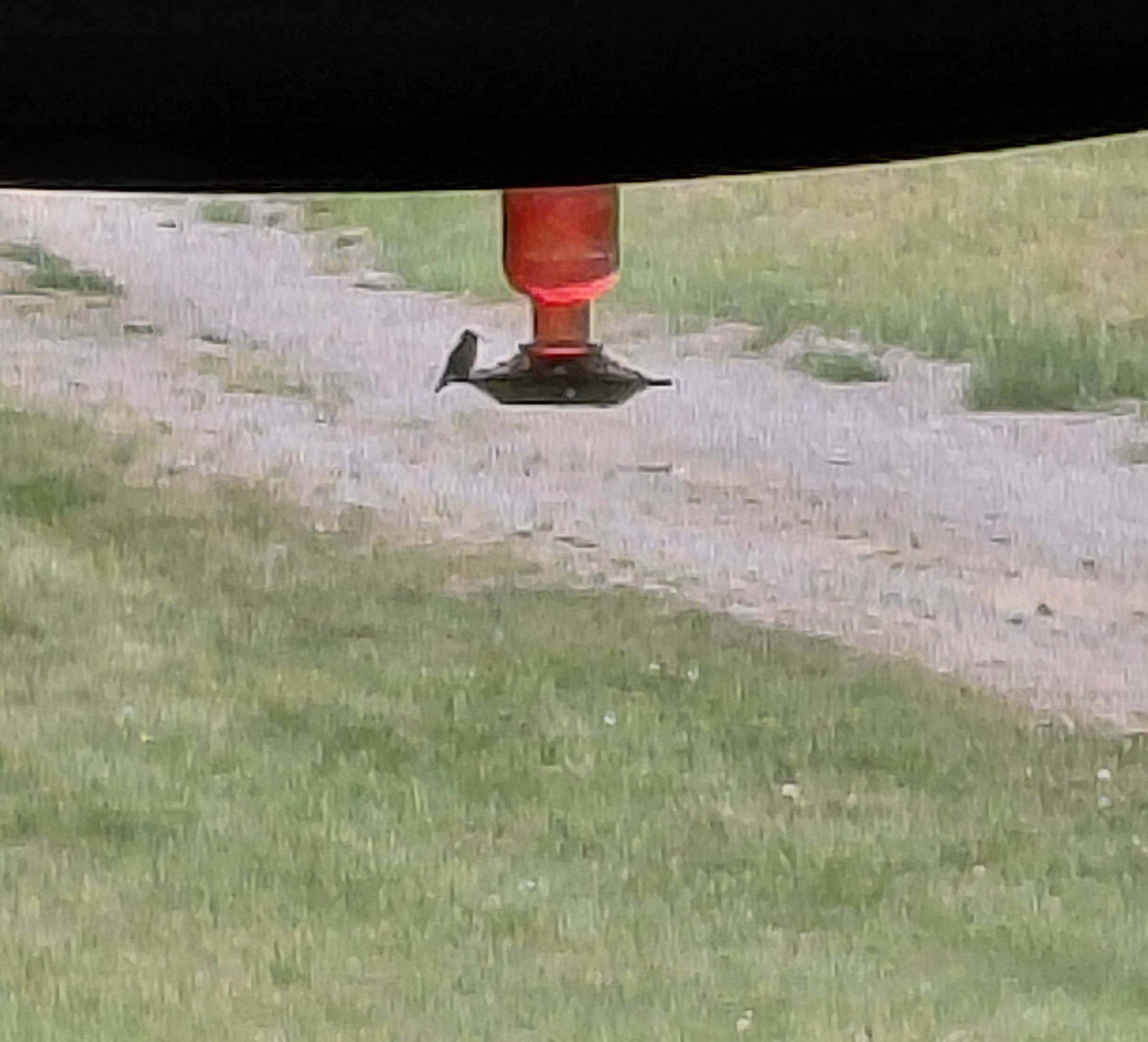
    And today, finally a Ruby throated Hummingbird visited the feeder that was hung about 10 days ago. It has been dumped and refilled once to keep the sugar syrup fresh. Soon they will be fighting for it as more appear and a second feeder will be hung.

    The young rooster, so far, hasn’t been too vocal and his fate is still undecided. If the pullets reach a free ranging state, his presence will be helpful, but as long as they are restricted to the pen and tunnels, he is a nuisance.

    Spring brings the Tom turkeys puffing up, fanning their tails to attract the females. They call back and forth across the fields. It always amuses me that Thanksgiving turkeys are depicted in the fall like the spring Toms.

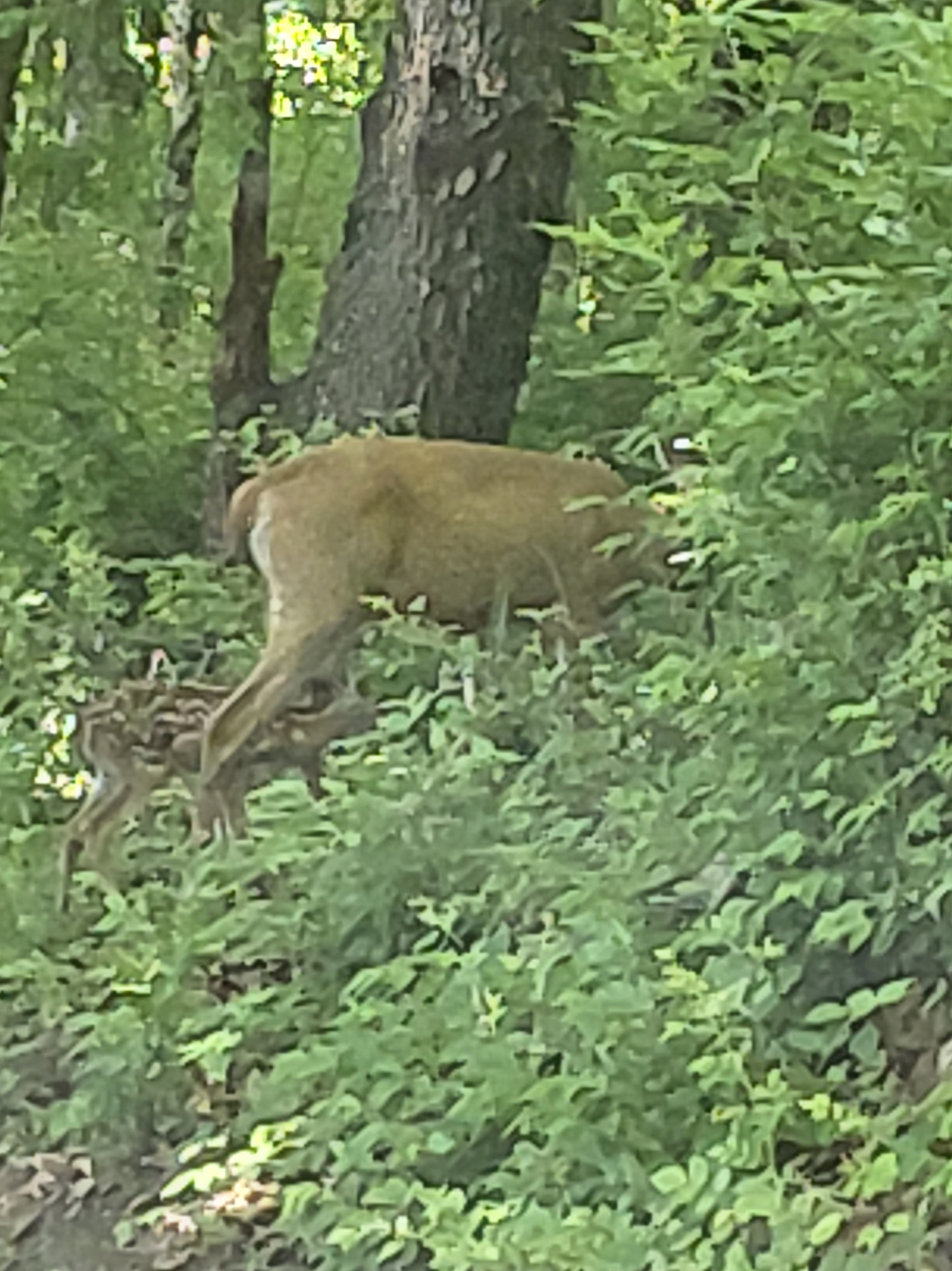
    Another month or so, we will start seeing fawns with their Mom’s. So far, the does haven’t sent last year’s fawns off alone. By fall, they will rejoin Mom with her new young. Though not a hard rule, usually, first time Mom’s have only one, and older does will have two or occassionally even three, though that is rare.

    Spring with the flowers, returning migrating birds, young animals, greening trees is always an anticipated time of the year.

  • Still here

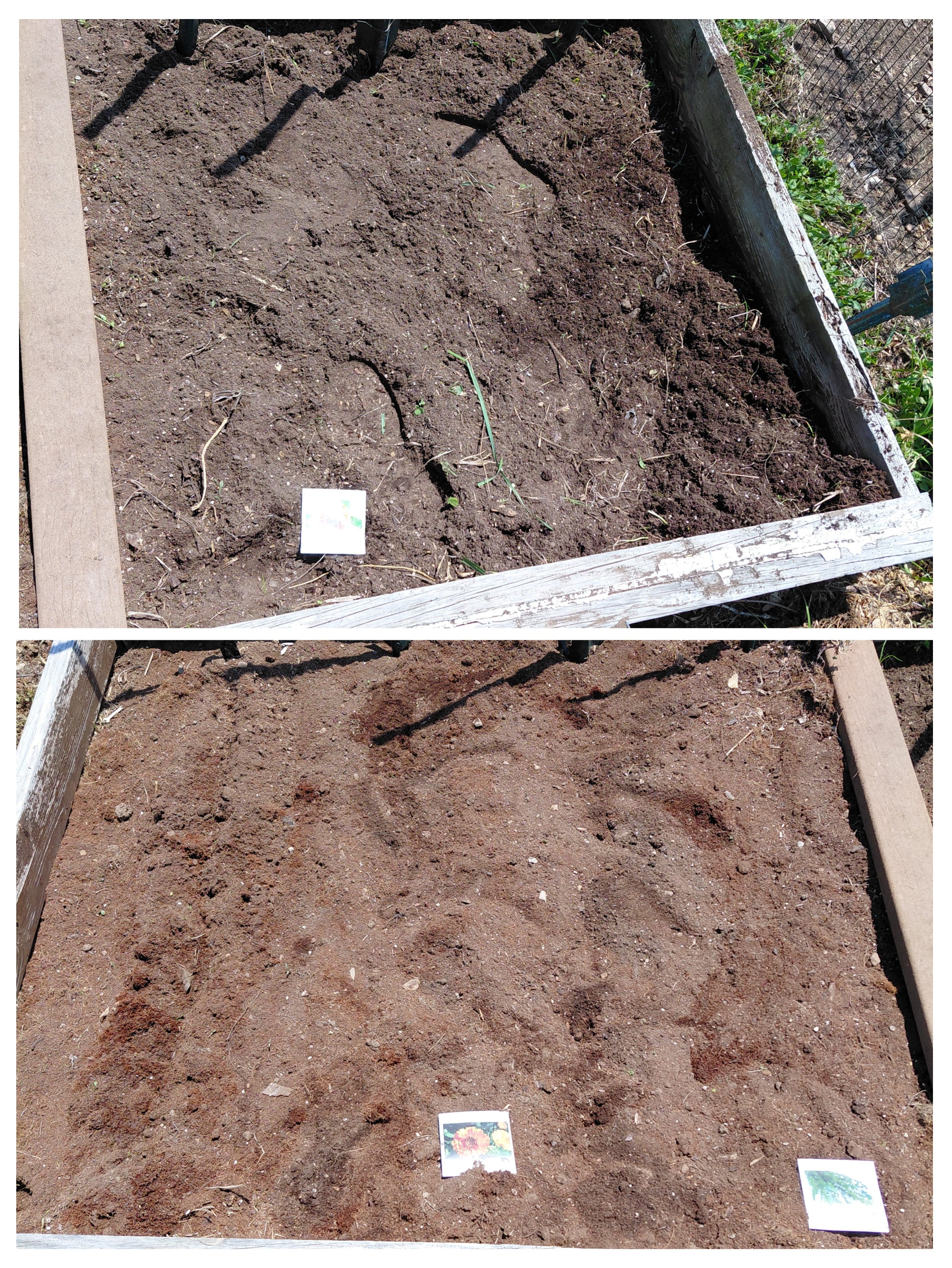
    The garden is cleaned up, the peas, lettuce, and spinach planted and awaiting more stable weather without fear of frost to plant beans, tomatoes, peppers, popcorn, and gourds. The asparagus are providing more than I can eat now, so some freshness from the garden. Both of my Asian pears are failing, both with large areas of dead branches. They produced nicely for a few years, then basically stopped production, and now seem to be dying. It is too early to tell it the freeze that happened a few days after the plum bloomed will prevent fruit. The peaches and apples waited to bloom until later, and the blueberries have lots of blooms.

    This week is summer type weather with three nights of near freezing later this weekend into early next week. One day it is shorts, tees, and sandals, then a few days later, jeans, long sleeve shirts, socks, and sweaters.

    It is only mid April and the lawn has had to be mowed twice already. Not my favorite job, but if it doesn’t get done, even the riding mower struggles to cut it down.

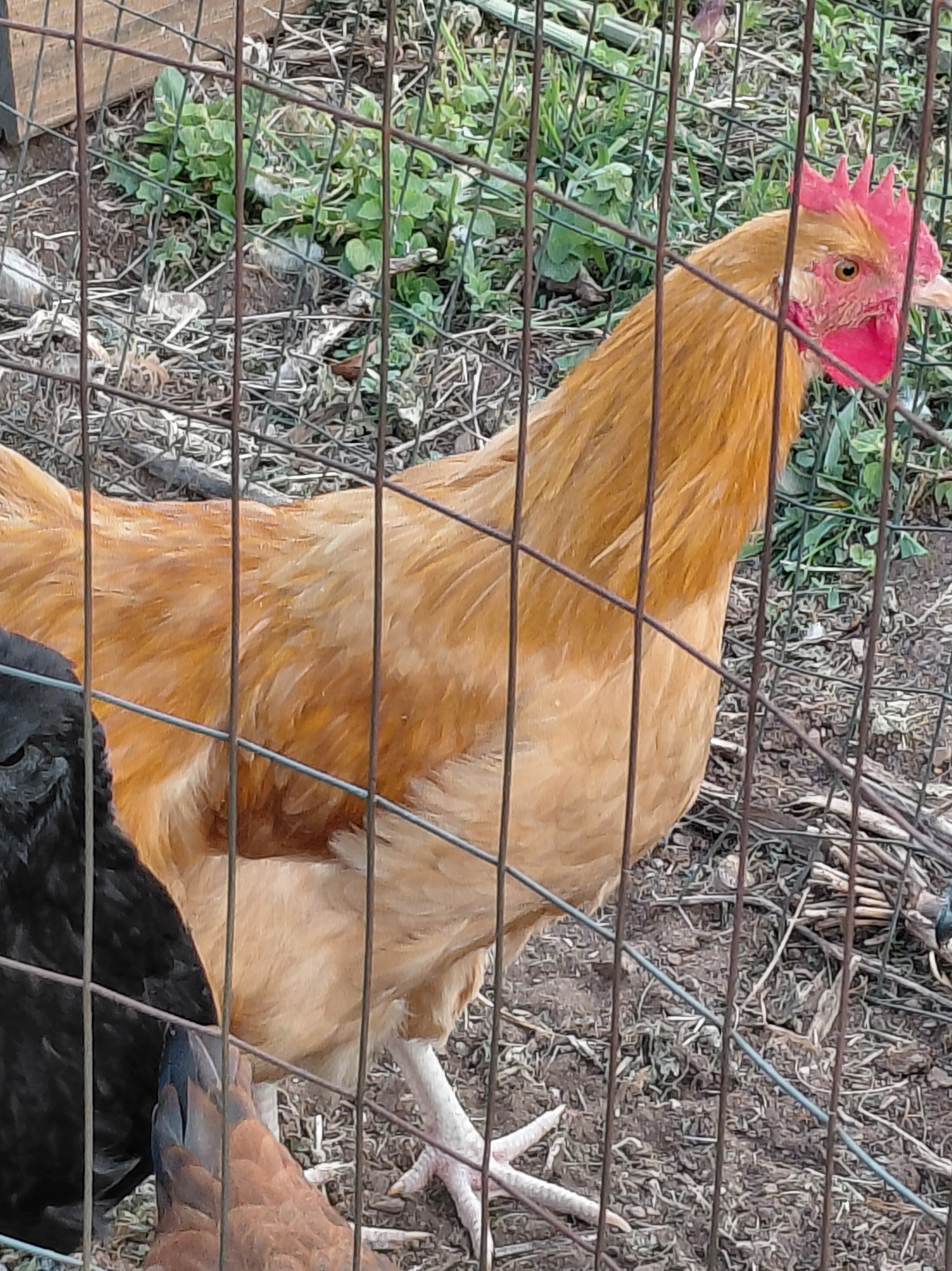
    The young chickens are now about 16 weeks old and a few weeks ago, I noted that one of the Buff Orpingtons was larger than the rest and already developing a vivid red comb. This morning, my suspicions that she was a he was confirmed with crowing. Now I have to decide if I want to keep a rooster with the remaining 9 pullets or find a new place for him to live.

    One of the all black Mystics is pure evil, not toward me, but very aggressive and dominant toward some of the other pullets. They will have to settle their own “pecking order,” without my intervention. We are about 6 or 7 weeks from starting to see eggs.

    One of my fellow re-enactors is a published author of historical novels, Carol Amorosi. She has a 3 book Celtic series, and a 5 book series that begins with the surveying of the Mason Dixon line and the most recent, I just finished reading, brings it up to the brink of the American Revolution. If you are a lover of historical fiction, her books can be found on Amazon in paperback or e-book formats.

    And it is school visit time at the museum, several Friday’s in a row with varying age groups and group sizes. This week are 6th graders, about 100 of them. They will be broken into 8 groups and rotated through 8 stations to visit and learn about life on the frontier about 250 years ago. This week, the slip, petticoat, short gown, long socks, and cap will be quite warm to wear with the 80+ degree heat.

    With these sessions, I generally spin on a Dealghan spindle or a wooden drop spindle as they would be more historically correct, and demonstrate the Lucet for making braided cords. These skills would be ones that young people would have been taught to help contribute to the family’s cord and yarn needs for tying bags, carrying tools, and for weaving the homespun that was a necessity away from the larger town ports after the Wool Act.

    We continue taking a daily walk, sometimes about 2 1/4 miles, other times we extend it to more than 3. As it gets hot, we often shift our walk time to late evening to avoid being in the hot sun during peak hours, and start making sure we have a bottle of water to stay hydrated.

    Stay well my friends.

  • Marching On

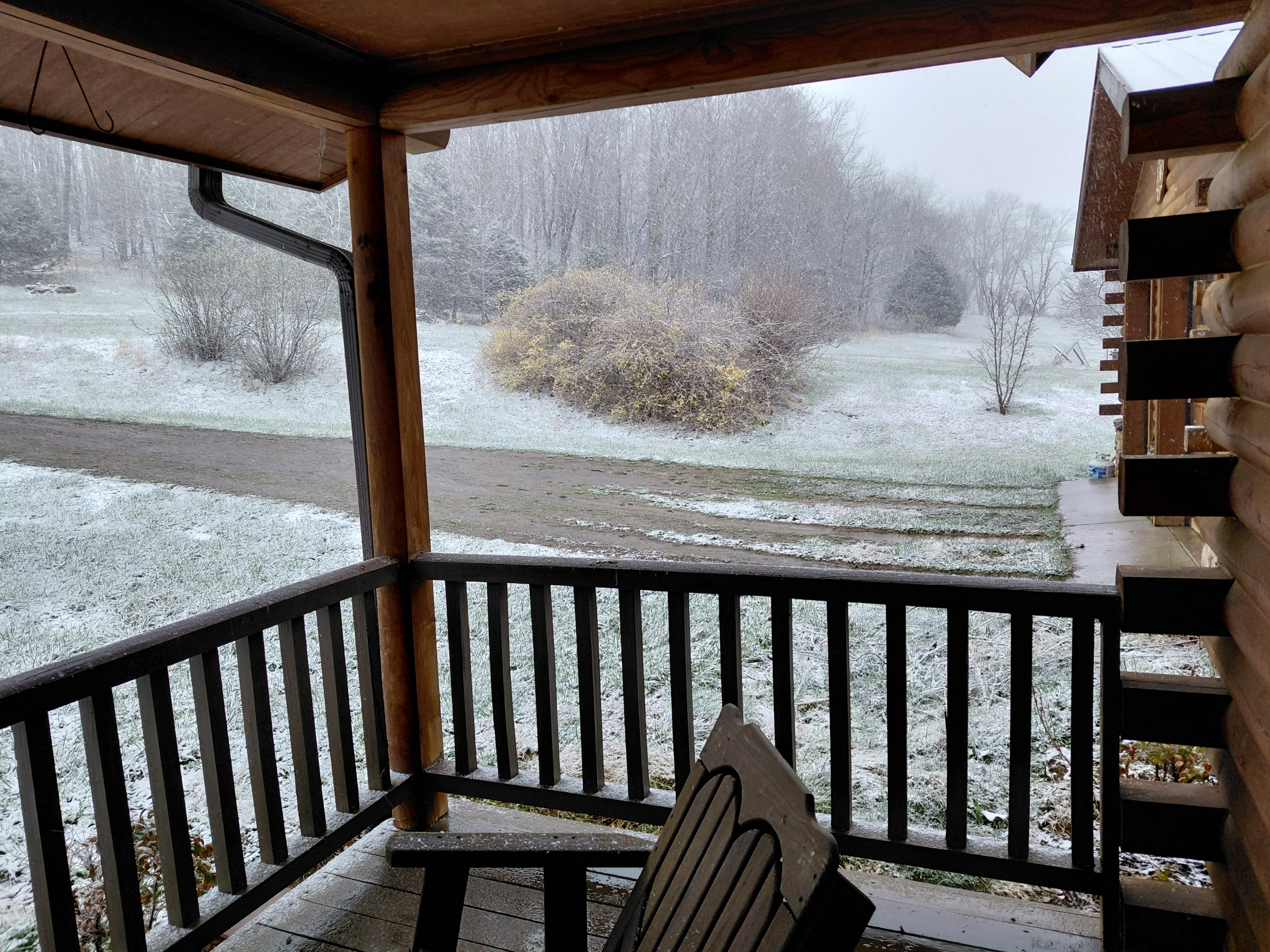
    The Facebook memories show snow around this time of March, which confirms how crazy the springtime weather can be. Monday morning is was 60 degrees when I got up, but raining. As the day wore on, the temperature fell. By the time I was prepping dinner, the rain had sleet in it and quickly turned to snow.

    Hubby’s comment was that the ground was too warm for it to stick. By Tuesday morning, we had about 1.5″ on the ground and cold temperatures. Two nights in the upper teens and all the local forsythia look sad now. The plum blossoms are brown, with the hope that maybe some of them were fertilized before the freeze. The bonus side is that all of the invasive Callary pears along the roadside also browned. Unfortunately, that won’t result in their loss. As the week progressed, the temperature began to rise again with Sunday expected to be in the low 80’s before another front and drop to normal 50’s and 60’s.

    We walked a couple miles outdoors today and until it rains, will continue for at least the next 10 days.

    The living history groups at the Museum begin this week. The first set is a team of classes from a local middle school, sixth graders. Their lessons have included the information that the nation is celebrating 250 years of independence this year and as the loom house where I am stationed is circa 1760, it will be easy to incorporate the resistence, effects of the taxation, and history of fiber use during the period.

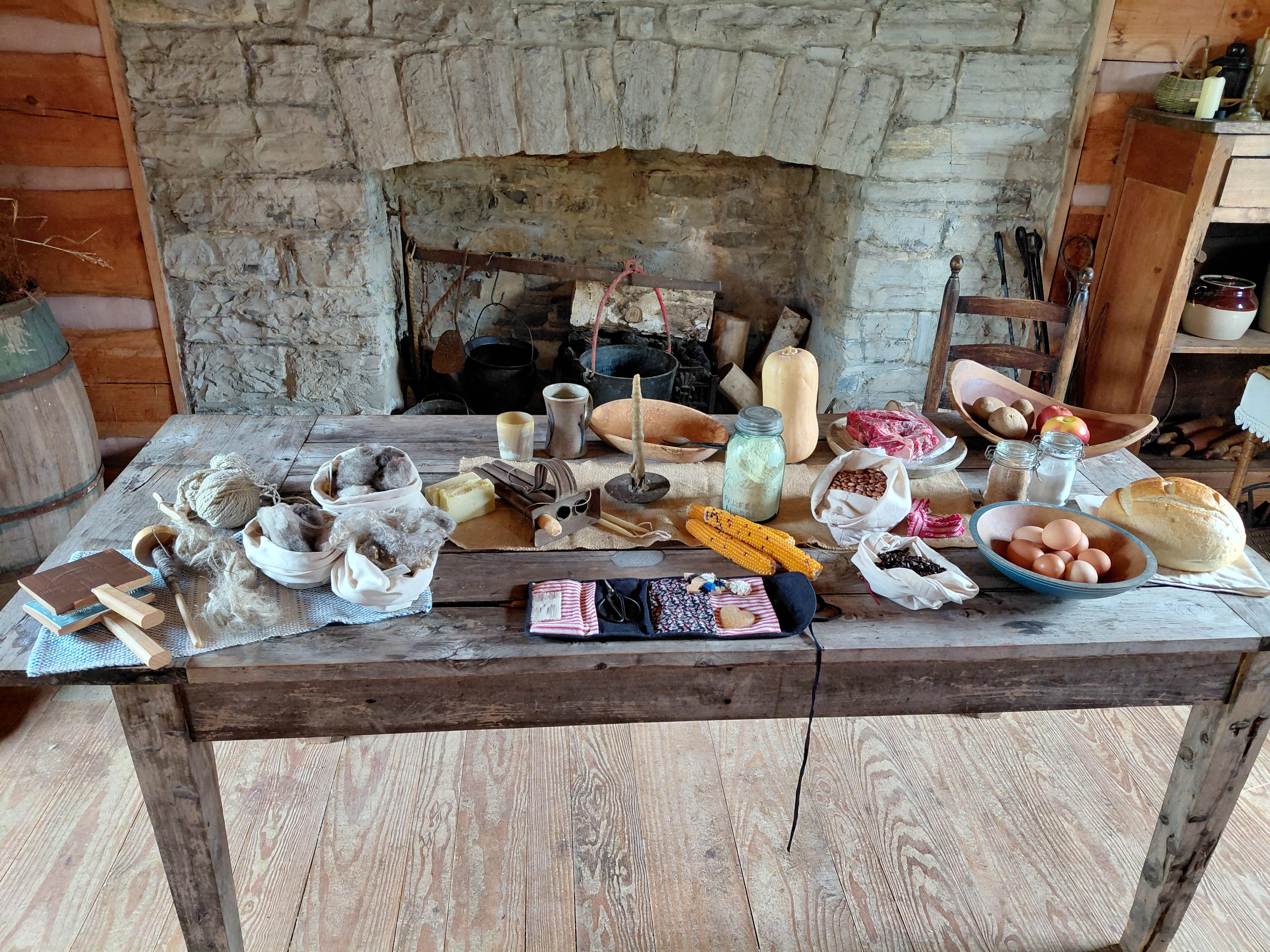
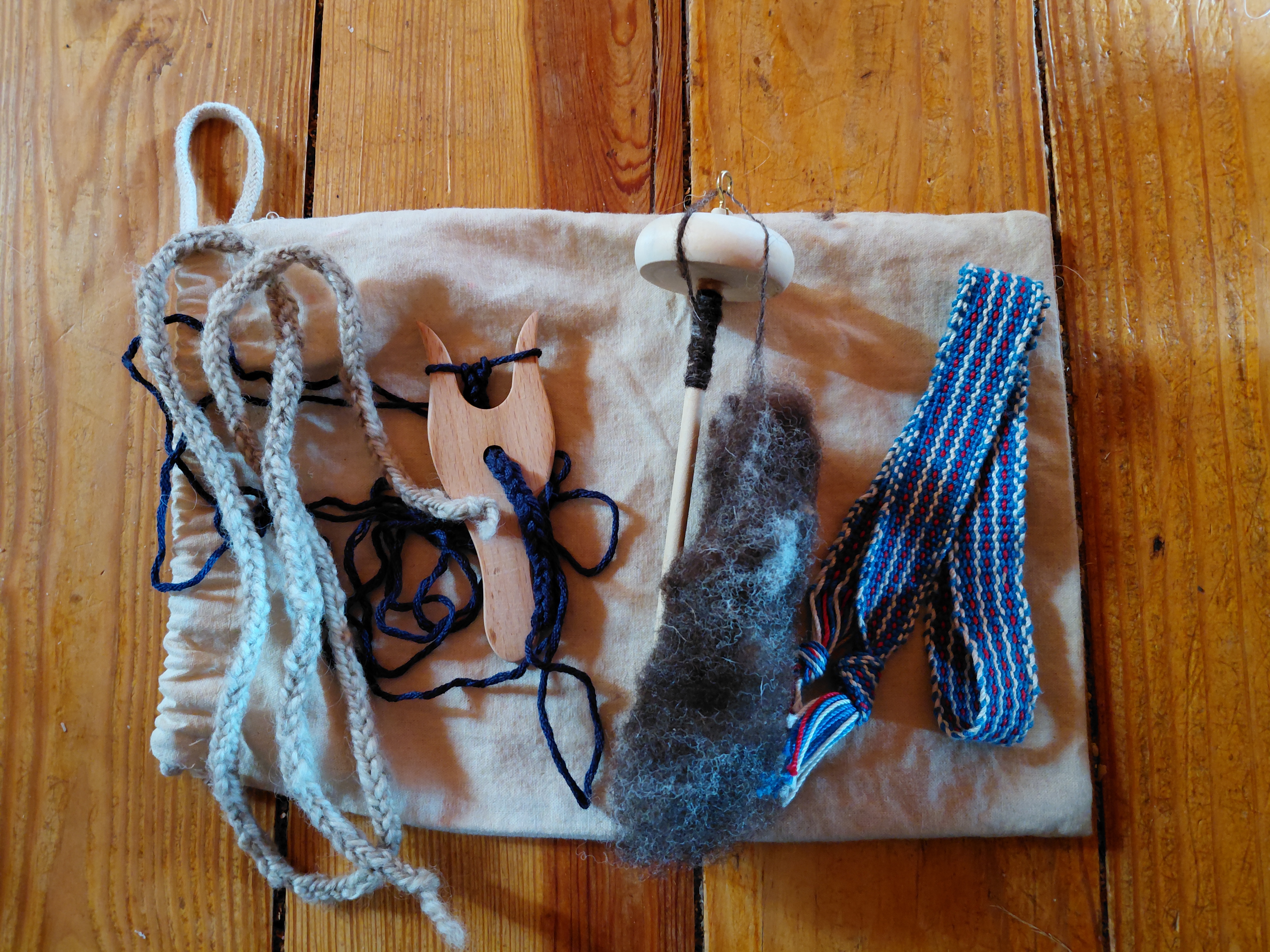
    I have added some lucets (a Viking braiding tool) that was used to make cordage, a few hand made spindles, and a pile of woven items to let the kids handle and try.

    There will be samples of flax, hemp, wool locks with and without lanolin for them to handle, and lessons on what it would have been like as an 11-12 year old as far as household responsibilities compared to the life they live now 250 years later.

    Of course, I will be asked more than once if the Colonial outfit is what I really wear everyday and whether I live in the 266 year old cabin. Though they may have been taught the facts, the reality of what life might have been like is very difficult for them to process.

    The springtime and sessions with the 2nd, 4th, and 6th graders are always a pleasure for this retired educator.

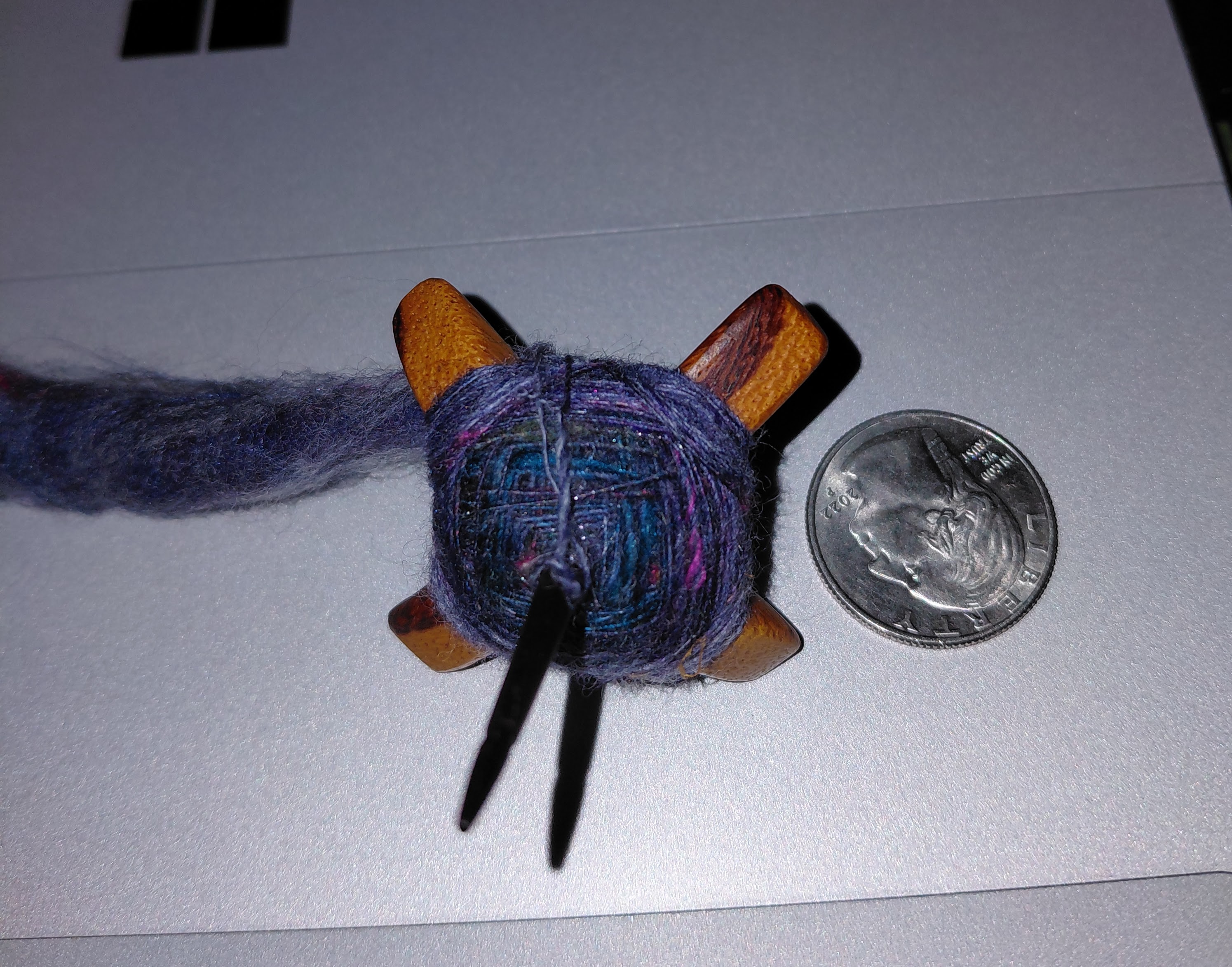
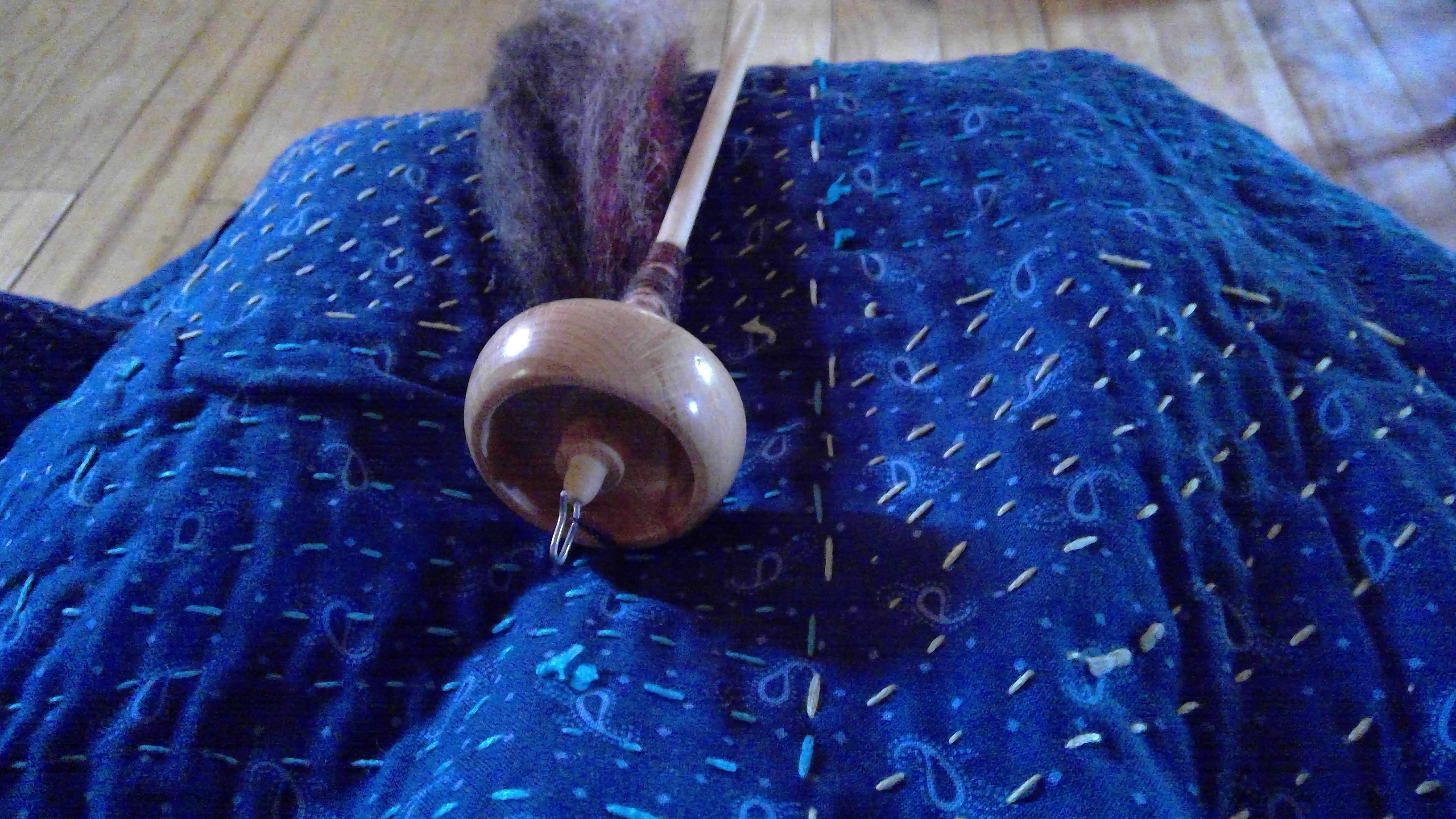
    A new spindle was added to my collection this week. This is one I can use spinning with the class groups as it is a plain wooden drop spindle

  • History Week

    October brings lots of history activity at the museum or sponsored by the museum. Many opportunities to be a Colonial Pioneer woman in the New River Valley.

    On Sunday, we had the annual Spirit Trails, but this year it was held at the restored historic Belle Hampton home and property, 280+ acres with several buildings that have been restored. The General Store is an Air B&B, the main house and additions cleaned up and available by appointment to visit, the cottage in which the owners live, plus the addition of a lovely huge pavillion that was the home base for the mule driven wagon rides through the history of the property and the various people that lived, worked, or fought on the land.

    The owner Tom Hoge portraying the Governor.

    Unfortunately, a strong line of thunderstorms came through during the third ride and the remaining tours had to be cancelled with one portrayal held in the pavillion for those folks who stayed. There were treats to be had, displays to see. Period dance lessons, cider pressing, and some kids activities as well.

    Monday morning brought the first 70 4th graders from Pulaski County for Fall on the Frontier. We had 7 stations for them to visit, history of the town film, cider pressing and corn shelling, slavery talk, cooking, bobbin lace making, spinning and weaving, and militia with flintlocks fired.

    We will host more classes tomorrow and Friday. The classes are always interesting as the students learn more about the history of the region in which they live and how it differed over 200 years ago.

  • Memories

    Today’s news had throwback photos of October 10, 1979.

    On that day, a surpise early snowstorm dumped up to 10 inches of snow on parts of the Shenandoah Valley. When I saw the article, I asked my hubby if it had any significance to him but he said it didn’t until I reminded him of where we were and what we were doing.

    We had taken a weekend backpacking trip along the Skyline Drive. On Friday night, we tent camped at the Big Meadows Campground rather than walking in a trail we were unfamiliar with in the dark. I was an avid backpacker at that time, trail Supervisor for the Appalachian Trail Club in Tidewater area of Virginia. They came out monthly to clear a section of the AT from Maupin’s Field to Three Ridges, but this weekend it was just the two of us. Being Autumn, we figured it would be a nice, mild weekend to go see the fall leaf colors, so we borrowed a fairly thin sleeping bag for hubby. That Friday night ended up being very cold and I exchanged sleeping bags with him so he could have the down bag as I had a down jacket I could wear in the thinner bag. Saturday was gorgeous. It probably got up in the mid 70’s and we had a great hike down the trail and a signifant elevation loss to a hollow where we planned to spend the night. Camp was set up, dinner prepared and enjoyed, and a lovely evening as it got dark, looking at the stars. The night stayed relatively warm, a surpise after the prior night.

    On Sunday we woke and were about to prepare breakfast when I looked in the distance to see a very ominous black cloud. The decision was made to pack up, grab something we could eat on the move and start the hike back up the hill to where our car was parked. We hadn’t even begun to walk out until it started to rain, then hail. The temperature began to plummet and the hail turned to sleet, then snow. By this point, we were hustling to get up the slope and back to the car, a few miles away. Packs tossed in the hatchback and we set out to get off the Skyline Drive when we saw a young man, improperly clad, hiking up the road. We stopped and asked his if he needed help and he asked if we could drop him off at the site where his group would be or would gather. We did, and slowly through accumulating ice and snow made our way to Afton Pass where we got off the Drive and stopped to finally get food at Howard Johnsons. While we ate, we heard a report that the Skyline Drive and the Blue Ridge Parkway were being shut down. We hoped the young man found his group and a safe place to stay. The Drive and Parkway were shut down for 3 days due to the storm.

    That was a trip we remember in detail 46 years later. I don’t remember ever seeing snow in Virginia in October, prior to or since.

  • Old Skills

    Last Wednesday evening, I trekked over to the museum to teach an old skill. No costume required for this event. We set up 4 stations for 4 ladies + 1 second grader accompanying her Mom and they learned to make basic lard and lye soap. We used a mix of old school and modern skills and equipment so we weren’t there all night stirring the mix. Of course they were given some history of soap and soap making and why we now use a lye calculator and a superfatted recipe to be sure we end up with a body friendly product. I put together kits of a small heat safe plastic bucket, two rigid plastic stadium cups, a spatula, and a silicone loaf pan for each participant that they keep at the end of the session, along with the a three page history, instructions, and two recipes; one for the lard and lye and one for a vegan soap with Shea butter, Coconut Oil, and Olive Oil, and of course, their mold of soap. We “cheat” by stirring with an immersion blender to speed the process up to keep our session within a 90 minute window. As I dug out some of my equipment and essential oils to scent their individual batches of soap, it seemed a good time to go ahead and make soap for 3 friends and our household.

    The batches at home were made Tuesday and Wednesday of this week. On Tuesday, a double batch of one scent was made and I won’t do that again as it took forever to get to the consistency to pour it in the molds and is still not as firm as I would like to slice it into bars. The
    Wednesday batches will be unmolded and cut tomorrow to cure for a month before going to the folks for whom it was made.

    Today as I sat waiting for hubby to have a consultation visit and then I waited for my annual mammogram, I spun. In public, I spin on either a top whorl drop spindle or a Turkish spindle. When doing it, there are surreptitious glances, to out and out staring and occasionally someone will ask what I am doing. Followed by the question of what I then do with the yarn I spin.

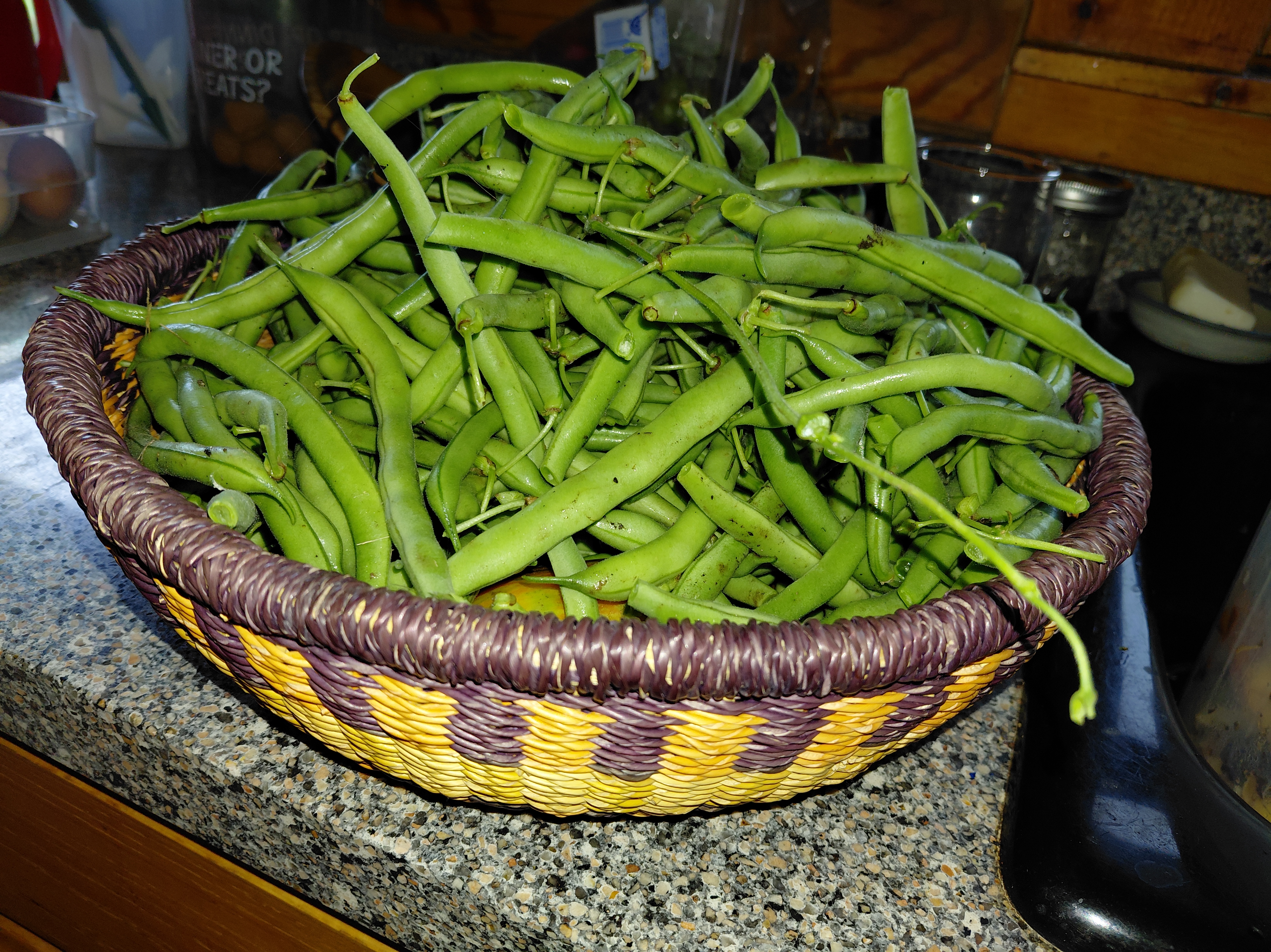
    The other old skill that really hasn’t been done so far this year is canning and preserving. There have been pickles fermented and stored, but the tomatoes haven’t produced in sufficient quantity to bother canning them. I have frozen a couple of gallon bags, made one big pot of sauce to use one night for pasta and the rest frozen in wide mouth pint jars. There is a basket of Asian pears from the orchard sitting on the dining table with a couple of oranges to make pear/orange marmalade, but I haven’t gotten around to dragging down the canning pot to do it. As there are still many jars of applesauce from last year unopened, I doubt that any will be canned this year. The only other produce that has come in quantity are greenbeans and I freeze some of them, but don’t like canned one at all and barely tolerate them from frozen. I like to buy local, but come midwinter when green vegetables are at a premium if at all available, I do buy from the grocer.

    All of these skills have been learned since retirement. You can teach an old dog new tricks. And I truly believe in the each one teach one. I am grateful to the friends who taught me to make soap, spin, and improve my knitting skills. The canning and fermentation, I have learned from books and the internet.

  • Colonial History

    The school year is winding down here and so, the class groups at the museum are coming to an end. Today, we had about 40 second graders visit us. Not as many rotations, fewer volunteers, but the kiddos did very well.

    It is a bit more challenge with the younger students as they haven’t had the history in their Social Studies classes in any depth, their attention span is much shorter than the middle school aged students, so my presentation takes a much simplified form.

    I start with asking them, “How many outfits do you think you own?” Answered by 10 to 1,000,000. “Where do you get your clothes?” Answered by Walmart, Target, Amazon, etc. From there, I try to get them to imagine having only 1 or 2 outfits, having to make them, including making the cloth they are made from, and wearing that same outfit until they outgrew it and handed it down to a younger sibling. They have a hard time with that idea or having only a handed down outfit themselves. How no handmade cloth was wasted, that worn garments were taken apart and the cloth reused for bags or quilts.

    Trying to get them to imagine living in a 10′ x 10′ log home with parents and several siblings with no kitchen and no bathroom is also difficult for them to comprehend.

    There are some good questions, some wrinkled noses over how few baths they could take and how that process works. How they had to help shear sheep, skirt and wash fleece, help card the wool, then help spin it on spindles. I have a handful of small spindles I have made for them to try and for them to see how difficult the process is initially, as I have been spinning on a spindle the entire time I have been talking to them.

    There are lots of flax, hemp, and wool samples to pass around. Some woven pieces, box loom tapes, and lucet cords to see what even as kids that young would have helped make.

    It is fun to have the various ages and drawing from my teaching skills with them.

  • Busy Week/Changing Seasons

    There was a lot of living history this week. On Wednesday, we had about 80 fourth graders and 7 rotations with the museum history, slavery in Appalachia, a bit of William Tell fun with suction cup arrows and a plexiglass shield to protect the”victim,” women’s duties on the frontier, blacksmithing, fiber production at home on the frontier, and frontier Militia that includes the presenter firing a flintlock rifle for the students. After we were done, the curator showed them a covered wagon and how it would have been loaded to travel the Wilderness road to the western parts of Virginia (now Kentucky and Ohio).

    Thursday we had over 100 sixth graders with some changes in rotations to match the available volunteers. These groups are fun to do and also have some of the frustrations that teachers deal with daily. Some the the youth are very engaged and have great questions. Some would rather be anywhere else and poke and prod their neighbors, or engage in flirting with another student.

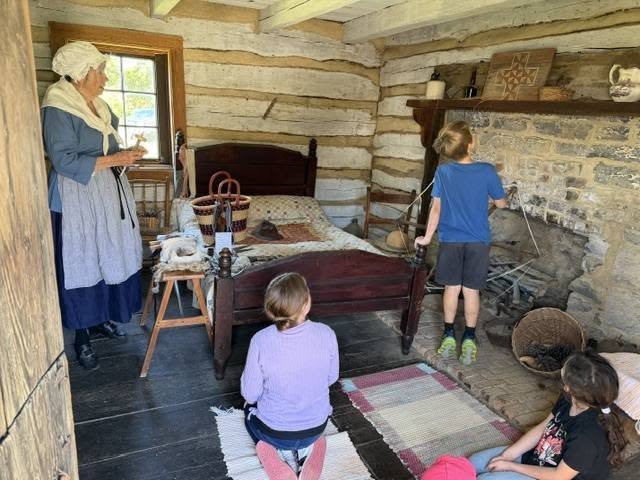
    The door to the loom house is low, about 5’5″ and most kiddos that age walk in without a thought, but there are a few as tall or taller than me at 5’7+” that have to duck to enter. The space inside is tight to put 15 sixth graders, but we make it work.

    Wednesday night threatened cold so the flowers planted in the deck pots were covered for the night, there are no more nights much below 50 f for the next 10 days.

    The first Hummingbird was spotted this morning. The single feeder that is currently out will empty quickly and soon additional feeders will be added.

    The vegetable, sunflower, and herb seed have sprouted under the grow lights. They will begin to get acclimated to the outdoors in a day or two.

    The Amaryllis bud opened with only 2 flowers but is 22″ tall.

    After the museum yesterday it was time to mow the lawn for the first time. The riding mower original battery was so dead there wasn’t even a hint of light from the headlights, much less turning over the engine. I edged around the house and pulled out the gas push mower and it wouldn’t start either. Our once a year pushing the heavy riding mower up on to the trailer and trip two towns over to drop it off wit the repair guy was done. Once it is repaired, the grass will be so tall it will be difficult to mow, but that is all I can do for now.

    We are looking forward to warm days and mild nights. Tomorrow, grandson will come help me get the rest of the garden ready to plant soon.

  • News from the Blog

    If you are a subscriber that gets the blog in your email, it will direct to here. If you have gotten it from Facebook or Ravelry, you now should use Fstafford165.wordpress.com and it is secure. Subscribing will sent it to your email each time I post.

    The blog looks a bit different as I have updated to a newer format, but it is still the same blog.

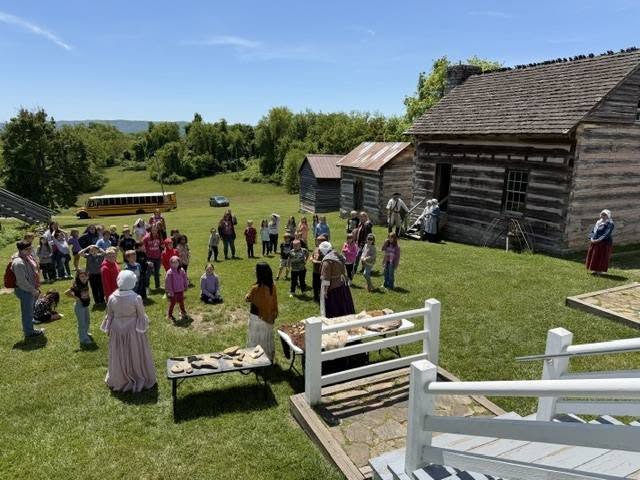
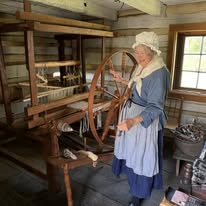
    It is that time of the year when I dress up and present to local elementary and middle schoolers what it was like to have to make everything you needed to live on the frontier and to trade and barter with neighbors, provide your extras to the community store for the wagons moving farther west into what is now Kentucky and Ohio. The cabin was originally built in 1769 on Peak Creek and moved to the Wilderness Road in Newbern in 1830. When it was moved, a loft was added, you can see the stairs in the background. The footprint of the cabins in the “planned” community were 10′ X 10′ some with a loft. A fireplace for heat and cooking. The barn loom behind me, similar to the one that was in this cabin for an enslaved woman who was the village weaver. The walking wheel also behind me is one I made functional at the museum and demonstrate it and the drop spindle for making yarn to be used for the fabric needs. Last Wednesday when this photo was taken, it was dreary and chilly, about 47f and the 100 kiddos moving between the 8 stations every 15 minutes had to hustle and pack in tight for some of the stations. They huddled in every porch and building that had space to eat their lunch. I thought I was going to freeze and it took several hours once home to thaw out.

    That sent me on a quest to make or find a historically accurate cape because this week’s groups begin on another chilly but dry day. My quest turned up a navy blue wool reenactment cape with hood used, on ebay, for a very good price and quick shipping. It arrived today and I won’t be cold again when the weather does not cooperate.

    The cold night last week was hard on the new flower starts I put out, I guess a day too early. Today we bought marigolds and petunias as well as some flower seed that mostly will go in a ground bed once I get it cleaned up from winter and the hardier starts were put in the spots in the pots on the deck that were hit the hardest by the 25f night. Also some zinnia and nasturtium seed were interspersed with the small plants, so hopefully the pots will fill in with color as the spring moves on. There are no near freezing nights for the next 10 days and I will cover the pots with row cover if we get threatened.

    The vegetable, herb, and flower seed under the grow lights haven’t sprouted yet, but they aren’t due to go in the ground for at least a month, maybe 6 weeks.

    I hope you enjoy the new format.

  • Class groups are done for now

    With the altered plan to be very hands on and low key on the history part with today’s 2nd graders, things went much smoother. I had inexpensive homemade spindles, tape bands, Lucet cordage, a small woven towel, and a small knit along with the flax and hemp fiber samples for them to pass around and handle. As they entered, I was spindle spinning and didn’t draw attention to it until I explained that by their age, they would have been contributing to the family thread and yarn production using a spindle, or making tapes on the box loom, or cordage on the Lucet. They tried to spin with the homemade spindles and were amazed that though it looked simple as I did it, they could not. I did demonstrate the Great Wheel, letting them touch the quill after a reminder of the Sleeping Beauty fairy tale. They were surprised that it wasn’t sharp enough to prick their finger. We had 40ish children, divided into 5 groups as today, we were fortunate to have volunteers to cover Colonial militia, and Slavery. With the museum video, the games and corn shelling, with me and very, very nice weather, it went as it was planned. It was fortunate that we had extra rotations and good weather, well behaved children, as I was operating on very little sleep.

    Our last pup, the 12+ year old German Shepherd faltered last night, and passed away shortly after I went to bed, but before hubby came to bed. We discussed what we were going to do and as it was well after midnight, decided that she would just spend the night on her bed and we would load her into the car and be at the vet’s office as they opened at 7:30 this morning, to take her for cremation.

    That put us in town much too early for me to make the 40 minute drive to the museum for the 10 o’clock school group, so I settled in my new favorite local bakery for a pastry and cup of coffee while hubby took the other car back home. Tonight, I will sleep well.

    The Colonial outfit has been put away until needed for an event at the museum. The tools and wools I use there, reorganized in the basket with the tapes and cordage and it too has been put away until needed again. The top whorl spindle only gets used for demonstrations, at home I use my Jenkins Turkish spindles and my non historic Louet spinning wheel. June 1 there will be a living history day at the museum and I will likely spend at least part of the day spinning for visitors.

    I do love the school groups, especially when they are engaged in the process. It is a great volunteer activity for me to use skills I have learned and to draw on my many years as an educator.