Category: education

  • How does your garden grow

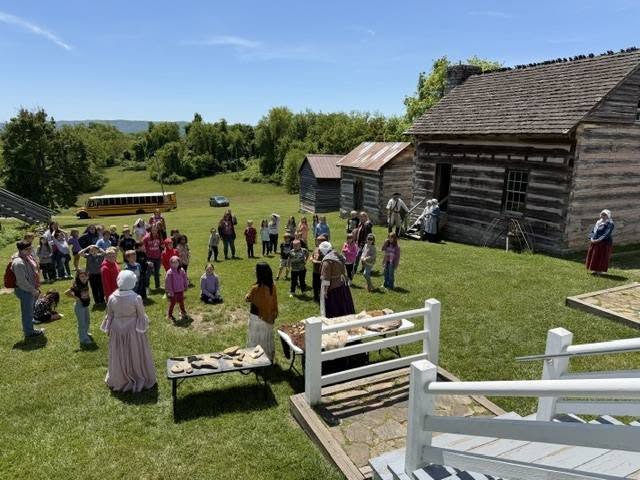
    Yesterday was a perfect day and the last Living History class group of the spring. They were a delightful group of about 50 second graders, well behaved, engaged, and even had some great questions. Summer time is hot to wear all of the frontier woman’s clothing, but I do miss doing the groups during the summer. Fall will bring fourth and sixth graders, and more of the surrounding counties are taking advantage of the offering of history as it applies to their SOL objectives.

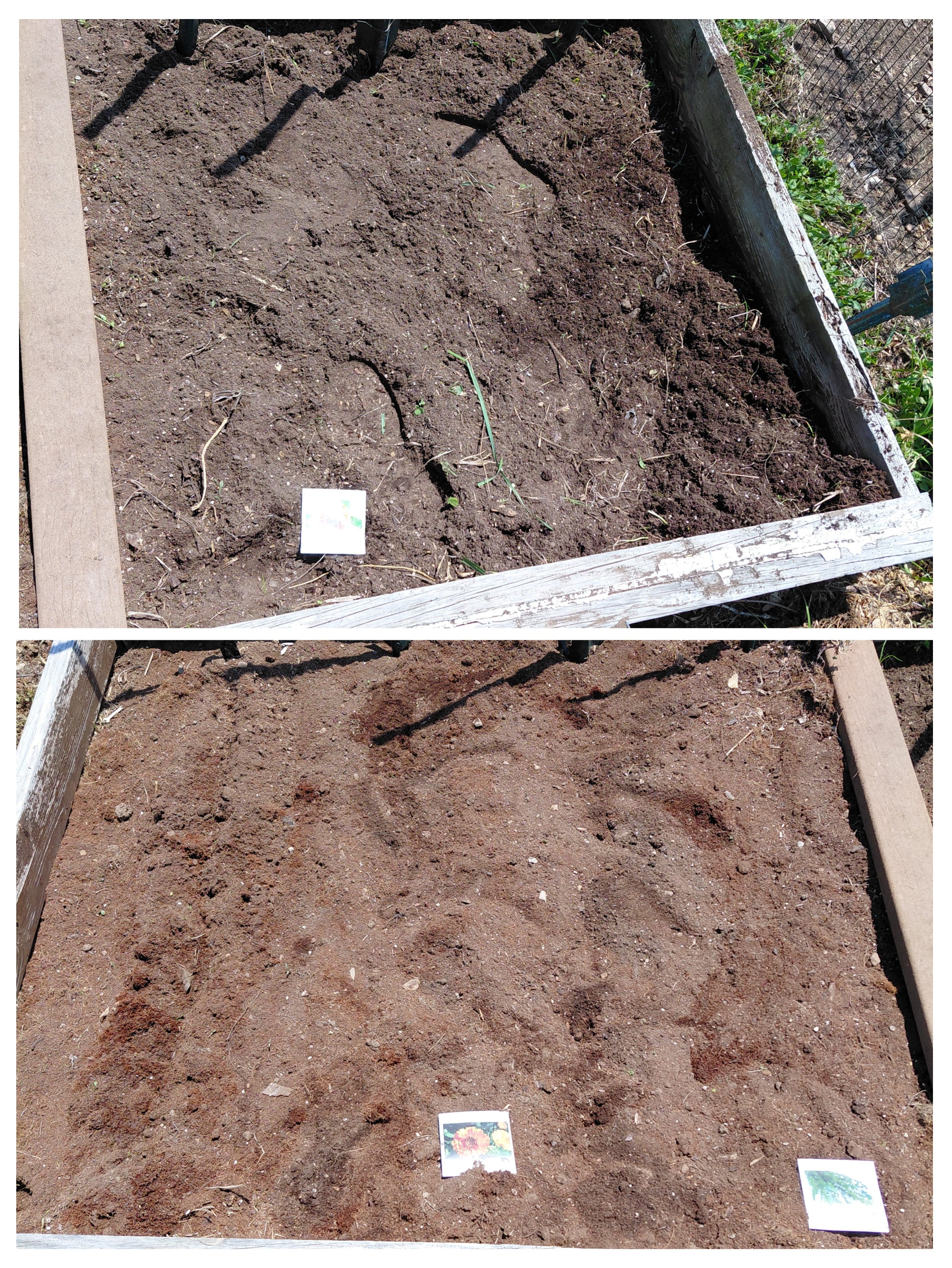
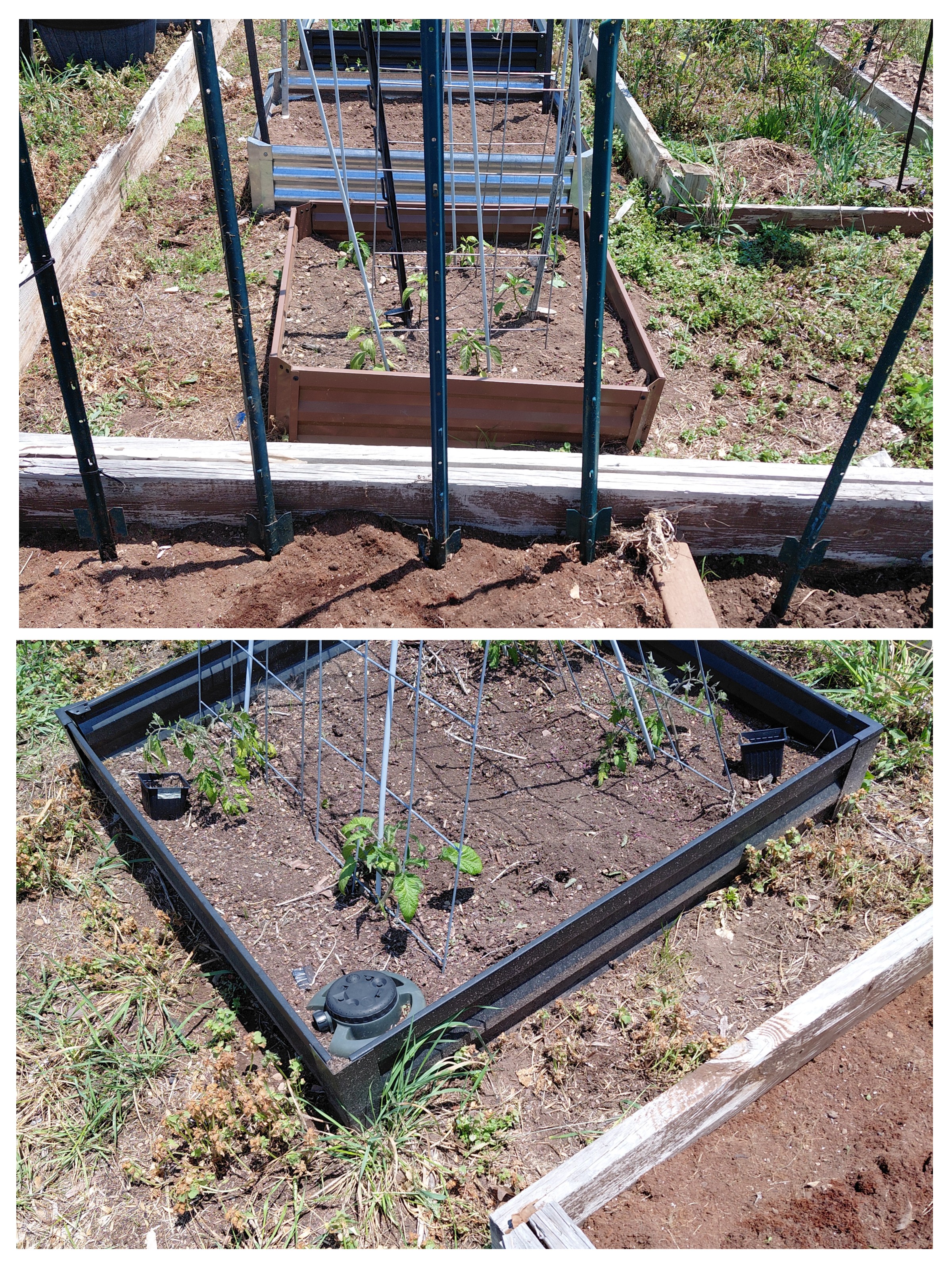
    Today the temperature begins an uptick to a few days of mid summer type weather with it reaching near or achieving 90 f before it returns to normal spingtime. It seemed like a good day to take the next step in garden planting for the season. After our usual Saturday morning breakfast out, Farmer’s Market purchases, and walk along the Huckleberry Trail, a pointed hoe and packets of seeds were carried out to the garden. The green beans were planted, the peppers staked, and a box that wasn’t in the vegetable plan this year, planted with mixed sunflowers and tithonia, and the adjacent area with Sweet Annie and Calendula. Since they were newly planted and no rain forcast for a few days, the sprinkler is on it now.

    The blueberries need weeding, some paths week whacked and the three sister’s garden started. I also want some flax seed for the row of the flower box that isn’t planted yet.

    The box with the flower seed in it is deteriorating and will removed at the end of the season, probably replaced with another metal box next spring. The very long one to the left of the peppers, peas, and newly planted beans if rotted so badly that it has become dangerous and local grandson is going to come over and help me cut it up, remove it from the garden and haul it to the dump. Under one of the apple trees is the remnant of a small chicken tractor that blew over about 4 or 5 years ago and he is also going to help finish deconstructing that to haul away so that mowing near the apple trees and chicken coop and pen is easier. Sure is nice having older teens/young adults that are willing to work for tuition money (or to just help grandmom out, but will be paid.)

  • Home Routine

    Last weekend we travelled across the state to visit our younger son, his wife, and the grandkiddos. We got to see their little homestead and their business location that we hadn’t seen since they relocated to the larger spaces.

    We also had the opportunity to see their second oldest daughter perform with the Virginia Children’s Choir in a Saturday afternoon concert.

    The trip was fun, though the traffic in the region we lived in until 20 years ago is crazy.

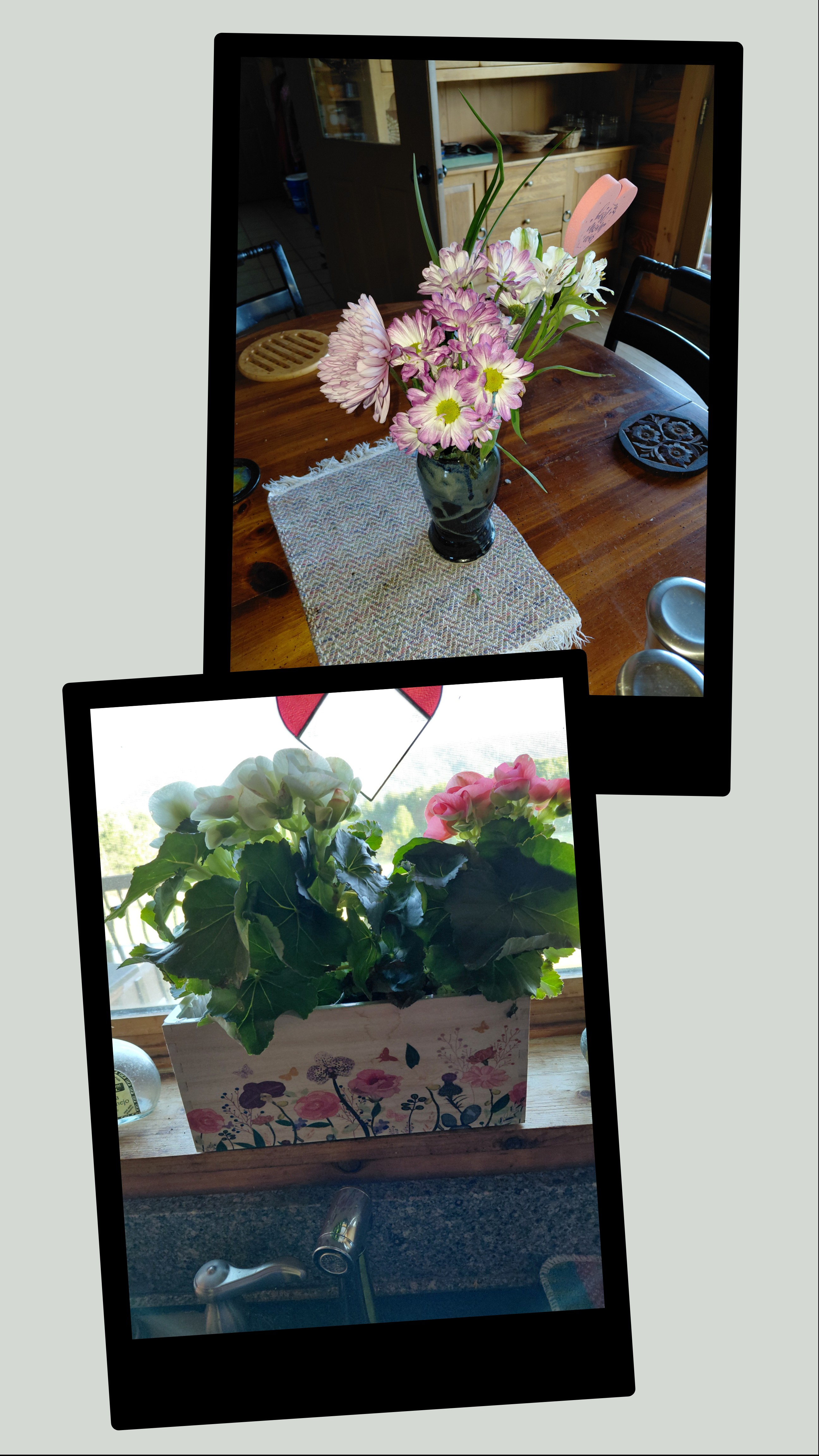
    After sharing breakfast with them at their home, we headed back to the mountains in time to visit with and go out to dinner with daughter and her family for Mother’s Day for the two of us. I came home with flowers from those two families and a very generous donation in my honor to the New River Conservancy Organization from eldest son’s family.

    We got home tired, but happy.

    It rained yesterday morning, and we realized that the grass was going to become impossible to mow if we didn’t get it done, but it didn’t dry off enough yesterday to make that happen. After today’s walk and errands, working together, we got the lawn and orchard cut back to a managable level, but ran out of weed trimmer line, so that didn’t get finished. Tomorrow is cooler and rainy again, but we can at least stop and purchase the line so that part of the job can be completed once it dries out again.

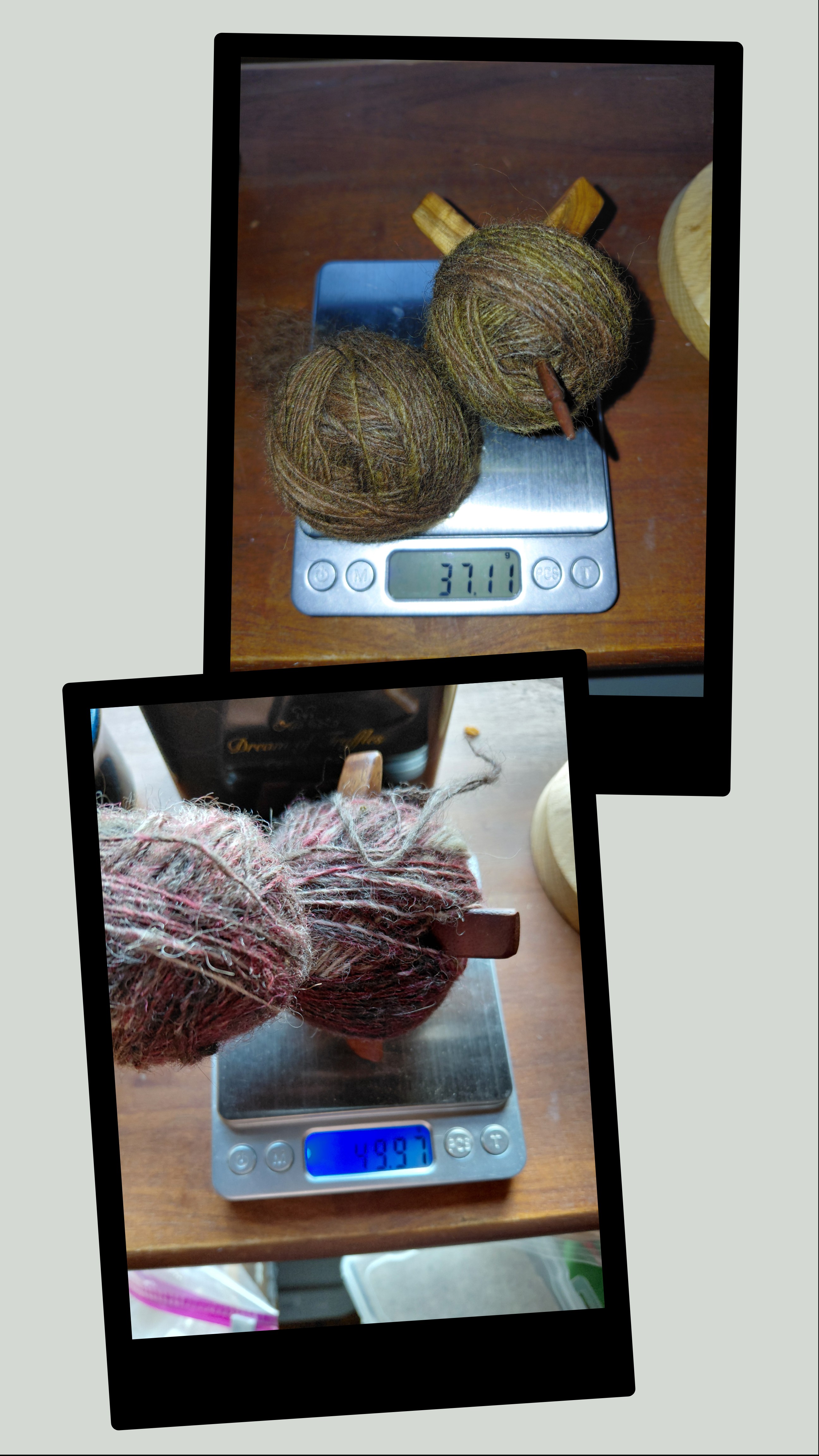
    May’s Jenkins spindle challenge is a fun competition to see which style spindles (divided into two randon groups) can spin the most in a month. I finished up some fiber I had been working on with my newest spindle and some fiber I want to use to knit the second quadrant of a queen sized blanket with my smallest spindle, and now finishing that fiber with my lightest spindle.

    Today’s mail brought some black Shetland wool that will be the borders of the remaining three quadrants of the blanket. Black Shetland was used on the first quadrant.

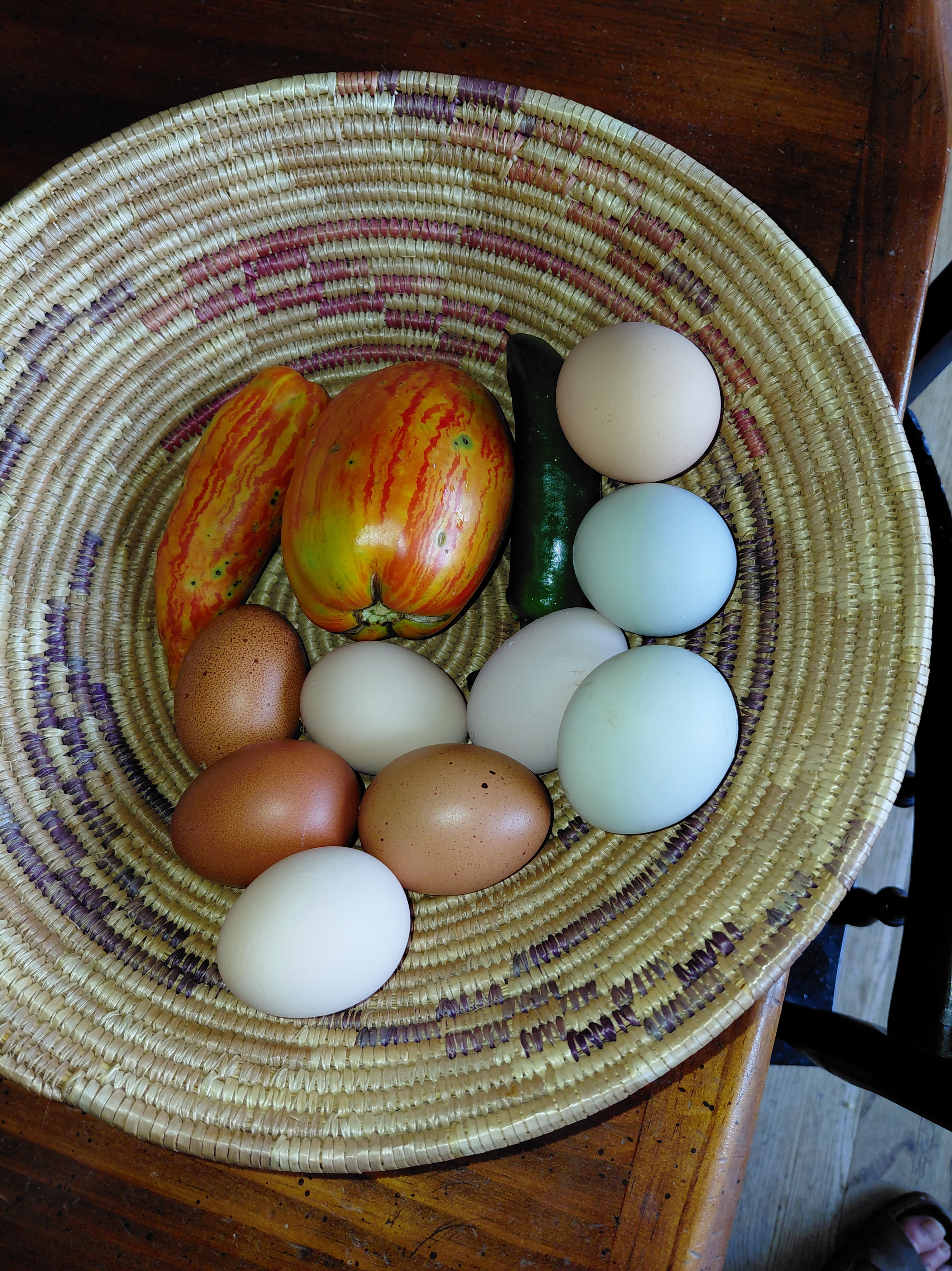
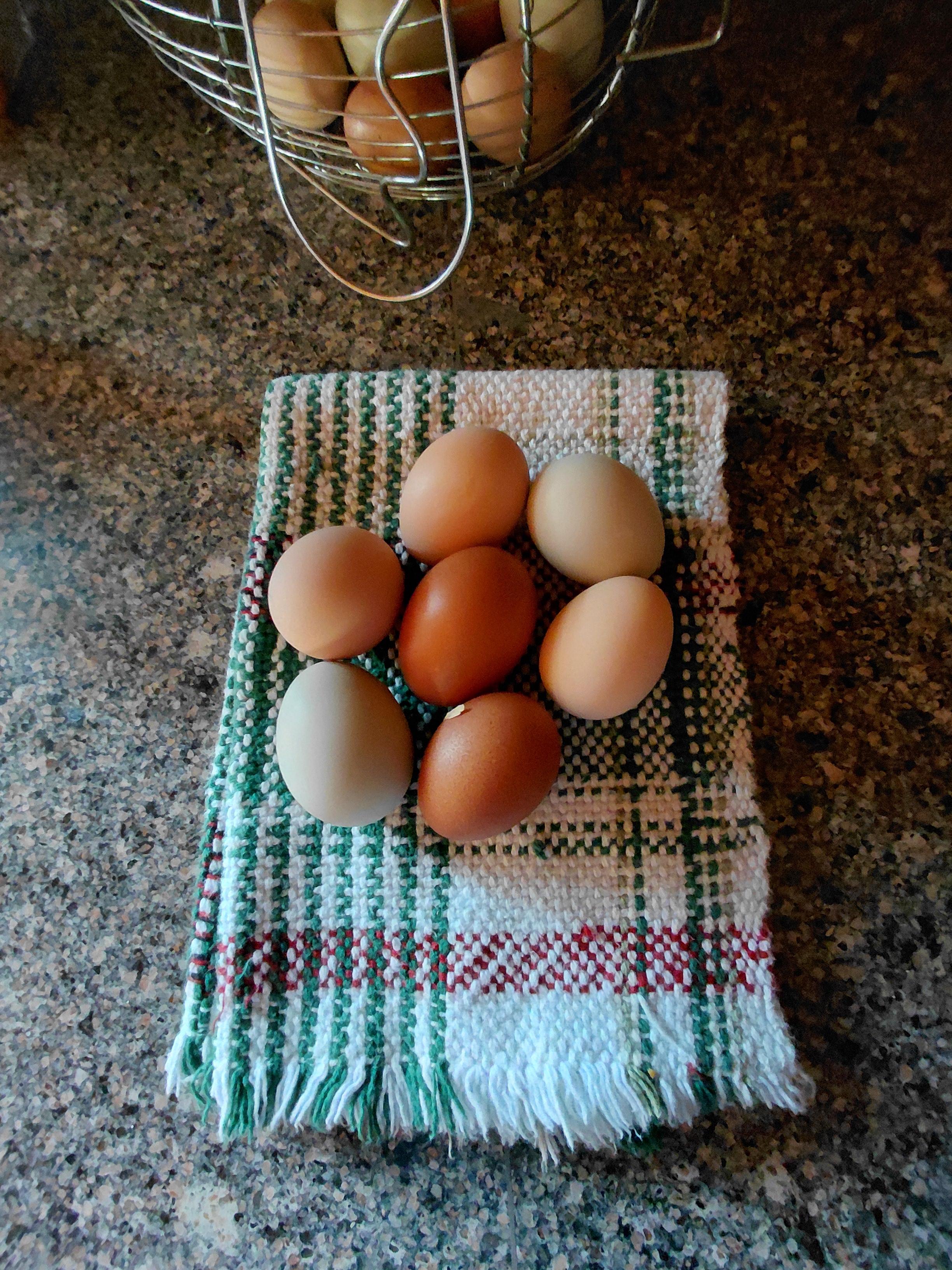
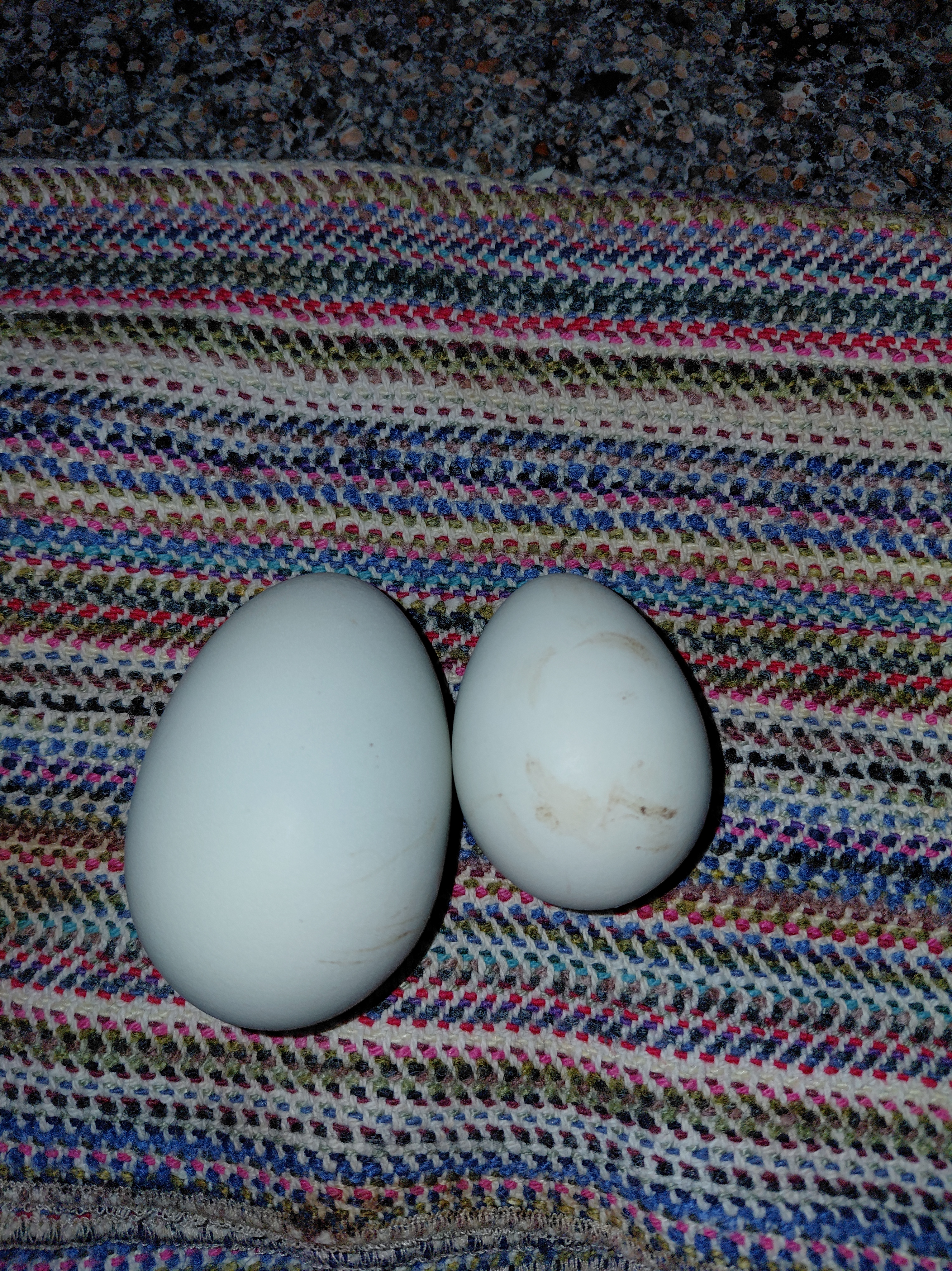
    The pots seeded with mixed flowers are sprouted and growing nicely, the peas, spinach, and lettuce in the garden also. The tomatoes and peppers that were transplanted just before we left seem to be thriving as well. Spring is definitely here even with with 50’s daytime temps off and on and upper 40’s nighttime temps. Over the weekend, three of the pullets layed their first egg. I think one more may have layed a wind egg (an egg with no shell) as there was a yolky sticky spot in a nesting box. Soon we will have daily egg supply again, and enough to take to daughter’s house each week.

    There is only one more grade level group coming to the museum. This Friday, we will again host 2nd graders, then schools in this region will adjourn on May 29 for the summer. I will miss that opportunity during the summer.

    Have a safe week.

  • An Educator

    This is teacher appeciation week. Thank a teacher for the impact they had on you or your child. For 43 years, I was an educator, retiring when I could begin to collect Social Security. For a few years after retirement, the only teaching I did was helping a local summer camp, teaching some spinning, weaving, and salve making. Then a friend who had been volunteering at a local museum couldn’t fulfill a day they needed a spinner and I connected with a volunteer activity that allowed me to demonstrate in a Colonial historical context, fiber arts. The program director at that museum moved to a different location, a little farther from our farm, but still under an hour to get there and I followed her, volunteering at events, and as she developed a program and relationship with the area school districts, as a teaching volunteer.

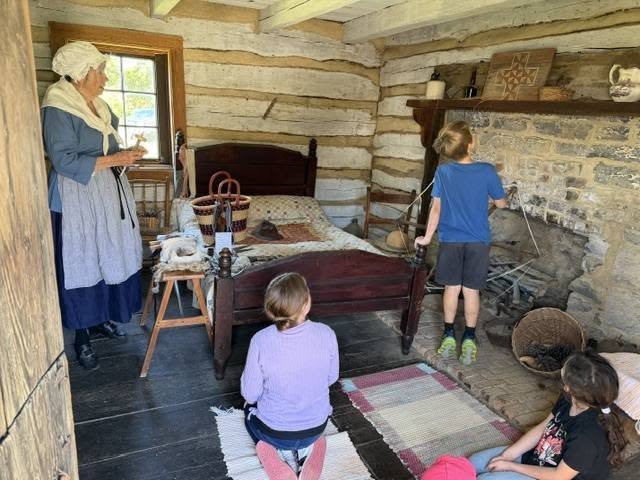
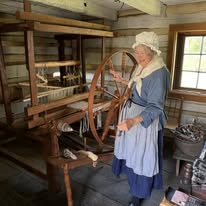
    Generally, I am in a 1769 log, 10 by 10 foot cabin that houses a great wheel and a barn loom.

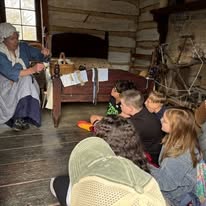
    We have classes from second grade, fourth grade, and sixth grade that visit the museum at different times of the year. In my usual role, I am teaching about fiber production, processing, and clothing on the frontier. The village was chartered in 1810, so still very early in our country’s history, and through a period where trade was virtually stopped due to the Revolutionary War, and limited after the war due to the distance from the coastal trade ports.

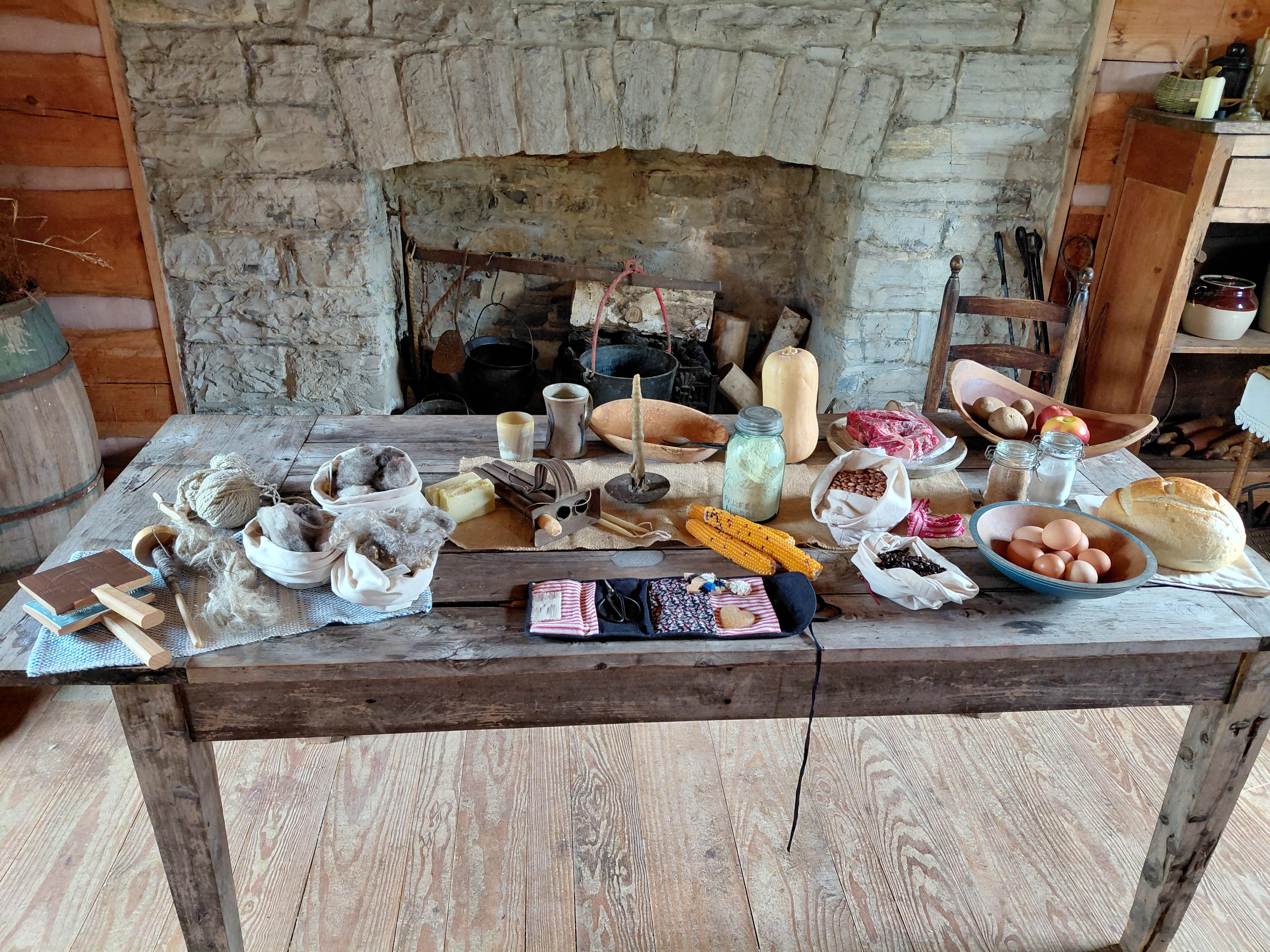
    Today, a very rainy day, we had about 60 second graders visiting. And a different hat as one of our volunteers was unavailable, I was in the old separate kitchen talking about household life and how different it was then compared to what the kids experience today. The limitation of types of food, as most of what we eat now is imported or hybridized versions of what a local in western Virginia would have had available as well as the difficulty of storage, cooking on a fireplace, the soap making, candle making, fiber growth and processing, and how it was mostly a cashless society with bartering the most common form of trade.

    I may be a very senior citizen, but teaching is still in my blood and I love the volunteer opportunity that is there for me. I hope to be able to continue doing this for many more years.

  • Return to normal

    Spring typical weather returns tonight for a few days of 50’s during the day and upper 30’s/low 40’s at night before the warmer weather returns midweek. By Friday when again, many layers of Colonial style clothes will be donned to greet more school kiddos at the museum, it will be back up in the 80’s. For the next few days, the two hanging plants that were put on the porch will hang in the utility room to prevent the cold burning the leaves.

    Today being Saturday, we supported the local Farmer’s Market, coming home with some pasture raised, grass finished meats; some veggies; and 4 tomato plants that will live in a plastic bin by the back door in the sunshine, on the porch on warmer days, and inside at night, until it is safe to add them to the garden. I still need to get or start some peppers.

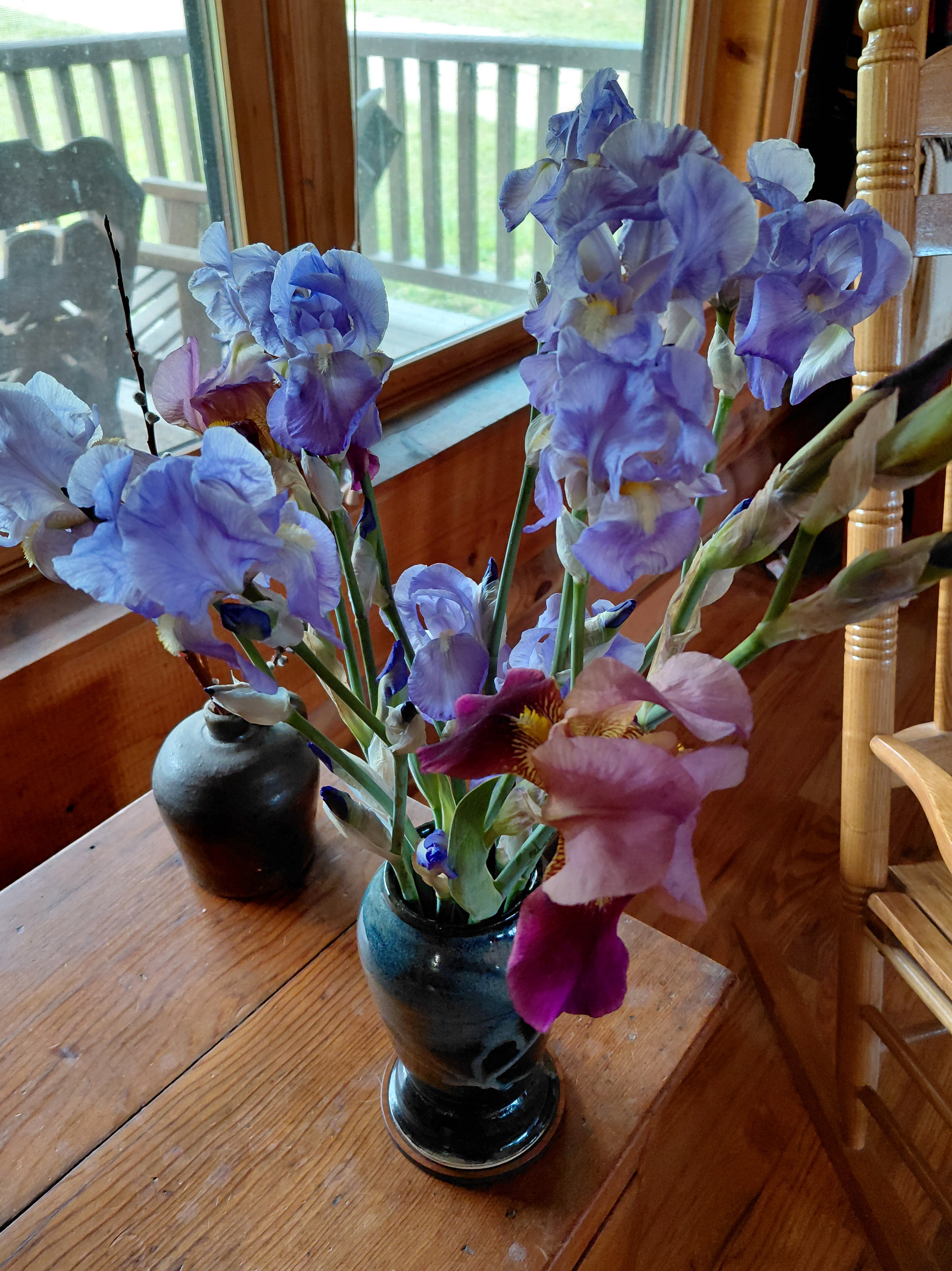
    The bearded Iris are glorious right now, at least the purple ones. Two vases cut and brought in the house and dozens more blooms in the garden beds. The Amaryllis that was gifted me in bloom several Christmases ago has bloomed later each year. It is just about to have this year’s blooms open. When it is done blooming and the weather stabilizes, it will move outdoors for the summer.

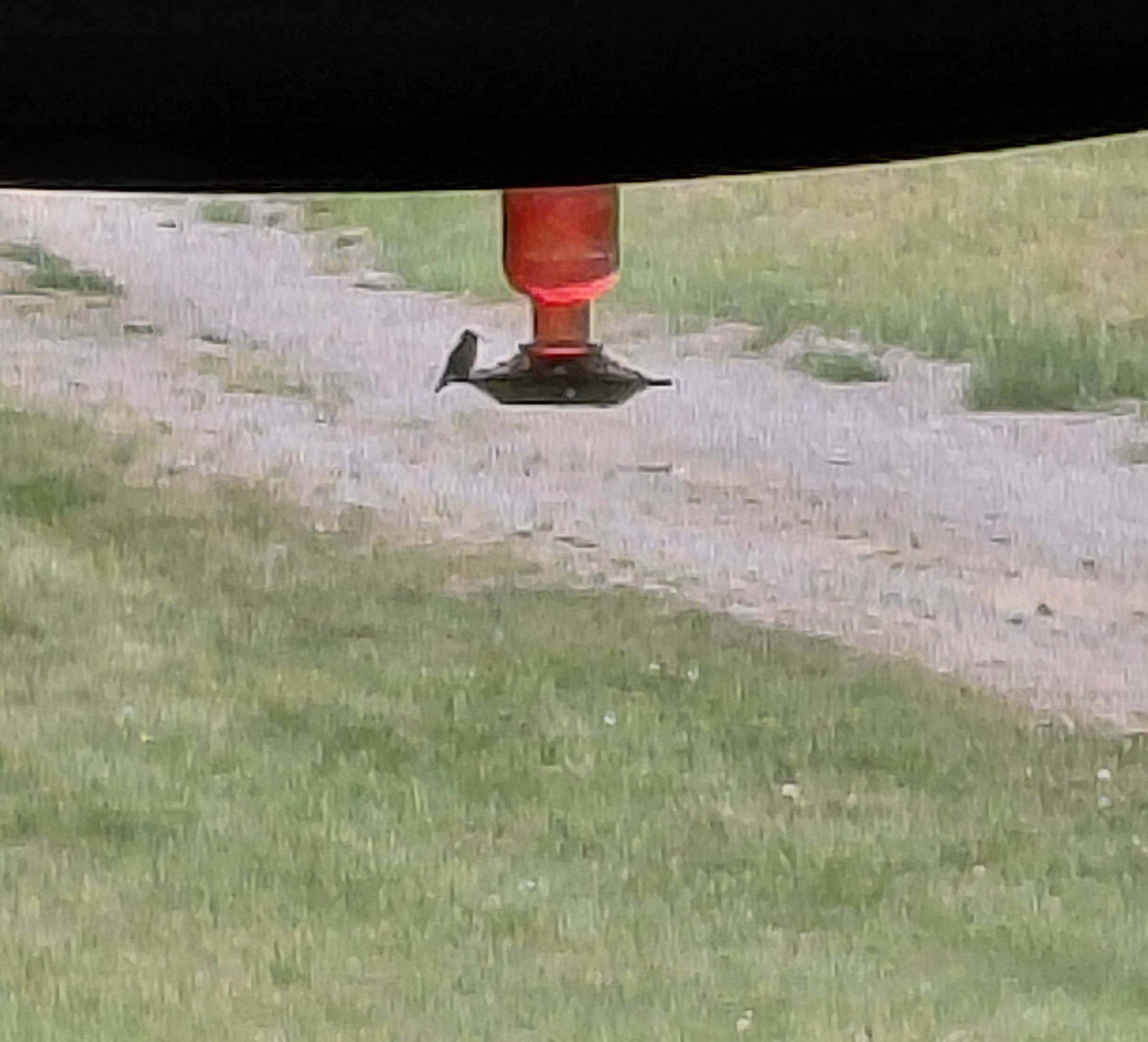
    And today, finally a Ruby throated Hummingbird visited the feeder that was hung about 10 days ago. It has been dumped and refilled once to keep the sugar syrup fresh. Soon they will be fighting for it as more appear and a second feeder will be hung.

    The young rooster, so far, hasn’t been too vocal and his fate is still undecided. If the pullets reach a free ranging state, his presence will be helpful, but as long as they are restricted to the pen and tunnels, he is a nuisance.

    Spring brings the Tom turkeys puffing up, fanning their tails to attract the females. They call back and forth across the fields. It always amuses me that Thanksgiving turkeys are depicted in the fall like the spring Toms.

    Another month or so, we will start seeing fawns with their Mom’s. So far, the does haven’t sent last year’s fawns off alone. By fall, they will rejoin Mom with her new young. Though not a hard rule, usually, first time Mom’s have only one, and older does will have two or occassionally even three, though that is rare.

    Spring with the flowers, returning migrating birds, young animals, greening trees is always an anticipated time of the year.

  • Marching On

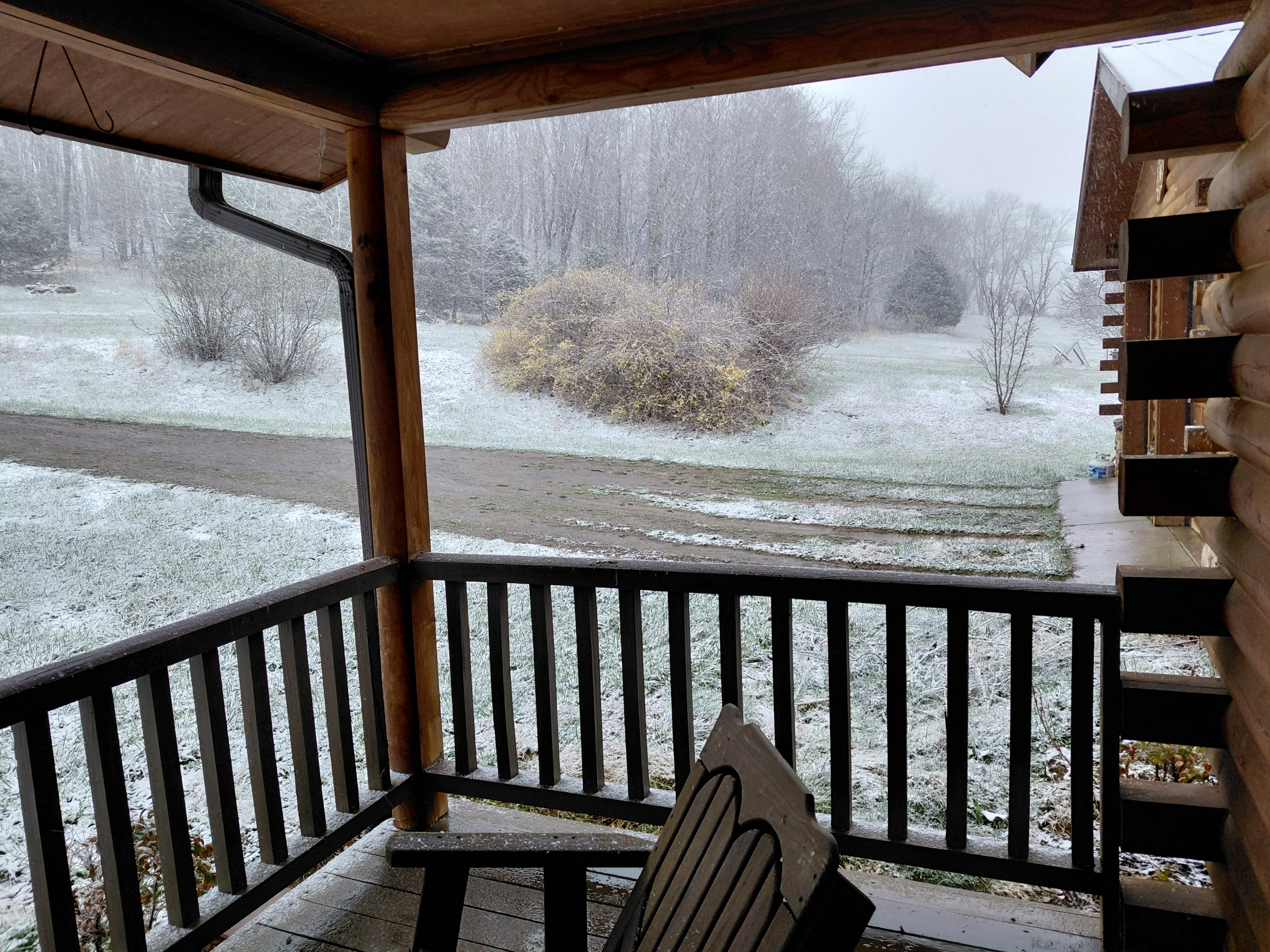
    The Facebook memories show snow around this time of March, which confirms how crazy the springtime weather can be. Monday morning is was 60 degrees when I got up, but raining. As the day wore on, the temperature fell. By the time I was prepping dinner, the rain had sleet in it and quickly turned to snow.

    Hubby’s comment was that the ground was too warm for it to stick. By Tuesday morning, we had about 1.5″ on the ground and cold temperatures. Two nights in the upper teens and all the local forsythia look sad now. The plum blossoms are brown, with the hope that maybe some of them were fertilized before the freeze. The bonus side is that all of the invasive Callary pears along the roadside also browned. Unfortunately, that won’t result in their loss. As the week progressed, the temperature began to rise again with Sunday expected to be in the low 80’s before another front and drop to normal 50’s and 60’s.

    We walked a couple miles outdoors today and until it rains, will continue for at least the next 10 days.

    The living history groups at the Museum begin this week. The first set is a team of classes from a local middle school, sixth graders. Their lessons have included the information that the nation is celebrating 250 years of independence this year and as the loom house where I am stationed is circa 1760, it will be easy to incorporate the resistence, effects of the taxation, and history of fiber use during the period.

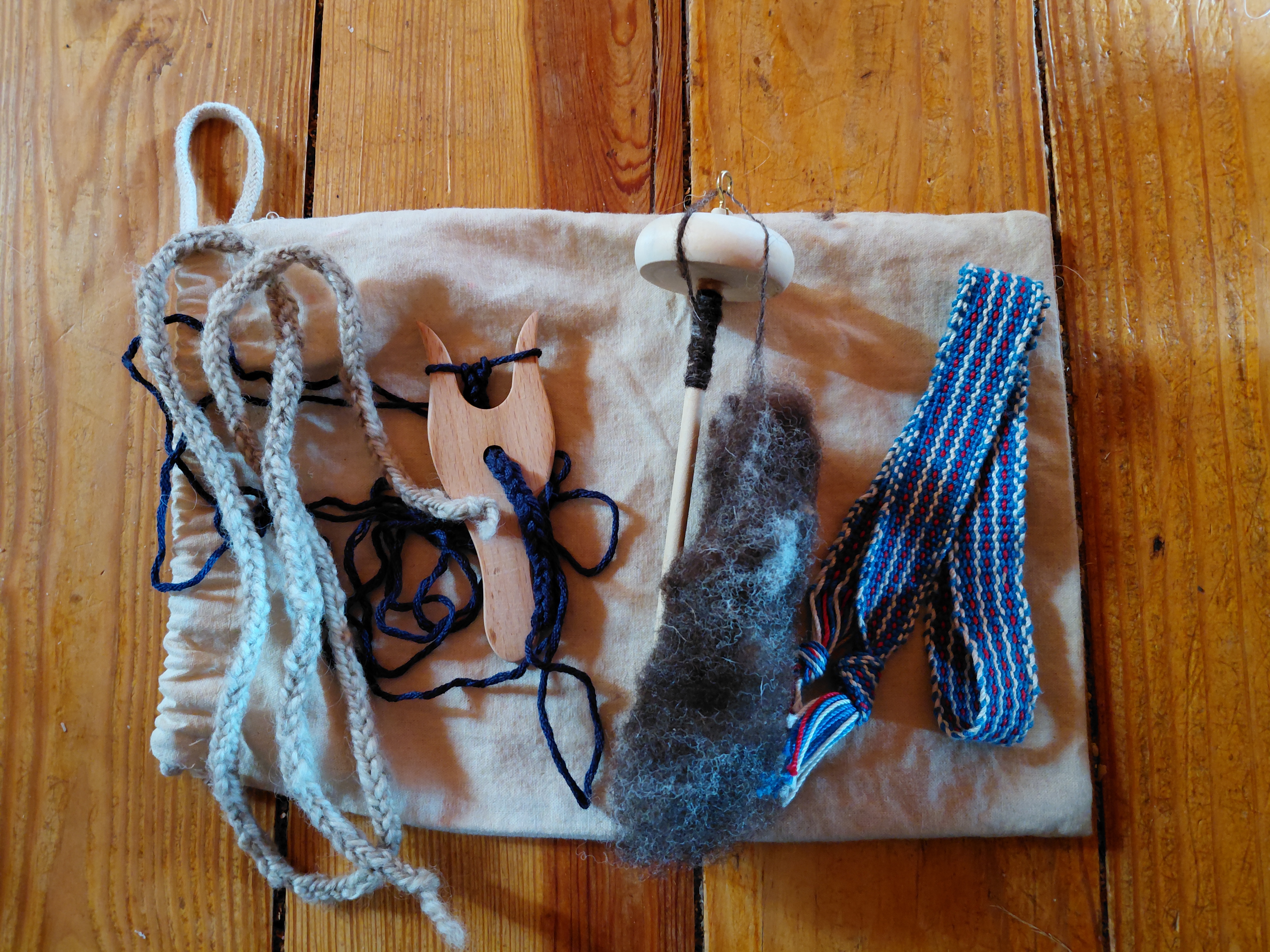
    I have added some lucets (a Viking braiding tool) that was used to make cordage, a few hand made spindles, and a pile of woven items to let the kids handle and try.

    There will be samples of flax, hemp, wool locks with and without lanolin for them to handle, and lessons on what it would have been like as an 11-12 year old as far as household responsibilities compared to the life they live now 250 years later.

    Of course, I will be asked more than once if the Colonial outfit is what I really wear everyday and whether I live in the 266 year old cabin. Though they may have been taught the facts, the reality of what life might have been like is very difficult for them to process.

    The springtime and sessions with the 2nd, 4th, and 6th graders are always a pleasure for this retired educator.

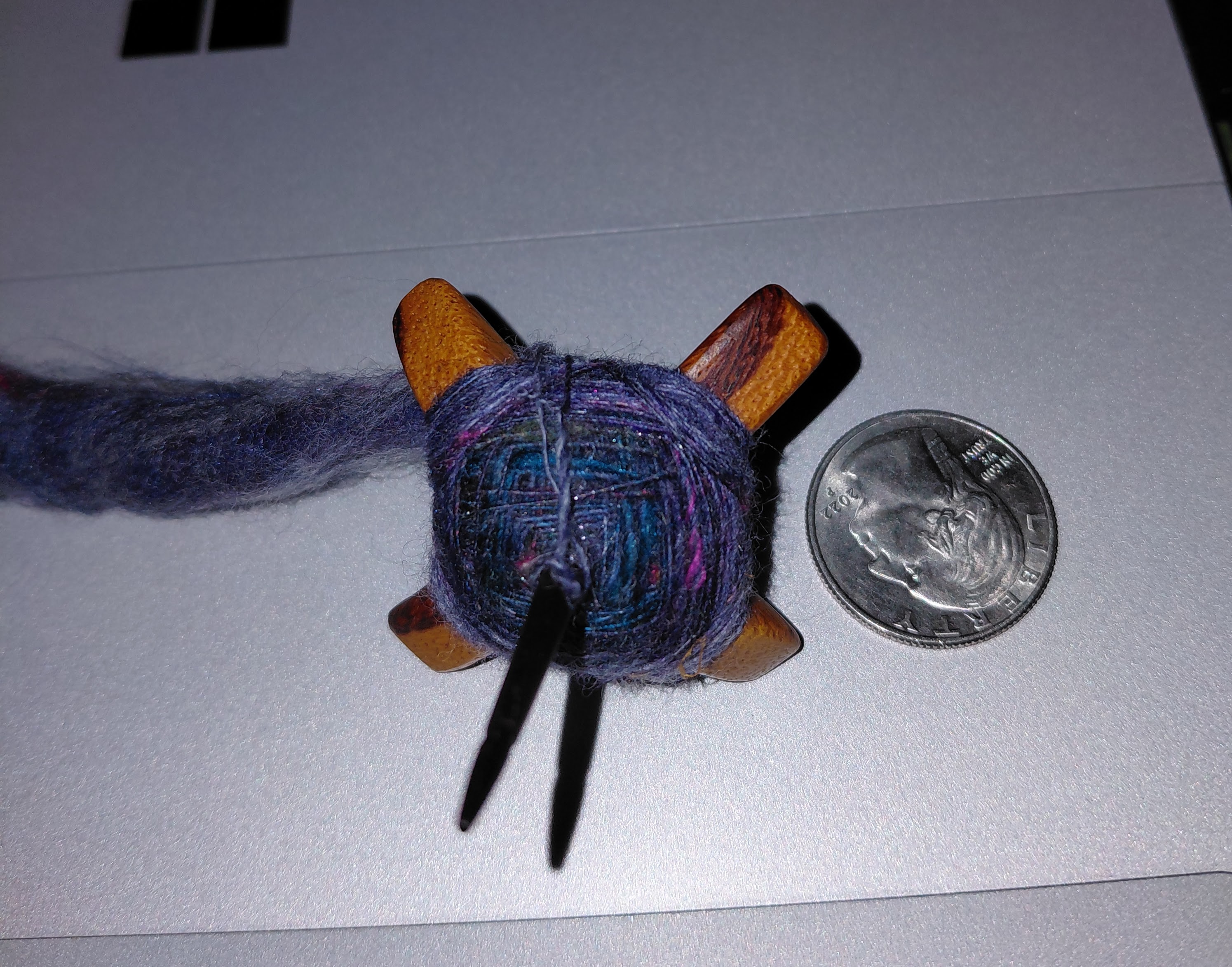
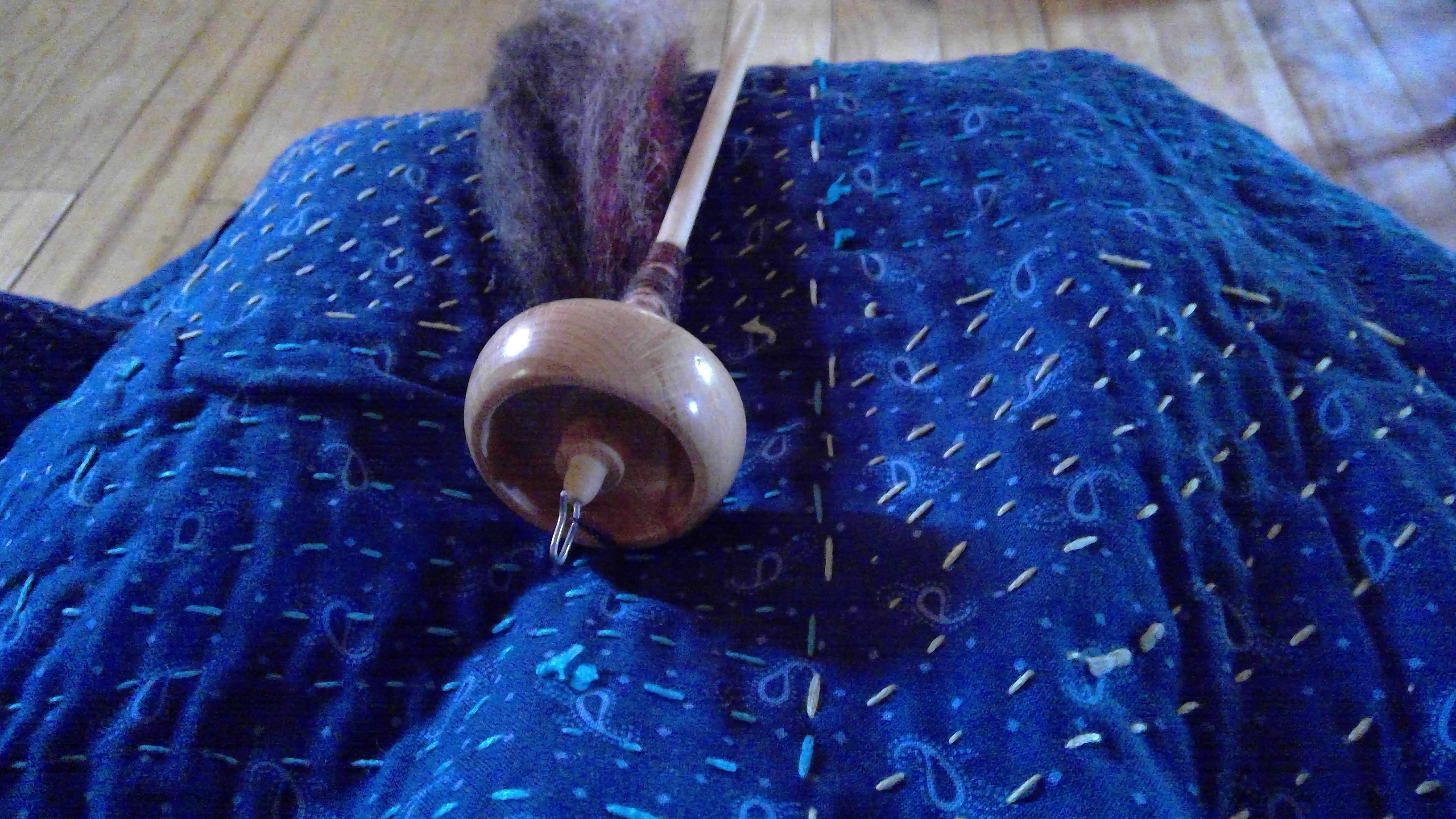
    A new spindle was added to my collection this week. This is one I can use spinning with the class groups as it is a plain wooden drop spindle

  • History Week

    October brings lots of history activity at the museum or sponsored by the museum. Many opportunities to be a Colonial Pioneer woman in the New River Valley.

    On Sunday, we had the annual Spirit Trails, but this year it was held at the restored historic Belle Hampton home and property, 280+ acres with several buildings that have been restored. The General Store is an Air B&B, the main house and additions cleaned up and available by appointment to visit, the cottage in which the owners live, plus the addition of a lovely huge pavillion that was the home base for the mule driven wagon rides through the history of the property and the various people that lived, worked, or fought on the land.

    The owner Tom Hoge portraying the Governor.

    Unfortunately, a strong line of thunderstorms came through during the third ride and the remaining tours had to be cancelled with one portrayal held in the pavillion for those folks who stayed. There were treats to be had, displays to see. Period dance lessons, cider pressing, and some kids activities as well.

    Monday morning brought the first 70 4th graders from Pulaski County for Fall on the Frontier. We had 7 stations for them to visit, history of the town film, cider pressing and corn shelling, slavery talk, cooking, bobbin lace making, spinning and weaving, and militia with flintlocks fired.

    We will host more classes tomorrow and Friday. The classes are always interesting as the students learn more about the history of the region in which they live and how it differed over 200 years ago.

  • Nature

    When I began college nearly 60 years ago, I was unsure the direction in which to go careerwise. One of my early classes was a General Biology class with a great professor and having followed a wonderful high school biology teacher, I ended up majoring in Biology Education and adding General Science certification to my teaching license. I started my master’s degree also in science, but later changed to School Counseling. Though much of my career in education was in counseling, the interest in science never moved far from my focus.

    As a result, I am ever on the lookout when on our daily walks for animals, and changes in the flora surrounding the trails. One of the interesting quirks of nature are mast years. Those are years when all the nut and oak trees produce more fruit that prior years. The reason for this is debated with several theories, but next year, there will be way more young animals in the fields and woods. This is a mast year. Walking the paths over the abundance of acorns and small nuts feels like walking on pebbles. And several of the areas are shaded by black walnut trees which drop baseball size nuts in green husks that can cause a turned ankle if not looking where your feet fall, or a knot on the head if you are under one when it falls.

    The past couple of days walks have been interesting. We saw the first copperhead snake I have seen here since we moved here almost two decades ago. It was leisurely crossing the paved trail on which we were walking. I got close enough to identify it, but not close enough to disturb it, not wanting to make a venomous snake cross with me.

    Yesterday while weeding a garden bed, I disturbed this large garden spider with hundreds of her young on her back. I moved away from where she was and weeded elsewhere.

    Today’s walk was one that was ripe with nuts. There were Buckeyes (aka Horse Chestnuts) which are toxic to humans and animals, Bitternut Hickory which are edible though very bitter when raw, if roasted they can be substitued for pecans or walnuts, and many Black Walnuts. I failed to pick up a walnut to add to my photograph. The Black Walnut that was on our property before we purchased it had fallen, though we have plenty of Bitternut Hickory trees and Oaks.

    The hickory nuts in this photo are in two stages of being shelled, the husk still on one and two still in the shell. All five nuts went back into the wild, not brought home with us.

    This is a great time of year for our daily walks. The daytime temperatures are very comfortable, the trees are turning autumn colors and dropping their leaves, fruits, and nuts, and we see more wildlife in the woods and crossing the roads and trails. Soon the geese will land in the pond on their way south, though we haven’t seen or heard any yet. We still have Hummingbirds coming to the feeders, so they are staying full. One beautiful little one got trapped in our garage yesterday and by the time we saw it, it was worn out from trying to escape, allowing me to pick it up and take it back outdoors where it gratefully flew away. The hens have already started into non laying mode, getting only about a dozen a week now from 6 hens instead of enough to share.

    Soon the autumn will chill, the garden will close up for the winter, and it will be time to plant next year’s garlic.

    Stay safe, enjoy the changing seasons if you live where you get changes.

  • Old Skills

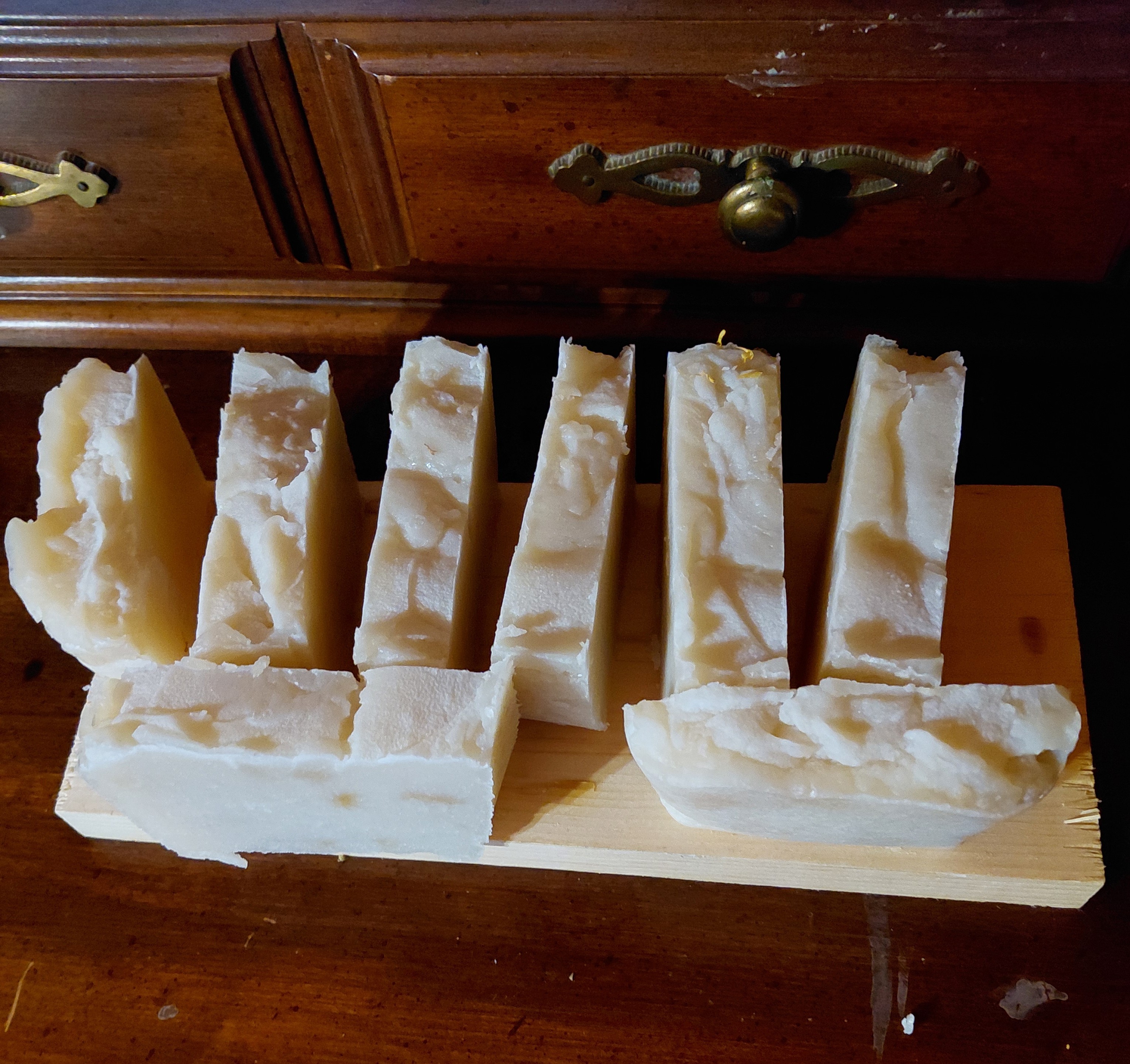
    Last Wednesday evening, I trekked over to the museum to teach an old skill. No costume required for this event. We set up 4 stations for 4 ladies + 1 second grader accompanying her Mom and they learned to make basic lard and lye soap. We used a mix of old school and modern skills and equipment so we weren’t there all night stirring the mix. Of course they were given some history of soap and soap making and why we now use a lye calculator and a superfatted recipe to be sure we end up with a body friendly product. I put together kits of a small heat safe plastic bucket, two rigid plastic stadium cups, a spatula, and a silicone loaf pan for each participant that they keep at the end of the session, along with the a three page history, instructions, and two recipes; one for the lard and lye and one for a vegan soap with Shea butter, Coconut Oil, and Olive Oil, and of course, their mold of soap. We “cheat” by stirring with an immersion blender to speed the process up to keep our session within a 90 minute window. As I dug out some of my equipment and essential oils to scent their individual batches of soap, it seemed a good time to go ahead and make soap for 3 friends and our household.

    The batches at home were made Tuesday and Wednesday of this week. On Tuesday, a double batch of one scent was made and I won’t do that again as it took forever to get to the consistency to pour it in the molds and is still not as firm as I would like to slice it into bars. The
    Wednesday batches will be unmolded and cut tomorrow to cure for a month before going to the folks for whom it was made.

    Today as I sat waiting for hubby to have a consultation visit and then I waited for my annual mammogram, I spun. In public, I spin on either a top whorl drop spindle or a Turkish spindle. When doing it, there are surreptitious glances, to out and out staring and occasionally someone will ask what I am doing. Followed by the question of what I then do with the yarn I spin.

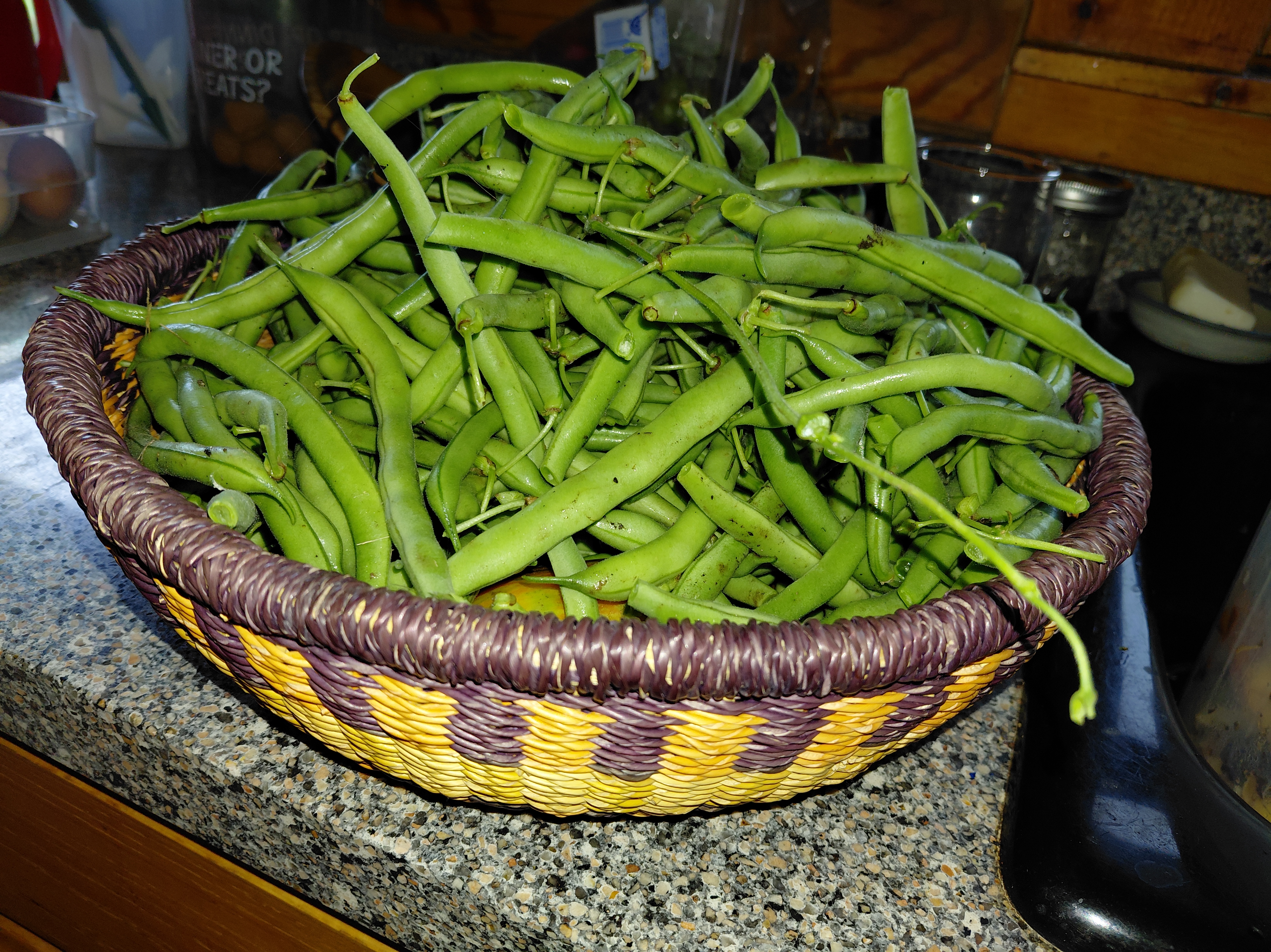
    The other old skill that really hasn’t been done so far this year is canning and preserving. There have been pickles fermented and stored, but the tomatoes haven’t produced in sufficient quantity to bother canning them. I have frozen a couple of gallon bags, made one big pot of sauce to use one night for pasta and the rest frozen in wide mouth pint jars. There is a basket of Asian pears from the orchard sitting on the dining table with a couple of oranges to make pear/orange marmalade, but I haven’t gotten around to dragging down the canning pot to do it. As there are still many jars of applesauce from last year unopened, I doubt that any will be canned this year. The only other produce that has come in quantity are greenbeans and I freeze some of them, but don’t like canned one at all and barely tolerate them from frozen. I like to buy local, but come midwinter when green vegetables are at a premium if at all available, I do buy from the grocer.

    All of these skills have been learned since retirement. You can teach an old dog new tricks. And I truly believe in the each one teach one. I am grateful to the friends who taught me to make soap, spin, and improve my knitting skills. The canning and fermentation, I have learned from books and the internet.

  • Summer Camp

    The museum where I volunteer as a spinner and occasional teacher holds a history themed week long day camp each summer. This year’s theme is cultures, representing the melting pot of cultures that dwelt in this region and the crafts they brought. Next week, I will spend one afternoon on fiber and will provide each camper with a small drop spindle to take home and a lesson on how to spin on one.

    The spindles are wooden toy wheels on a dowel with a cup hook at the top. Each in a small storage bag that will also have an ounce or so of wool for practice, and each will be given a printed instruction as a reminder when they get home with them.

    The weather is going to be hot as it has been for several weeks, but cloudy, so maybe not too uncomfortable in the Colonial outfit. I am following the bagpiper and he will certainly have on more layers than I will.

    As my favorite thing to do at the museum is working with children, drawing back on my retired educator skills, this is a perfect afternoon.

    The annual scavenger hunt has been fun this week, with easy to find object and encouraging much more spinning time for me. The wool I have been spinning was slightly sidelined as I wanted to spin the gift sample that my friend sent with the spindle she proxy shopped for me. One half was spun Monday, the other half yesterday and the two plyed last evening to create a small 46 yard skein. The pale yellow, I learned from here is caused by a bacteria in the wool in wet or humid conditions and though washing with soap stops the growth and makes the wool safe, the yellow color does not wash out. It will be added to a bag of other small skeins and they will be knit into hats when my current knitting project is complete.

    If the weather ever cools off, a couple days of weeding flower beds, dividing Iris and Day Lilies needs to be done. And a couple skeletons of Nandina that the cold killed off two winters ago, need to be dug out. Other than cucumbers and a handful of green beans, the garden is growing but not producing much right now. There will be tomatoes, a few ears of corn, peppers, and hopefully a second round of green beans later in the summer.

    Right now, we are sitting out a round of thunderstorms. We got our daily walk in prior to them setting in. It was hot and humid, but done anyway.

  • Animal Behavior

    We have lived here for about 18 years now, and for 15 of them we had either barn cats or large dogs. All are gone now. Early on, because we have 30 acres of fields and woods, we allowed some hunting on the property, but after an incident when one of the young hunters, invited a friend we did not know and the friend then showed up alone with his 5 year old son, we cancelled hunting privileges for non family and no one in the family has hunted here for years. With no domestic animals in or near the house and no hunters on the land, the wild animal behaviors have changed.

    We used to park the cars in the driveway and every spring, we had to cover the side mirrors to keep the male cardinal, that calls the side yard his habitat, from constant attacks against the “intruder.” The cars now get parked in the garage.

    The male bird aggression is interesting. This morning a tiny sparrow repeatedly bashed his breast and head against the French doors of the dining room. I tried turning on the inside light, putting a dining room chair against the glass, and finally hung a paper owl from the back of the chair to keep it from a concussion or broken neck.

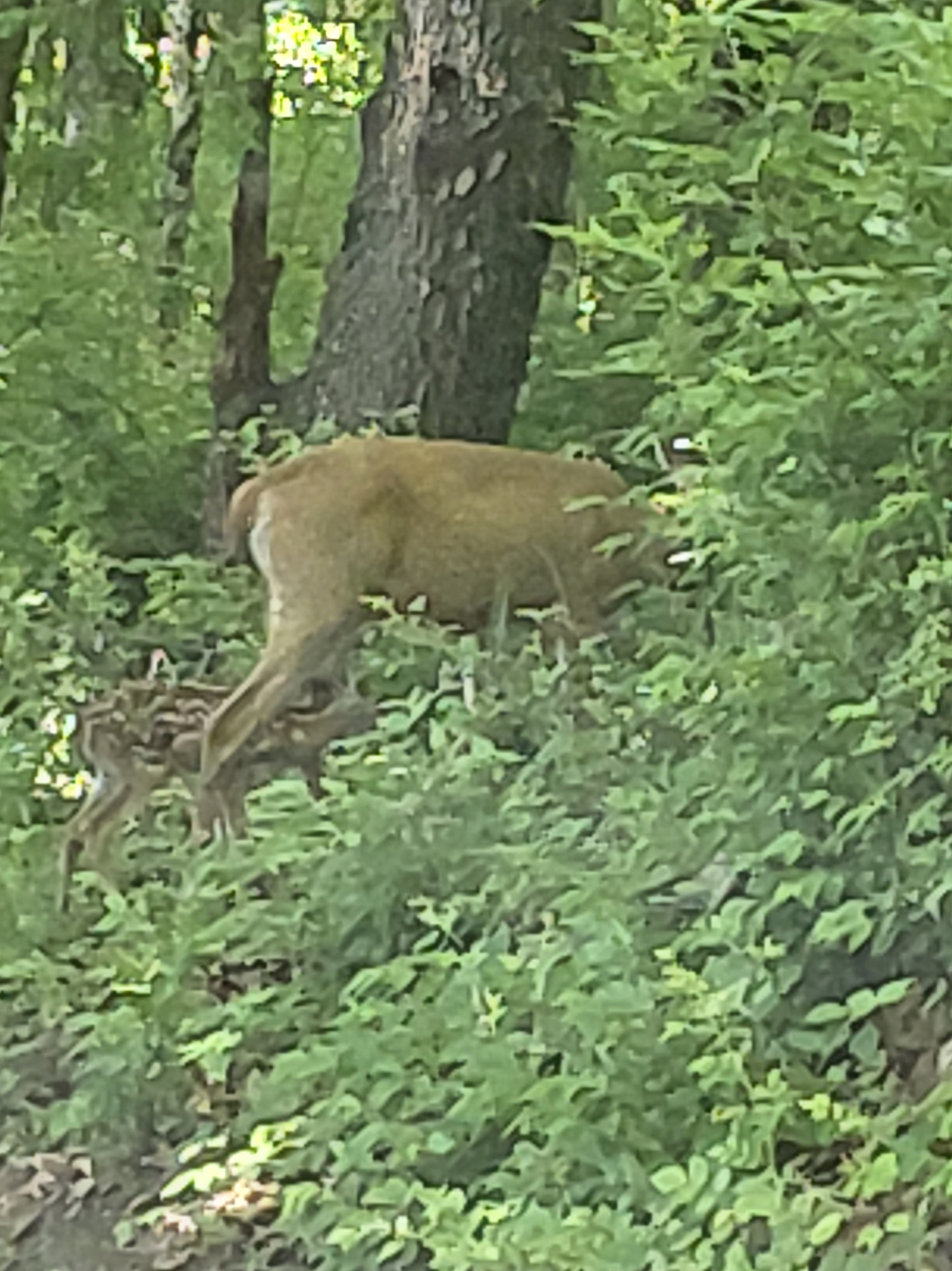
    We have always had deer foraging and crossing the property, but now they rest in the shade of the row of pine trees on the edge of the mowed lawn just to the west of the house and barely flinch when we go outside to water plants, fill hummingbird feeders, or go over to the chicken pen and coop. The hay is still high and unmowed and it is fawning season where the does drop their young. There is a new mom doe (probably a first time as she only has one fawn) that feels safe enough that she had her tiny little one near the house. As their behavior is to hide the fawn and move off from it, coming back to nurse a few times a day, and then moving the fawn to a new location, we have seen her bring the little one in to the mowed yard where it is easier to walk, then take it back into the tall grass to hide. We can tell approximately where the fawn is hidden by where she goes to graze.

    I won’t look for the fawn, there is no reason to disturb them, but we look out the south windows to see if we see where the doe is grazing. She is a brown hump in the tall grass when grazing and will look up if she hears a noise. The area she is using is about 2 football fields in size. After the fawn is about 3 weeks old and starting to eat more solid food, it will begin to follow the doe around and the two of them will like form a small herd with other does with fawns or other does that she is related to.

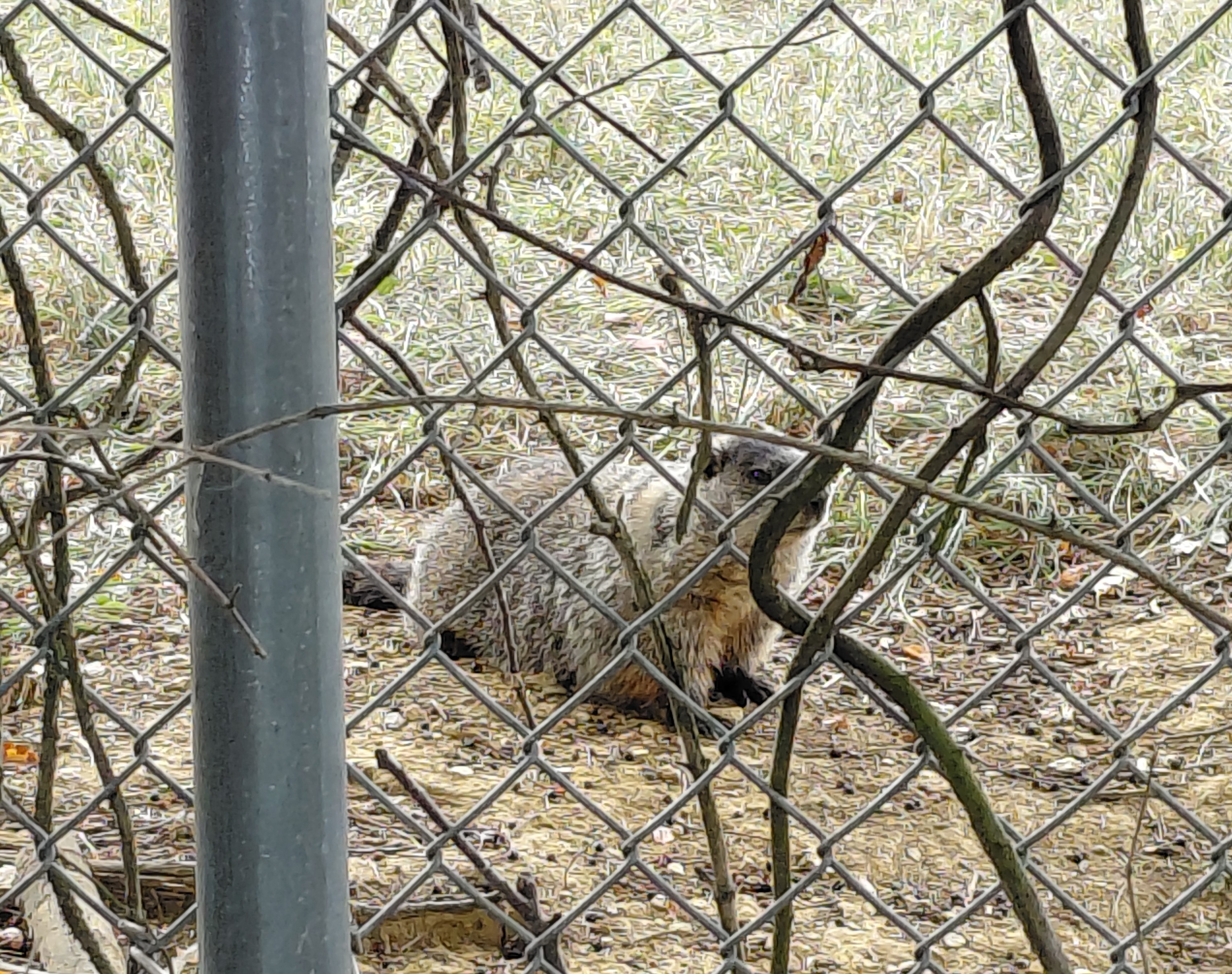
    The other wildlife whose behaviors have changed in the absence of cats and dogs are the rabbits and chipmunks that come right up to the house, the chipmunks even up on the deck. And we have a groundhog that seems to prefer the mowed lawn to graze but lives near or under a cedar tree right on the edge of the hayfield. I haven’t caught it out to take a photo lately, it has been rainy for the past 4 days.

    Last weekend, our eldest, his wife, and their son came to our local grandson’s high school graduation. His son is city born and city raised and he spent the entire weekend looking for o’possums and groundhogs to no avail. We did see rabbits and deer to show him and warned him about nighttime wandering to look for them due to skunks and coyotes. I haven’t heard the coyotes this spring yet.

    Life in a rural area is ever changing. The hen turkeys should be hatching poults soon and we will see them. The toms are in male groups now and if they are in the fields, we can’t see them due to the height and thickness of the hay. Within the next month, weather permitting, the hay will be mowed and baled, hauled off to other farms and the animals will be visible in the mowed fields again. I love the rural mountain life.