This week, two of our grandchildren celebrated birthdays. Our eldest, son of our eldest turned 9, our first granddaughter, daughter of our youngest, turned 3. Though we didn’t actually get to spend their birthday with either of them, they are special.
The garden is growing. The garlic looks like it is ready to harvest and cure. Agree?

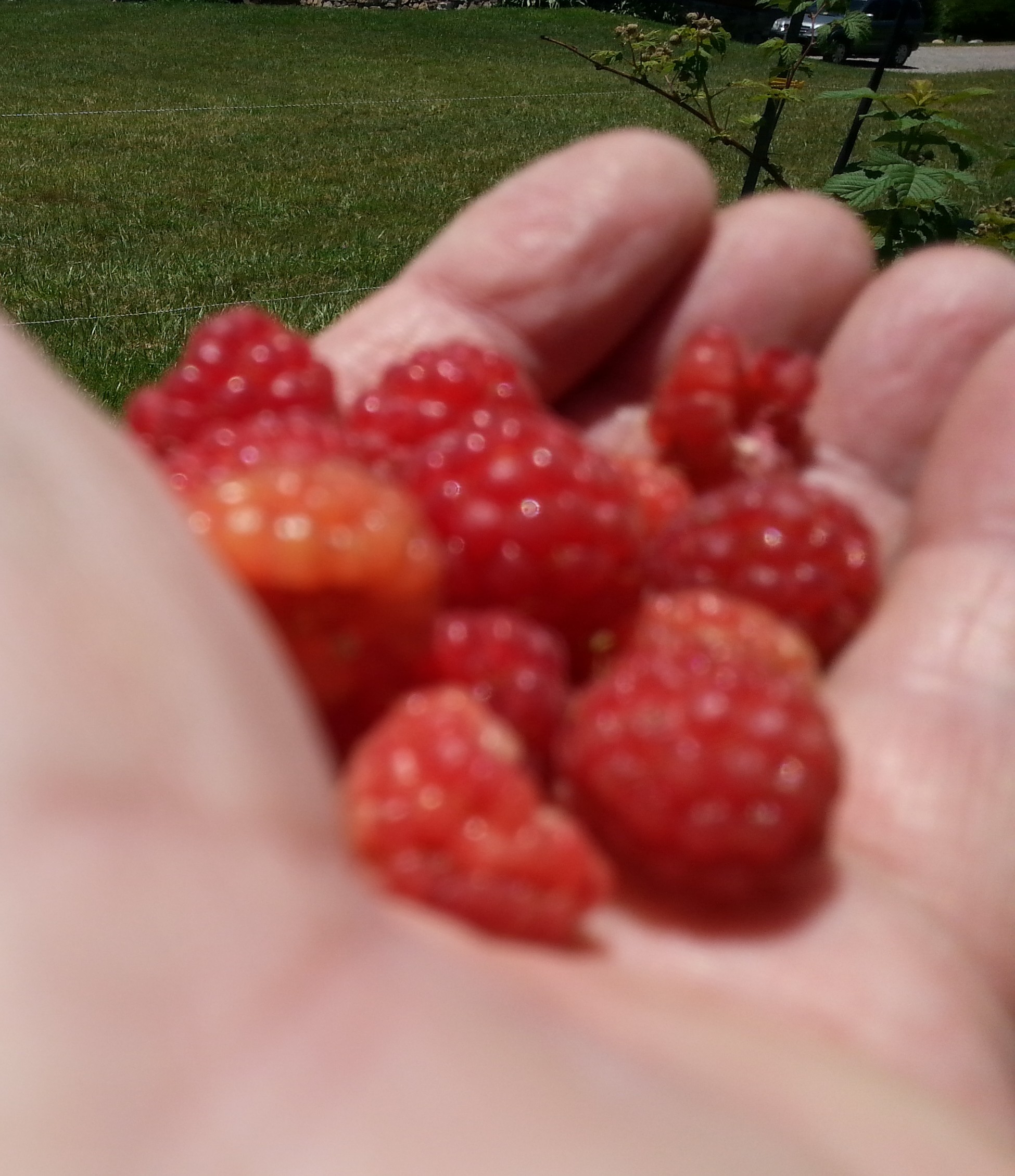
I never did make garlic scape pesto. Oh well, there is always next year as it is a crop we plant annually in quantity to share with our kids. The peas are or so close to being ready for the first batch of lightly steamed or sauteed fresh peas. My mouth is watering at the thought. The raspberry patch is starting to ripen. It is really going to be a challenge to bring enough in to make jam or smoothies with as I graze as I am in the garden, they are so delicious fresh.

A few weeks ago, while in Lowes, I purchased two new garden implements, a hoe with a two tine rake on the other end and a loop hoe. The loop hoe is an okay tool in bare soil. The other implement bent the very first time I used it and it will be returned to Lowes along with a wire brush they sold us for our new grill that has coated cast iron grates and specifically says DO NOT USE A WIRE BRUSH ON THE GRILL PLATES. A few days after I purchased them, I received a copy of one of the only two magazines to which I subscribe and they had an article on must have garden tools, one of which is a new Rogue Tool Hoe that has a tapered, sharpened end, flat at the end and a 3 tine rake on the other end. It is American made, forged and solid. I ordered one and was notified that they were backordered and it would be several weeks. I okayed that and two days later, was notified that it shipped. It is a great tool, well worth the money and the wait. Used on its side, it cuts right through the weeds. The end cuts deeper for heavier rooted weeds and the rake grabs even young tap rooted plants and pulls them right up. The wooden handle is thick and well balanced. They aren’t paying me or giving me anything, but I highly endorse their products.

This is the first week of the summer that we have had house guests. Jim’s cousin and his wife spend Thursday night with us on the way to Pennsylvania to pick up his youngest son from college and will spend tonight with us on their way home to Georgia. They brought us two bags of Georgia peaches to enjoy along with pecans and a lovely loaf of bread. Some of the peaches were very ripe and after they left yesterday morning to finish their trip north, I prepared about half of them for peach jam.
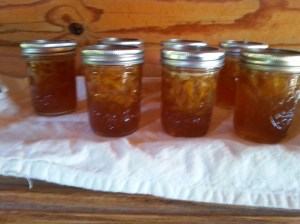
In 25 or more years of making jam and jelly, this was my first experience with peaches and it didn’t set up properly. Last evening, we went to town to purchase more fresh pectic, new lids and while there, I bought another case of 1 cup jelly jars and reprocessed it last night with a bit more lemon juice and a new package of pectin. It turned out perfectly and they will get to take a jar home with them tomorrow along with a couple of jars of berry jams from last season, some of the cured garlic still left from last year and a dozen of my fresh eggs to enjoy once they are home.
I subscribe to a delightful magazine called taproot. It comes out 4 times a year, contains no advertisements, often contains a gift, such as a small notebook or some notecards with artwork from one of their many artist contributors. It always has wonderful recipes, craft ideas and generally a knit, crochet or sewing pattern in it. This issue has infused vinegars and three fermented mustard recipes that I want to try. Today while making a vinaigrette from it for our salad tonight, since I already had the small blender out, I made the Horseradish mustard to sit and ferment for three days before adding in the last two ingredients. Once it is completed, I will divide it into 4 oz jars and share the finished product with our kids that want to try it. (It tasted delicious even without the fermentation and last two ingredients, so I bet it is going to be great.)

There are two more recipes for other mustards in the magazine, but I bet it will be hard to beat this one.
I must have been born in the wrong century. I love preserving, growing a garden, spinning yarn, knitting, and cooking from fresh ingredients. As we await their return for the night, I am preparing a meal of roasted radishes, turnips, yellow squash, garlic, spring onions, rosemary from our garden and the Farmers’ Market. Local grass finished beef kabobs with Monterey seasoning that I make. Shrimp with mustard basil marinade. Salad with local vegetables added and the vinaigrette from taproot magazine with fresh from my garden thyme.
Life is good here on our mountain farm.




![20140610_093107[1]](https://cabincrafted.fangorn.space/wp-content/uploads/2014/06/20140610_0931071.jpg)
![20140610_093154[1]](https://cabincrafted.fangorn.space/wp-content/uploads/2014/06/20140610_0931541.jpg)
![20140610_093319[1]](https://cabincrafted.fangorn.space/wp-content/uploads/2014/06/20140610_0933191.jpg)
![20140610_093313[1]](https://cabincrafted.fangorn.space/wp-content/uploads/2014/06/20140610_0933131.jpg)
![20140610_093142[1]](https://cabincrafted.fangorn.space/wp-content/uploads/2014/06/20140610_0931421.jpg)
![20140610_093818[1]](https://cabincrafted.fangorn.space/wp-content/uploads/2014/06/20140610_0938181.jpg)
![20140610_093822[1]](https://cabincrafted.fangorn.space/wp-content/uploads/2014/06/20140610_0938221.jpg)
![20140610_093541[1]](https://cabincrafted.fangorn.space/wp-content/uploads/2014/06/20140610_0935411.jpg)
![20140610_093506[1]](https://cabincrafted.fangorn.space/wp-content/uploads/2014/06/20140610_0935061.jpg)


 Cabin Crafted